If your driveway has been cracking, heaving, or just looking worn out, you already know the problem isn’t cosmetic. Centereach homes especially the ranches and capes built during the Dawn Estates and Eastwood Village development era of the 1950s are sitting on driveways that are decades past their useful life. Asphalt lasts 15 to 20 years. Poured concrete lasts 25 to 30. If your home was built between 1950 and 1980 and the driveway has never been replaced, the math isn’t in your favor.
What makes brick pavers different isn’t just how they look it’s how they’re engineered to behave. Each individual unit can flex slightly with ground movement during freeze-thaw cycles and settle back into place when temperatures rise. When water gets under a concrete slab and freezes, it expands and cracks. With pavers, that same ground movement doesn’t cause failure it’s accounted for in the design.
And if one paver ever does get damaged by a heavy vehicle, a sharp impact, or an unusually rough winter you replace that one piece. Not a section. Not the whole driveway. Just the unit that needs it. That alone changes the long-term cost equation significantly, especially for a Centereach homeowner thinking about resale value in a market where homes are listing around $650,000.
We’ve been doing masonry and hardscape work across Long Island for over two decades. The team that shows up to your Centereach property is our own crew not a subcontractor hired for the week. Every phase of the project, from demolition and base prep to the final paver and joint sand, is handled in-house. That means one standard of quality from start to finish, and one company that owns the result.
Centereach sits squarely in the middle of our Suffolk County service area. We’ve worked throughout the Town of Brookhaven and in the communities surrounding Centereach Selden, Farmingville, Holtsville, Lake Ronkonkoma long enough to know what Long Island soil, drainage conditions, and winter weather actually demand from a driveway installation. That’s not something you pick up overnight.
We hold a verified 5.0-star rating on both HomeAdvisor and Angi, are fully licensed and insured, and provide free written estimates before any work begins. No verbal quotes that shift at invoice time. No surprises.

Before any material gets ordered, we start with a conversation. The goal is to understand what you actually want the look, the function, the budget and to assess the existing conditions on your property. Drainage, soil type, the current surface condition, and how the driveway grades away from your foundation all factor into what gets built. In Centereach, where central Suffolk soils can carry higher clay content in certain areas, base depth and compaction aren’t something we estimate loosely. They’re engineered to what’s actually under your driveway.
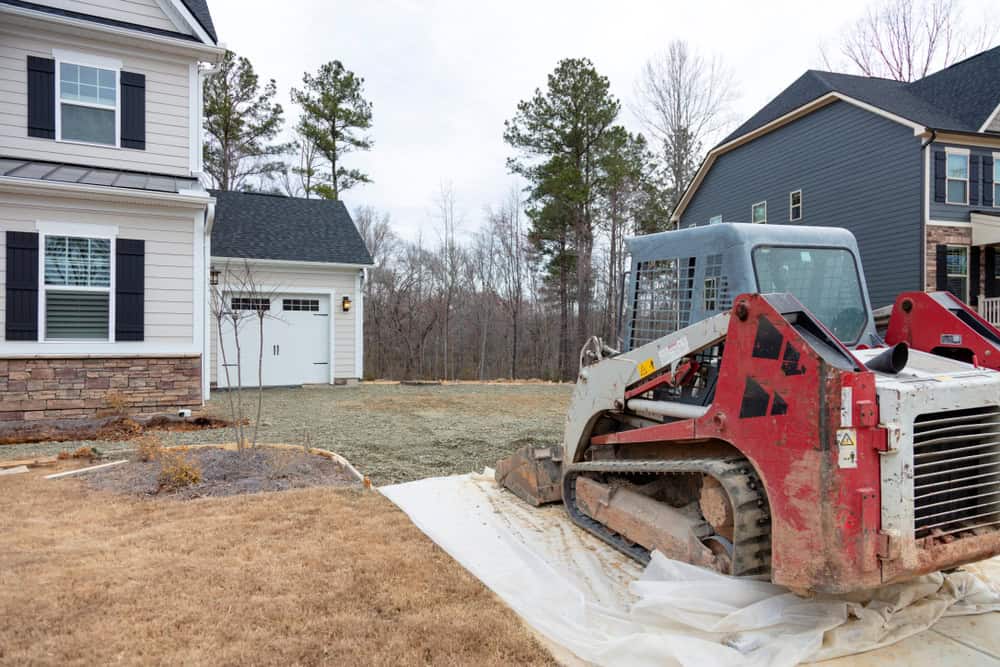
Once the scope is confirmed and a written estimate is agreed upon, the existing surface gets demolished and removed. Excavation follows deep enough to account for Long Island’s frost line and the specific soil conditions on your lot. The aggregate base goes down in measured lifts and gets compacted thoroughly before bedding sand is applied. This is the part that separates a driveway that lasts from one that shifts within two winters. It’s not visible once the pavers are set, but it’s everything.
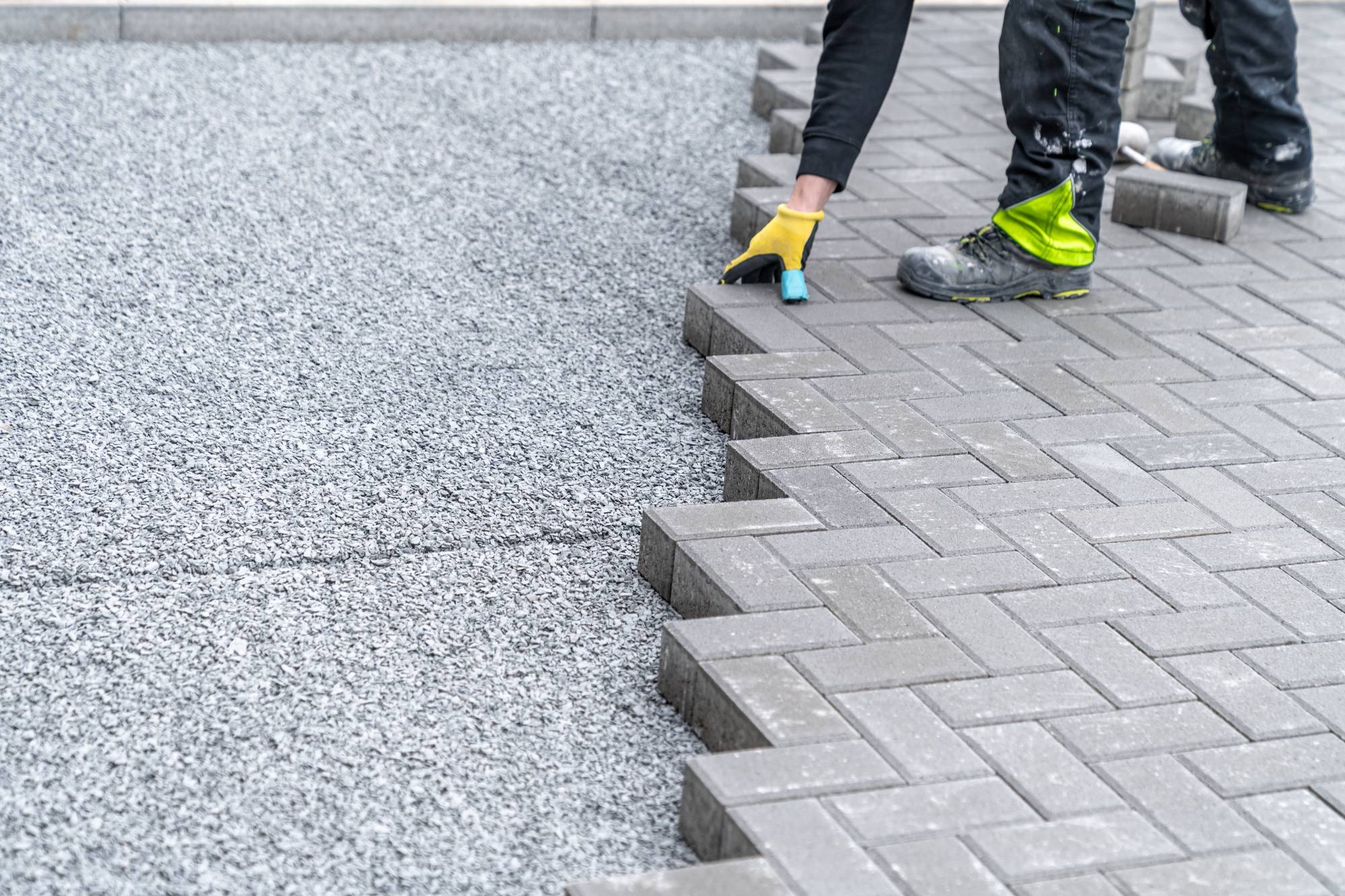
Pavers are then laid to the agreed pattern, edge restraints are installed to keep the field locked in place, and polymeric joint sand is applied and activated. That joint sand hardens when wet, which means weeds, insects, and washout from rain or irrigation aren’t going to undo the work. For projects in the Town of Brookhaven, we handle any applicable permit requirements as part of the process so you’re protected at resale and compliant with local code from day one.

Brick driveway paving in Centereach, NY typically runs between $10 and $45 per square foot installed, depending on the material type, the complexity of the design, and what the base preparation requires. For a standard residential driveway, most projects land somewhere between $6,000 and $18,000 total. That range is wide because no two driveways are the same a straightforward rectangular driveway with a classic running bond pattern costs less than a custom design with borders, curves, and multiple paver colors. We’ll walk you through exactly what’s driving the number on your specific project before you commit to anything.
The cost-per-square-foot comparison between brick and concrete is a common question. Concrete typically runs lower upfront. But when you factor in the lifespan difference pavers lasting 25 to 100 years versus concrete at 25 to 30 under Long Island conditions and the individual repairability of pavers versus full-section concrete replacement, the total cost of ownership over time often favors pavers. In a neighborhood like Centereach where homes were built decades ago and driveways are being replaced rather than installed new, that long-term math matters.
If you’re weighing the cost to install a brick paver driveway in Centereach, NY against what your current driveway is actually costing you in curb appeal and future repair bills, the free written estimate from us is the right starting point. You’ll know exactly what’s included demolition, excavation, base prep, materials, edge restraints, joint sand, and permit handling with no line items that appear later.

The installed cost for brick paver driveway paving in Centereach, NY generally falls between $10 and $45 per square foot, with most full residential projects coming in between $6,000 and $18,000. Where your project lands in that range depends on several factors: the size of the driveway, the paver material you choose, the pattern and design complexity, and what base preparation is required once the existing surface is removed.
In Centereach specifically, soil conditions and drainage requirements can affect base depth, which in turn affects labor and material cost. Homes in the Dawn Estates and Eastwood Village areas many of which were built in the 1950s sometimes have older base material underneath that needs to be fully excavated rather than built on top of. That adds cost but also protects the investment. A written estimate from us will break all of this down clearly before any work begins.
For most Long Island homeowners, yes and the freeze-thaw cycle is the main reason why. Centereach experiences repeated cycles of below-freezing overnight temperatures and above-freezing daytime temperatures throughout the winter, sometimes multiple times per week from December through March. That thermal cycling is what cracks poured concrete over time. Water infiltrates micro-cracks, freezes, expands, and widens them season after season until you’re looking at full-section failure.
Brick pavers handle that same ground movement differently. Each unit flexes independently, which means frost heave doesn’t cause cracking the way it does with a solid concrete slab. Add in the individual repairability factor replace one paver, not a whole section and the 25-to-100-year lifespan of a properly installed paver system, and the value case becomes clear. In a market where Centereach homes are listing around $650,000, a driveway that holds up through decades of Long Island winters and improves curb appeal is a real return on investment, not just an aesthetic upgrade.
Centereach falls under the jurisdiction of the Town of Brookhaven for all permitting purposes. Whether a permit is required for your specific driveway project depends on the scope of work new driveway installations, significant alterations to existing driveways, drainage modifications, and anything that affects a curb cut or the public right-of-way can all trigger permit requirements under Brookhaven Town Code and the New York State Uniform Fire Prevention and Building Code.
The short answer is: it depends on what’s being done, and you want to get it right. Unpermitted work can create complications at resale, and in Suffolk County, buyers and their attorneys do check. We’re experienced working within the Town of Brookhaven and handle applicable permit requirements as part of the project so you’re not navigating that process on your own or finding out after the fact that something needed to be filed.
For a standard residential driveway in Centereach, the active installation work typically takes between two and five days. That includes demolition and removal of the existing surface, excavation, base compaction, bedding sand, paver installation, edge restraint setting, and polymeric joint sand application. The timeline can extend slightly depending on the size and complexity of the design, or if site conditions require additional base work.
Timing within the year also matters. Spring and fall are the peak seasons for driveway installation on Long Island the weather is cooperative, the ground isn’t frozen, and conditions are ideal for proper base compaction. Summer works well too. Winter installations are generally not advisable in the Northeast because frozen ground prevents proper compaction and curing. If you’re looking at a spring project, booking early is worth it our schedule fills quickly once the season opens, and Centereach homeowners who assess winter damage in March often find that the best slots are already spoken for by April.
The most practical differences come down to performance in Long Island’s climate, repairability, and total cost over time. Poured concrete is a single rigid slab. When the ground beneath it shifts which it does every winter in Centereach as the frost line moves that slab cracks. Once it cracks, you’re either living with it or cutting out a section and pouring new concrete that will never match the original color.
Brick pavers are a system of individual units set over a compacted aggregate base. That system is designed to flex with ground movement rather than resist it. If a paver gets damaged, it comes out and gets replaced no color mismatch, no section replacement, no major cost. Concrete typically runs lower upfront on a cost-per-square-foot basis, but when you account for the lifespan difference and the repair cost difference over 20 or 30 years in a Suffolk County climate, the brick paver driveway cost in Centereach, NY often makes more financial sense than it appears at first glance.
The honest answer depends on what material you currently have and how far along the damage is. For asphalt, surface cracks and minor edge crumbling can sometimes be addressed with patching or sealcoating but if the base has failed and you’re seeing widespread heaving or alligator cracking across large sections, patching is a short-term fix on a long-term problem. For poured concrete, once you’re dealing with structural cracking or significant heaving, there’s no repair that restores the surface to what it was. You’re looking at replacement.
In Centereach, where a significant portion of the housing stock dates from the 1950s through the 1970s, many driveways are simply at the end of their natural lifespan. If your home was built during that era and the driveway has never been replaced, a professional assessment will tell you quickly whether you’re dealing with surface wear or base failure. We offer free written estimates that include an honest evaluation of your existing driveway’s condition so you know what you’re actually working with before making any decision.
Other Services we provide in Centereach