A driveway that was installed right doesn’t just look better it stops costing you money. No patching after every winter, no resurfacing every few years, no watching cracks spread from one end to the other. When the base is built correctly and the materials are matched to the conditions, the surface holds.
In Islip, the conditions aren’t forgiving. Properties near the Great South Bay sit on sandy soil that shifts under poorly anchored paver systems if the edge restraints aren’t right. Move further inland toward Islip Terrace and the soil gets heavier, retains more water, and puts real pressure on any paved surface during freeze-thaw cycles. A contractor who doesn’t account for that difference is going to give you a driveway that looks fine in October and starts moving by April.
Brick pavers handle this environment better than asphalt or poured concrete because individual units flex slightly with the ground and can be reset if something does shift without tearing out the whole surface. For a home valued well above $600,000 in the 11751 ZIP code, that repairability matters. You’re not locked into a full replacement every time the ground moves.
We’ve been doing masonry and hardscaping work across Suffolk County for over 20 years, with deep roots in South Shore communities like Islip, East Islip, Bay Shore, and West Islip. We know how the soil profile changes between the bayfront properties and Islip Terrace. We understand how proximity to the water and seasonal conditions affect how a driveway needs to be built. This isn’t knowledge from a manual it’s from doing the work here, repeatedly, over time.
Every project we take on is handled in-house. The crew that shows up is our own team not a subcontractor sourced after you signed a contract. That matters in a market where driveway paving scams are well-documented on Long Island and homeowners have been left holding the bag after a deposit disappears. One company, one crew, one standard from the first call to the final walk-through.
We hold a 5.0-star rating on both HomeAdvisor and Angi, are fully licensed and insured, and provide free written estimates before any work begins. No verbal promises, no surprises.

It starts with a free on-site estimate. Someone from our team comes out, looks at your property, and assesses the specific conditions soil type, drainage slope, existing surface, and any site factors that affect the scope. In Islip, that assessment also includes checking whether your project requires a Town of Islip Right-of-Way Work Permit, which is required any time driveway work touches the public right of way, including new aprons and curb cuts. If your property sits near one of Islip’s bayfront waterways or canals, a wetlands review may also apply. We handle that process you don’t have to figure out Town Hall on your own.
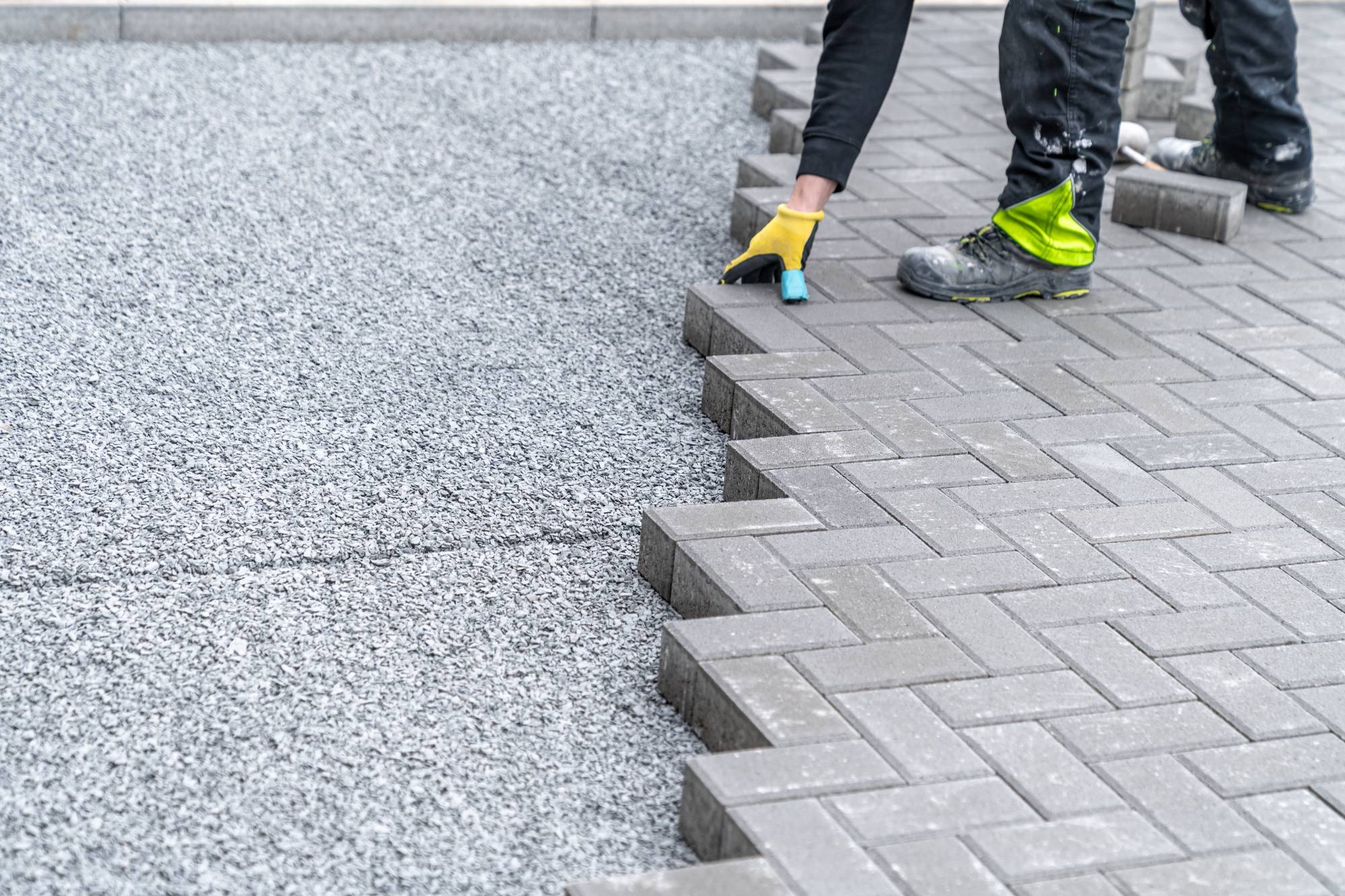
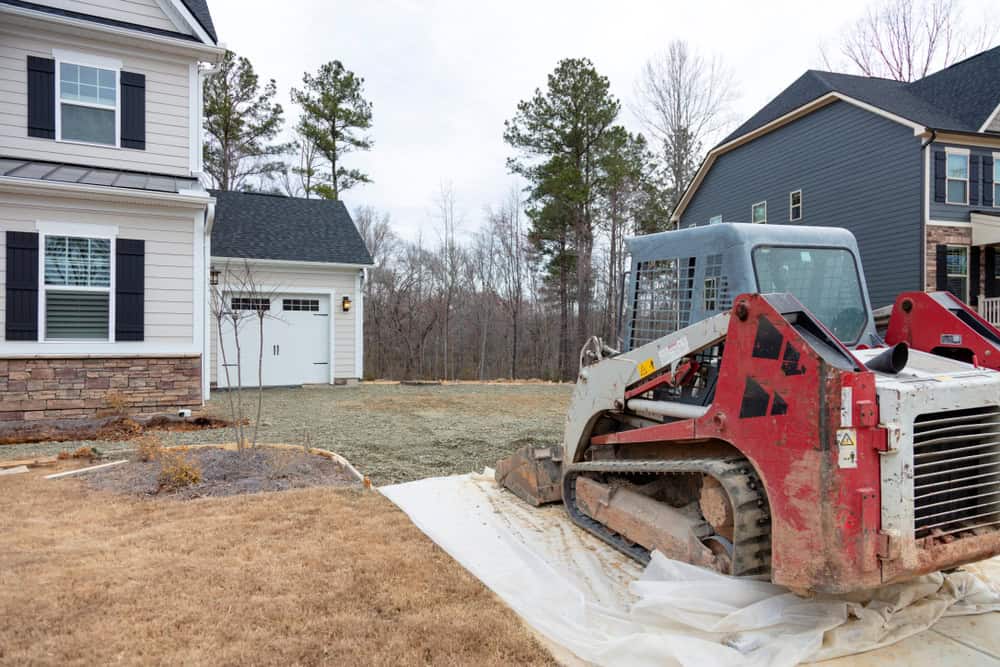
Once the plan is set and the estimate is agreed to in writing, the installation begins with demolition and removal of the existing surface. The base work comes next excavation, grading, and compacted aggregate and this is where the quality is actually determined. The surface pavers go down after the base is right, not before. Joint sand is applied and compacted into the seams to lock the surface, resist weed intrusion, and prevent washout from Islip’s coastal rain events.
The final walkthrough confirms everything meets the agreed scope before the job is considered complete. Written estimate, in-house crew, documented process that’s how we work every time.

Brick paver driveway installation in Islip, NY typically runs between $10 and $45 per square foot installed, with most full driveway projects landing in the $6,000 to $18,000 range depending on size, layout, and site conditions. That’s a wider range than most people expect, and the reason is straightforward: the base preparation, drainage requirements, and permit needs vary significantly from one Islip property to the next. A waterfront property near the Great South Bay with sandy soil and a required driveway apron permit is a different project than an inland home in Islip Terrace with clay-heavy soil and an existing concrete base.
Compared to asphalt which typically needs resurfacing every 7 to 10 years and full replacement within 15 to 20 a properly installed brick paver driveway can last 50 years or more. The cost-per-year math changes significantly when you factor that in. Concrete falls somewhere in between on lifespan, but it doesn’t offer the repairability of pavers. When a concrete slab cracks, you’re looking at section replacement. When a paver shifts, you reset it.
Our written estimate breaks down exactly what you’re paying for: materials, labor, base preparation, and any permit or site-specific requirements. No line items hidden, no costs added after the fact.

Yes, in many cases. The Town of Islip requires a Right-of-Way Work Permit from the Department of Public Works any time work is performed within the public right of way and that includes new driveway aprons, curb cuts, and sidewalk connections. If your new driveway connects to the road at the apron, that permit applies to your project. It’s not optional, and a contractor who doesn’t bring it up is either unaware or skipping it, which creates a code violation problem for you down the road.
If your property sits near one of Islip’s bayfront canals or waterways which is more common in the hamlet than in most other Suffolk County communities a Wetlands Permit may also be required before work can begin. We handle the permit process as part of the project. You don’t need to navigate the Town of Islip DPW on your own, but it’s worth knowing upfront so there are no timeline surprises once the project is underway.
Most brick paver driveway projects in Islip, NY fall between $6,000 and $18,000, with installed costs typically ranging from $10 to $45 per square foot depending on the paver style, driveway size, and what the site requires. That range exists because no two Islip properties are identical a home closer to the Great South Bay with sandy soil and a permit-required apron involves different prep work than a property further inland with heavier clay soil and an existing asphalt base.
The biggest driver of cost that homeowners underestimate is base preparation. Excavation depth, aggregate material, and drainage slope all affect the final number and they’re also what determines whether the driveway holds for 10 years or 50. Cutting corners on the base is how you end up with a driveway that looks fine at installation and starts failing within a few seasons. Our written estimate breaks down every line item so you know exactly what you’re paying for before any work begins.
A properly installed brick paver driveway can last anywhere from 25 to 100 years with standard maintenance. Asphalt typically needs resurfacing every 7 to 10 years and full replacement within 15 to 20. Poured concrete holds up longer than asphalt usually 25 to 30 years but when it cracks, you’re replacing sections, not individual units. With brick pavers, a single damaged paver can be lifted and reset without disturbing the surrounding surface.
On Long Island’s South Shore, where freeze-thaw cycles put real stress on any paved surface every winter, that repairability is a practical advantage over time. The ground moves here especially in Islip, where soil conditions vary between sandy loam near the bay and heavier clay further inland. A paver system that can be adjusted and reset as conditions change will outperform a rigid concrete slab that cracks under the same pressure. Over the life of a home in the 11751 ZIP code, the total cost of ownership for a well-built paver driveway is lower than it appears at the point of installation.
Weeds between pavers are an installation problem, not an inevitable outcome. When you see a paver driveway on Long Island overgrown with weeds a few years after installation, it usually means one of two things: the wrong joint material was used, or it wasn’t applied correctly. Standard sand washes out over time and leaves open joints that weeds take over. Polymeric joint sand is different it binds when activated with water, hardens in the joints, and creates a surface that resists weed growth, deters insects, and holds up against rain washout.
In Islip, where coastal rain events and seasonal ground movement can accelerate joint erosion, polymeric sand isn’t optional it’s the right call from day one. We use it as a standard part of the installation process. You’ll still want to reseal the driveway every couple of years to maintain the joint integrity and protect the paver surface from salt air and staining, but the weed problem that plagues poorly installed driveways doesn’t have to be part of your experience.
Spring and fall are the best windows for brick paver driveway installation in Islip, NY. Spring roughly March through May is when most homeowners are assessing winter damage and booking contractors. The ground has thawed, temperatures are stable enough for proper base compaction, and you have the full warm season ahead before the next freeze-thaw cycle begins. Fall September through October is the other strong window. Temperatures are ideal, contractors are still available, and getting the project done before winter means the base has time to settle and cure before the cold hits.
Summer is workable but comes with heat and scheduling pressure Islip’s waterfront character drives a lot of outdoor project demand in late spring and early summer, so contractors fill up quickly. If you’re thinking about a driveway project, reaching out in late winter or early fall gives you the best shot at getting on our schedule before the peak season crowds it out. We provide free written estimates year-round, so there’s no downside to getting the process started early.
Sandy soil drains well, which sounds like a good thing and in some ways it is. But it also shifts more easily than compacted clay, which means edge restraint and base depth matter more on properties close to the Great South Bay than they would on a heavier-soil lot further inland. If the base isn’t excavated deep enough or the edge restraints aren’t properly anchored, sandy soil allows the paver system to migrate laterally over time. You end up with gaps, uneven surfaces, and pavers that rock underfoot.
The fix isn’t complicated, but it has to be built in from the start. Proper excavation depth, a well-compacted aggregate base, and correctly installed edge restraints keep the system locked in place regardless of what the soil is doing underneath. We’ve been working in South Shore communities like Islip, East Islip, and Bay Shore long enough to know where the sandy soil conditions are most pronounced and how to account for them in the base design. It’s one of the reasons a local contractor with real experience in this specific area builds a more durable driveway than one who treats every Long Island property the same.
Other Services we provide in Islip