If you’ve owned a home in Smithtown for more than a few winters, you already know what happens to a poorly installed driveway. The cracks show up after the first bad freeze. The surface starts lifting in spots. Water gets in, freezes, expands, and the cycle repeats until you’re looking at a full replacement. The Town of Smithtown’s own Highway Department deals with this every spring rehabilitating roads damaged by freeze-thaw cycles season after season. Your driveway faces the same conditions, without any municipal crew coming to fix it.
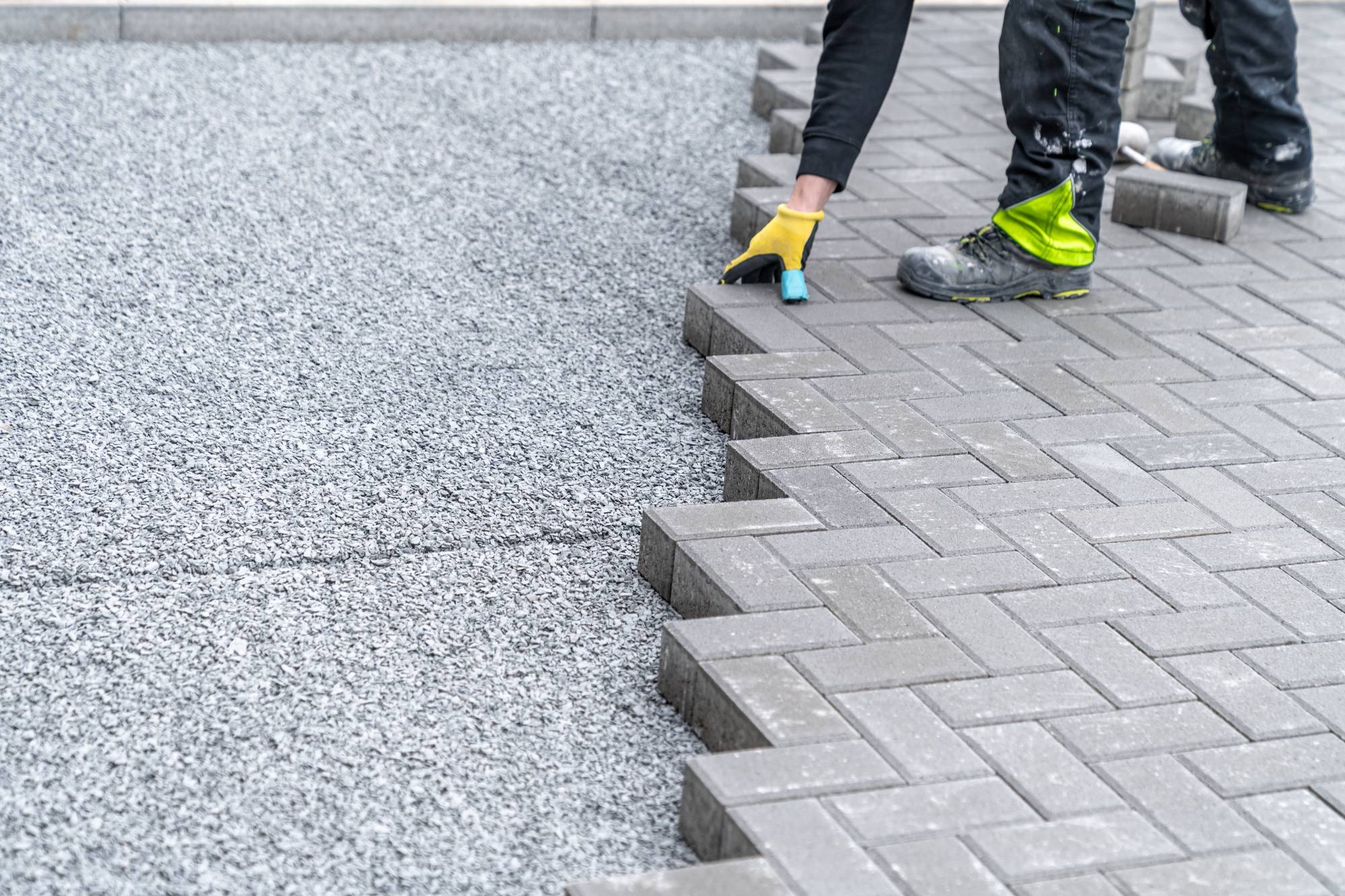
A brick paver driveway installed on a properly compacted aggregate base doesn’t just look better than asphalt it’s built to handle what Smithtown’s North Shore climate actually delivers. Individual pavers flex slightly with ground movement instead of cracking in slabs. If one paver is ever damaged, it gets replaced on its own. You’re not tearing out a 600-square-foot surface because of one bad spot.
There’s also the property value side of this. Smithtown homes are selling at a median of $940,000 right now, with buyers making multiple offers in under a month. The driveway is the first thing anyone sees. In a market this competitive, a brick paver entrance doesn’t just add curb appeal it signals that the whole property has been maintained at that level. That matters to buyers, and it matters to your bottom line when it’s time to sell.
We’ve been doing masonry and exterior work across Smithtown, Nesconset, Kings Park, Head of the Harbor, and the rest of Suffolk and Nassau Counties for over two decades. Every project from a single-car driveway in Nesconset to a sweeping entrance in Head of the Harbor is handled entirely in-house. No subcontractors. The same crew that shows up on day one is the crew that finishes the job.
That matters more than it might sound. When there’s no handoff to a third party, there’s no drop in standards halfway through. There’s one point of contact, one consistent approach, and one team that’s accountable for the finished result. We hold a verified 5.0-star rating on both HomeAdvisor and Angi, and every project starts with a free, written estimate that breaks down exactly what you’re paying for before any work begins.
Smithtown is a community where word travels. Neighbors talk. People ask around before they hire. Our reputation across the North Shore has been built on jobs that still look right years later not on low bids that fall apart by the third winter.

It starts with a free on-site estimate. Someone comes out, looks at your property, and gives you a written breakdown of the scope, materials, and cost. No verbal quotes that shift once work starts. The Town of Smithtown has specific code requirements that factor into this early including the 25% paved surface limit for front yards and driveway apron specifications that require at least 10 feet of width at the curb face and 7 feet at the property line. If your project involves a curb cut or apron modification, permit requirements get addressed at this stage, not after the fact.
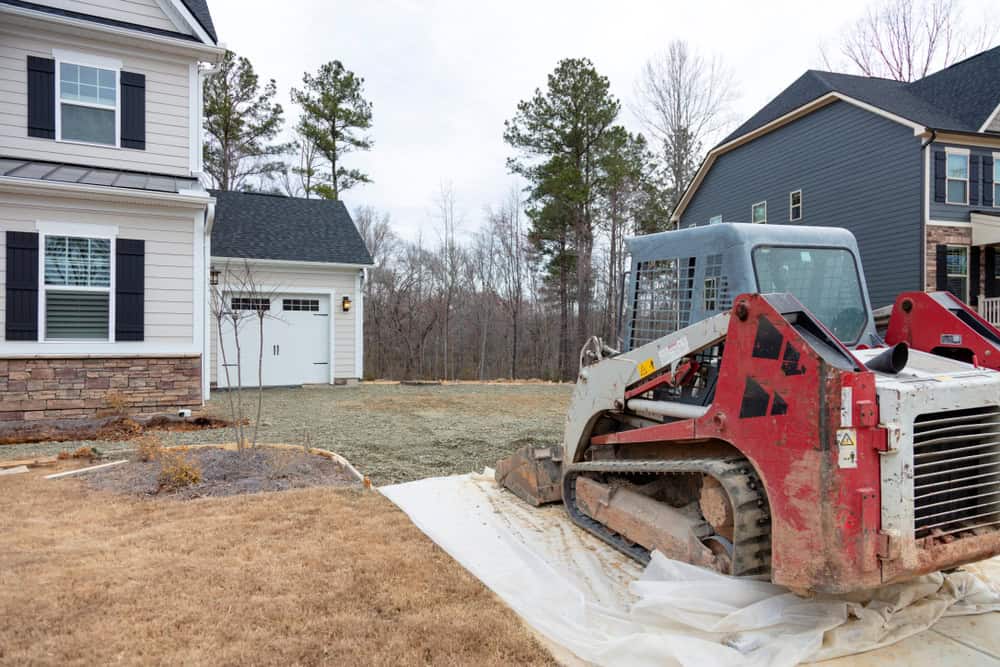
Once the project is scoped and approved, excavation comes first. The existing surface is removed and the base is properly graded and compacted. On Smithtown’s North Shore, where clay-heavy soil expands and contracts with moisture and temperature changes, base depth and compaction aren’t optional details they’re what determines whether your driveway holds its shape for 30 years or starts shifting in five. The aggregate base layer is installed and compacted to the standard required for Long Island’s freeze-thaw conditions.
From there, the pavers are set, edge restraints are installed to lock the field in place, and polymeric joint sand is compacted into the joints to resist weed growth and water infiltration. The final walkthrough covers grading, drainage, and apron transition making sure the finished surface sheds water correctly and meets Town of Smithtown’s construction specifications.

Brick paver driveway installation in Smithtown, NY typically runs between $18 and $23 per square foot installed. For a standard two-car driveway around 600 square feet, that puts the total project in the $10,800 to $13,800 range. Larger driveways, circular layouts, or estate-scale entrances in areas like Kings Park or Head of the Harbor will run higher depending on square footage, material selection, and site conditions.
What that price includes matters as much as the number itself. A properly priced brick paver installation covers full excavation and removal of the existing surface, a deep aggregate base compacted to freeze-thaw performance standards, paver setting with full edge restraint installation, polymeric joint sand, and apron work that meets Town of Smithtown’s code requirements. When you compare that to the cost of replacing an asphalt driveway every 15 to 20 years which is the realistic lifespan of asphalt under North Shore freeze-thaw conditions the total cost of ownership on a brick paver driveway is frequently lower over time, not higher.
The comparison to poured concrete is worth understanding too. Concrete costs less upfront in many cases, but it cracks under freeze-thaw stress and requires full-section removal when it fails. Brick pavers allow individual replacement without touching the surrounding surface. In Smithtown’s climate, that repairability isn’t a minor perk it’s a meaningful long-term advantage. Every estimate from us is written, detailed, and delivered before a single shovel goes in the ground.

The installed cost for brick paver driveways in Smithtown, NY generally falls between $18 and $23 per square foot. A standard two-car driveway roughly 600 square feet lands between $10,800 and $13,800 depending on the materials selected, the condition of the existing surface, and any site-specific factors like slope, drainage, or apron work required by the Town of Smithtown.
A few things affect where your project lands in that range. Larger driveways or more complex layouts circular drives, estate entrances in areas like Head of the Harbor or Kings Park, or projects requiring significant excavation depth due to clay soil conditions will come in toward the higher end. Simpler rectangular driveways on flatter lots with straightforward apron transitions typically come in lower. The best way to get an accurate number is a written estimate based on your actual property, which we provide at no cost and no obligation.
A properly installed brick paver driveway can last 25 to 75 years with routine maintenance primarily resealing every few years and occasional joint sand replenishment. The key phrase there is “properly installed.” In Smithtown’s North Shore climate, where freeze-thaw cycles repeat throughout the winter and the underlying soil is clay-heavy and reactive to moisture, the base preparation is what determines longevity. A driveway built on an inadequate base will shift, sink, and develop lips regardless of how good the pavers themselves are.
Compare that to asphalt, which typically needs resurfacing every 10 to 15 years in Long Island’s climate and full replacement within 25 years. Poured concrete lasts longer than asphalt but is prone to cracking under freeze-thaw stress and requires full-section removal when it fails. Brick pavers, installed on a correctly compacted aggregate base designed for Suffolk County’s North Shore soil conditions, hold their shape and remain individually repairable for decades. The lifespan advantage is real and it compounds over time.
The Town of Smithtown has specific, codified regulations that govern how much of your yard can be paved and how your driveway apron must be built. Under town code, no more than 25% of required front, side, or rear yards may consist of paved surfaces. There are exceptions the 25% limit can be exceeded to accommodate a 12-foot swath for a circular driveway, and a 10-foot-wide side-yard driveway for garage access is also permitted beyond that limit.
For driveway aprons the section between your property line and the curb the town requires a minimum width of 10 feet at the curb face and at least 7 feet at the property line, with a one-inch step at the curb cut. The apron must also meet the same construction specification as the adjacent street paving. Projects that involve curb cuts or significant drainage changes may require a permit from the Town of Smithtown Building Department. If your property is in one of the incorporated villages within the town Nissequogue, Head of the Harbor, or Village of the Branch additional local requirements may apply. A contractor unfamiliar with these specifics can leave you with a non-compliant installation that needs to come out and be redone at your expense.
For most Smithtown homeowners, brick pavers hold up better over time than poured concrete primarily because of how each material responds to freeze-thaw cycles. Concrete expands and contracts as a single rigid slab. When ground movement occurs beneath it which is common in Smithtown’s clay-heavy North Shore soil it cracks. Once a concrete section cracks, the repair requires cutting out and replacing that entire section, which rarely blends seamlessly with the surrounding surface.
Brick pavers behave differently. Because they’re individual units set on a compacted base, they can accommodate minor ground movement without cracking. If a paver is ever damaged, it gets swapped out on its own without touching anything around it. From an aesthetic standpoint, brick pavers also align more naturally with Smithtown’s North Shore character the older colonials and craftsman homes in St. James, the estate properties in Head of the Harbor, the wooded lots in Kings Park. A brick paver driveway fits the architectural language of these neighborhoods in a way that a gray concrete slab simply doesn’t. On the cost side, concrete may be slightly lower upfront in some cases, but the repair and replacement costs over a 30- to 50-year period typically favor brick.
Yes, and it’s one of the more common projects we handle across Smithtown and its hamlets. The process involves removing the existing asphalt surface, reassessing the base beneath it, and building the correct aggregate base depth for a brick paver installation. In many cases the old asphalt base can be partially reused if it’s in sound condition, but that’s evaluated on-site not assumed. Skipping a proper base assessment is one of the most common reasons replacement driveways fail within a few years.
One thing worth knowing before you start: the Town of Smithtown’s paved surface percentage limits apply to the finished project regardless of what was there before. If your existing asphalt driveway was oversized relative to the town’s 25% front yard limit, the replacement project is an opportunity to bring the installation into compliance or to confirm that the current footprint already meets code. Either way, it’s worth reviewing before the project begins rather than discovering a compliance issue after the fact. We walk through this during the estimate process so there are no surprises once work starts.
The most reliable signal is a contractor who puts everything in writing before work begins scope, materials, timeline, and cost and who uses their own crew rather than subcontracting the job out. In Smithtown, where the community is close-knit across six hamlets and word travels fast through neighborhoods and the Smithtown Central School District community, contractors who cut corners don’t stay busy for long. Ask directly whether the crew doing your job is employed by the company or hired out. Ask to see proof of licensing and insurance. Ask how they handle post-installation issues if something shifts or settles in the first year.
Verified third-party ratings on platforms like HomeAdvisor and Angi are worth checking, but look at the volume of reviews alongside the rating a 5.0 from three reviews tells you less than a 5.0 from dozens of completed projects. Also ask whether the contractor is familiar with Town of Smithtown’s specific driveway code requirements, including the paved surface percentage limits and apron specifications. A contractor who can speak to those details without hesitation has done this work in this town before. One who gives you a blank look when you bring it up probably hasn’t.
Other Services we provide in Smithtown