Most Great Neck driveways are working against a few things at once. You’ve got Long Island winters that cycle through freeze and thaw dozens of times between December and March. You’ve got mature trees the same ones that make streets like Kings Point Road and Middle Neck Road so beautiful sending roots underneath whatever surface is down there. And you’ve got a home that’s worth serious money, sitting behind a driveway that may not reflect that anymore.
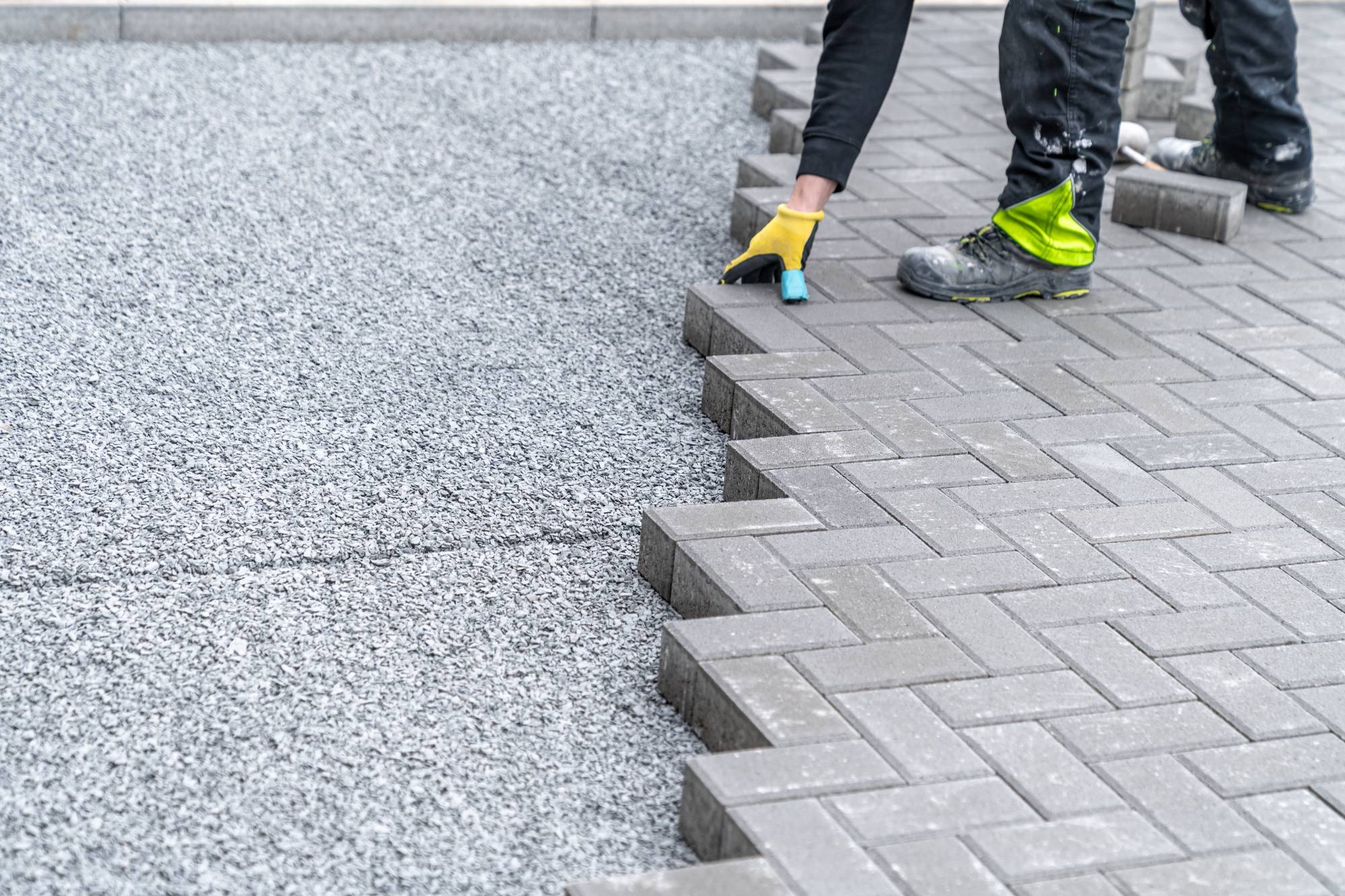
Brick pavers solve these problems in ways asphalt and poured concrete simply can’t. When a root lifts a paver, we lift the brick, address the root, reset the base, and relay the surface often in a single day. No jackhammer. No mismatched patch. With concrete, that same scenario means a full section replacement that never quite blends. That repairability matters in a neighborhood like Great Neck, where preserving mature landscaping is just as important as maintaining the driveway itself.
And when it comes to longevity, the numbers speak clearly. Asphalt lasts 15 to 20 years. Poured concrete runs 25 to 30. Properly installed brick pavers can last anywhere from 25 to over 100 years. For a home already valued near $1,100,000, that’s the proportionate investment one you make once and don’t think about again for decades.
We’ve been serving Nassau and Suffolk County homeowners for over 20 years. That means we’ve installed driveways through enough Long Island winters to know exactly what fails and exactly why. The North Shore’s variable soils, the peninsula drainage patterns, the village-level permit requirements across Great Neck’s nine incorporated villages Kings Point, Great Neck Estates, Great Neck Plaza, Kensington, Saddle Rock, Russell Gardens, Thomaston, and Lake Success none of that is new territory for our team.
Every project we handle is done entirely in-house. The crew that shows up to excavate is the same crew that sets the final paver. No handoffs, no subcontractors you’ve never met, no accountability gaps. For Great Neck homeowners who expect that level of service in every area of their lives, it matters that one company is responsible for every inch of the work.
We hold a 5.0 rating on both HomeAdvisor and Angi, are fully licensed and insured in Nassau County, and offer free written estimates no verbal promises, no surprises on the final bill.

It starts with a free on-site estimate. We walk the property, look at what’s there now, evaluate drainage, check the slope, and ask the right questions before anything is proposed. Because Great Neck’s nine incorporated villages each have their own building departments Kings Point, Great Neck Estates, Kensington, and the others all operate independently permit requirements vary by location. We handle that process, so you’re not navigating village building departments on your own.
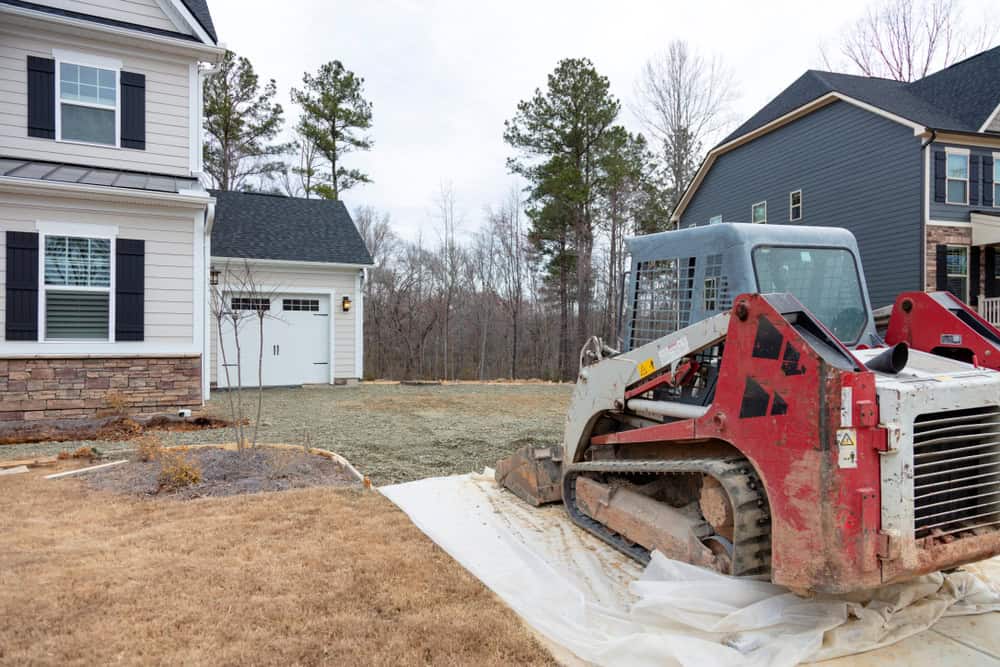
Once the project is approved and scheduled, excavation goes down to the appropriate depth typically six to eight inches for a vehicle-bearing driveway. The base is where most of the real work happens, and it’s where cheaper contractors cut corners because you’ll never see it once the pavers are down. We compact the aggregate base in measured lifts, install the bedding sand layer, and set the pavers to the correct pattern and slope. Polymeric joint sand is swept in and locked down to resist weed intrusion and prevent shifting.
After installation, you’ll get clear guidance on sealing pavers sealed every two years perform reliably through Nassau County’s freeze-thaw cycles without cracking, shifting, or heaving. The goal isn’t just a driveway that looks good on day one. It’s one that still looks good in year twenty.

Brick paver driveway installation in Great Neck, NY typically runs between $10 and $45 per square foot installed, with most residential projects landing between $12,000 and $25,000 depending on the size of the driveway, the material selected, and what’s being removed. That range exists because not every driveway is the same a standard two-car approach in Great Neck Plaza is a different scope than a long estate driveway in Kings Point or Great Neck Estates.
What drives the cost up or down comes down to a few factors: the grade and style of brick you choose, the depth of excavation required based on your specific soil conditions, whether the existing surface needs to be broken out and hauled, and any village permit fees that apply to your property. Nassau County DPW requirements for curb cuts and road openings can also factor in depending on your access point. We walk through all of this in the estimate nothing gets added after the fact.
If you’re comparing brick paver driveway cost per square foot in Great Neck, NY against a concrete or asphalt quote, keep the full picture in mind. Asphalt is cheaper upfront but needs resurfacing every 10 to 15 years and has no repair flexibility. Concrete is more durable but cracks under freeze-thaw stress and requires full-section replacement when it does. Brick costs more to install and significantly less to own over time.

For most residential driveways in Great Neck, NY, you’re looking at a range of $10 to $45 per square foot installed, with total project costs typically falling between $12,000 and $25,000. Where your project lands in that range depends on the size of the driveway, the specific brick or paver material you choose, how deep the excavation needs to go given your soil conditions, and what it costs to remove and haul whatever surface is currently down.
Village permit fees are also part of the equation in Great Neck, since each of the nine incorporated villages Kings Point, Kensington, Great Neck Estates, and the others has its own building department with its own fee schedule. If your driveway connects to a Nassau County road, there may be additional DPW requirements for the curb cut. We factor all of that into the written estimate upfront, so the number you see is the number you pay.
A properly installed brick paver driveway can last anywhere from 25 to over 100 years. The key phrase there is “properly installed” because Long Island’s freeze-thaw cycle is the single biggest stress test any driveway faces. Water gets into gaps, freezes, expands, thaws, and repeats that process dozens of times between December and March. If the base wasn’t built correctly, that cycle will expose it within a few winters.
What protects against that is adequate excavation depth typically six to eight inches of compacted aggregate for a vehicle-bearing driveway combined with correct drainage slope and polymeric joint sand that locks the surface together and keeps water from working its way down. Pavers sealed every two years add another layer of protection. When those elements are in place, Nassau County winters are not a problem. When they’re skipped to save time or money, the driveway tells on itself by year three or four.
In most cases, yes and the specific requirements depend on which village your property falls within. Great Neck is made up of nine incorporated villages, each with its own building department: Great Neck, Great Neck Estates, Great Neck Plaza, Kings Point, Kensington, Saddle Rock, Russell Gardens, Thomaston, and Lake Success. What’s required in one village may differ from what’s required in another, so there’s no single blanket answer for the entire Great Neck area.
Beyond the village level, if your driveway connects to a Nassau County-maintained road, you’ll also need to coordinate with the Nassau County Department of Public Works for any road opening or curb cut work. And if your property fronts a state road like Northern Boulevard (Route 25A), a New York State DOT residential driveway permit may apply. We’re familiar with the permit landscape across Great Neck’s villages and handle that process as part of the project you don’t need to figure it out on your own.
Concrete is generally cheaper to install typically $6 to $12 per square foot compared to $10 to $45 for brick pavers. But that upfront gap narrows significantly when you factor in how each material performs over time in a place like Great Neck. Concrete is vulnerable to Long Island’s freeze-thaw cycles. Once it cracks and it will crack you’re looking at full-section replacement, because patches don’t blend and the structural integrity of the slab is compromised.
Brick pavers cost more to install and less to own over time. Individual pavers can be lifted, replaced, or reset without touching the surrounding surface. In a neighborhood with mature trees, that repairability is especially valuable root intrusion that would require a concrete jackhammer job becomes a straightforward same-day repair with pavers. When you’re maintaining a home already valued near $1,100,000, the long-term math on brick pavers tends to make more sense than the short-term savings on concrete.
Tree roots can absolutely affect a paver driveway, and it’s one of the most common concerns for homeowners in Great Neck given how mature the tree canopy is throughout the peninsula’s villages. The good news is that brick pavers handle root intrusion far better than any other driveway material. When a root lifts a section of pavers, the repair process is straightforward: lift the affected bricks, address the root, recompact the base if needed, and reset the pavers. The repaired area blends back into the surrounding surface cleanly.
With poured concrete or asphalt, the same scenario is a much bigger job. Concrete requires breaking out the affected slab, which often damages adjacent sections, and the replacement patch rarely matches the original surface. Asphalt repairs are more flexible but still leave visible seams and don’t address the root cause. If you’re in Kings Point, Kensington, or anywhere along the tree-lined streets of Great Neck, brick pavers’ repairability isn’t just a nice feature it’s a practical reason to choose them.
This is worth asking carefully, because driveway paving is one of the more documented categories for contractor fraud. The BBB has recorded cases where homeowners lost over $8,000 to paving contractors who collected deposits, did substandard work, or disappeared entirely. A few things to check before signing anything: confirm the contractor is licensed and insured in Nassau County, ask specifically whether they use subcontractors or handle all work in-house, and make sure you receive a written estimate that itemizes materials, labor, base preparation, and any permit costs.
A contractor who knows Great Neck well should be able to speak to the village-level permit requirements for your specific location, the soil and drainage conditions on the North Shore, and what proper base depth looks like for a vehicle-bearing driveway in this climate. Vague answers to specific questions are a red flag. We’re fully licensed and insured, operate entirely with our own in-house crew, and provide free written estimates before any work begins so you know exactly what you’re agreeing to before a single shovel hits the ground.
Other Services we provide in Great Neck