Here’s what most Huntington homeowners don’t find out until it’s too late: the reason driveways fail on Long Island has almost nothing to do with the surface material and everything to do with what’s underneath it. When the base isn’t excavated to the right depth 18 to 24 inches below grade, which is where the frost line sits in this part of Suffolk County water gets in, freezes, expands, and pushes the surface up from below. By the third winter, you’re looking at cracks, uneven edges, and a driveway that looks ten years older than it is.
Huntington’s North Shore location adds another layer to this. The sandy coastal soil near the Sound shifts more easily than inland soil, and the moisture exposure in areas like Halesite, Centerport, and Lloyd Harbor accelerates that process. A properly installed brick paver driveway handles these conditions better than poured concrete because each unit can flex and settle independently there’s no monolithic slab to crack. And if one brick ever does get damaged, you replace that brick. Not a section. Not the whole driveway. Just that brick.
That’s the part of the cost conversation most contractors skip. Asphalt needs resealing every three to five years and full replacement every fifteen to twenty. Brick pavers, installed correctly, last anywhere from twenty-five to seventy-five years. On a home valued near $900,000 in one of the fastest-appreciating real estate markets in the country, that math matters.
We’ve been working across Suffolk and Nassau Counties for over twenty years. That means we’ve installed driveways from Cold Spring Harbor to Commack, from the historic streets near Huntington village to the newer developments along Route 110 through Melville and South Huntington. We know what Long Island soil does in February. We know what the Town of Huntington requires before a single paver goes down near the right-of-way. That’s not something you pick up from a manual.
What makes a real difference is that we don’t hand your project off to a subcontractor once the contract is signed. The team that shows up to excavate is the same team that sets the base, lays the pavers, and does the final walkthrough with you. One crew. One standard. One point of contact from estimate to completion.
We hold a 5.0-star rating on both HomeAdvisor and Angi not because we ask for reviews after every job, but because the work holds up. Free written estimates, no pressure, and no surprises when the invoice arrives.

It starts with a free written estimate. We come out, look at your property, talk through your goals, and put together a plan specific to your home not a one-size-fits-all quote pulled from a rate sheet. If you’re in the Huntington village area or near any of the town’s incorporated communities, we’ll also flag whether your project requires a permit from the Town of Huntington Highway Office. Any work in the right-of-way needs that permit, and because pavers aren’t concrete or asphalt, an additional permit is required on top of the standard $100 filing. Most homeowners don’t know that going in. We handle it so you don’t get caught off guard later.
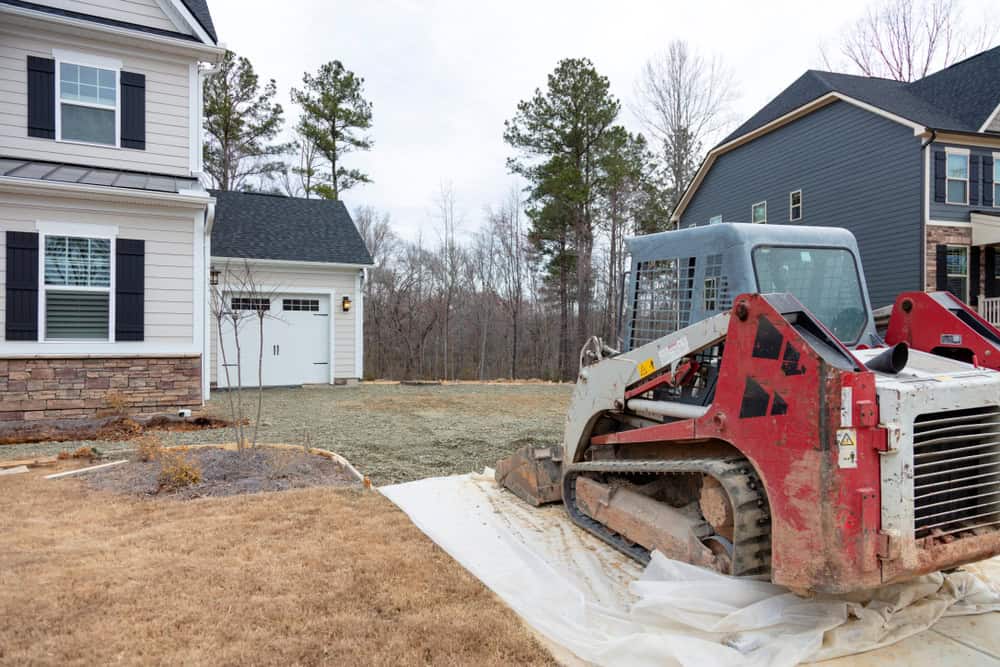
Once the project is approved, excavation comes first. On Long Island, that means going down 18 to 24 inches to get below the frost line this is non-negotiable if you want a driveway that doesn’t heave by the third winter. The base is compacted in layers, graded for drainage, and prepared with edge restraints before a single paver is set. In areas with sandier coastal soil which is common across northern Huntington near the Sound the drainage component of this phase is especially critical.
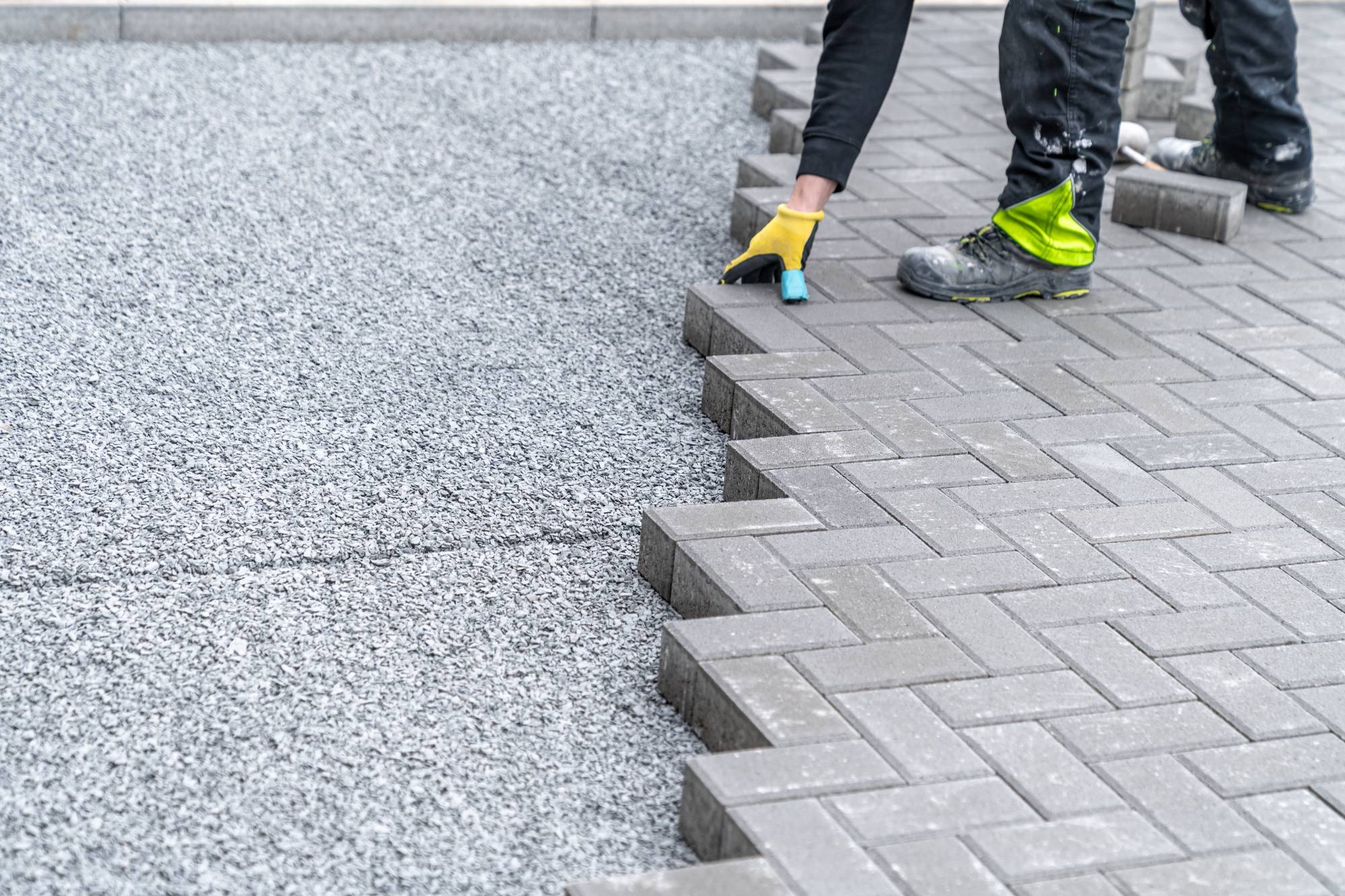
From there, the pavers go down in your chosen pattern, joints are filled with polymeric sand to resist weed growth and shifting, and the finished surface is inspected before we walk the project with you. The whole process is managed start to finish by the same in-house crew no handoffs, no gaps in accountability.

Brick paver driveway cost per square foot in Huntington, NY typically runs in the range of $17 to $20 installed for concrete pavers, with traditional brick and natural stone running higher depending on the material and pattern selected. For a standard two-car driveway roughly 24 by 40 feet most Huntington homeowners are looking at $16,000 to $20,000 for concrete pavers as a baseline. Belgian block apron borders, which are a common finishing touch on North Shore Long Island properties and complement brick paver installations particularly well, typically add $15 to $25 per linear foot.
Those numbers are higher than asphalt upfront. But when you factor in resealing costs every few years, ongoing crack repairs, and a full replacement cycle every fifteen to twenty years, the cost to install a brick paver driveway in Huntington, NY often works out to less over the long run especially on a property where you plan to stay. And in a market where home values have been appreciating at nearly 12% annually, a driveway that adds genuine curb appeal and longevity is not a luxury line item. It’s a reasonable investment in an asset that’s already performing.
Every DLZ project includes full excavation to frost-line depth, a compacted and graded aggregate base, edge restraint installation, paver setting in your chosen pattern, polymeric joint sand, and a final walkthrough. The estimate you receive is written, itemized, and binding what’s on the paper is what you pay.

The honest answer is that brick paver driveway cost per square foot in Huntington, NY depends on the material you choose, the size of the driveway, and what the base requires. Concrete pavers typically run $17 to $20 per square foot installed. Traditional brick and natural stone run higher. For a standard two-car driveway at 24 by 40 feet, you’re generally looking at $16,000 to $20,000 for concrete pavers as a starting point with larger driveways or premium materials pushing that range up from there.
What affects cost more than most people expect is base preparation. In Huntington and across Long Island, proper excavation has to reach 18 to 24 inches below grade to get below the frost line. That’s a significant amount of material removal and compacted base work, and contractors who skip depth to lower their bid are setting you up for a failing driveway within a few years. A written, itemized estimate from us will show you exactly where every dollar is going no vague line items, no surprises at the end.
For most Huntington homeowners, yes and the math is the reason why. Asphalt driveways need to be resealed every three to five years, repaired on an ongoing basis as cracks develop, and fully replaced every fifteen to twenty years. Brick pavers, when installed correctly with a proper base, last twenty-five to seventy-five years and don’t require that cycle of maintenance costs. Over a thirty-year period, a properly installed brick driveway in Huntington, NY often ends up being the more cost-effective choice when you run the full numbers.
There’s also the repairability factor that asphalt simply can’t match. If a paver gets damaged whether from a heavy impact or a tree root you pull that brick, replace it, and the repair is invisible. With asphalt or poured concrete, visible patch repairs are the best you can do. On a home in Huntington with a median value approaching $963,000, a driveway that looks right and holds up for decades is a different kind of investment than a surface you’re patching every few years.
Yes, and this is something a lot of homeowners don’t find out until there’s already a problem. The Town of Huntington requires a permit from the Highway Office for any work in the town right-of-way that’s typically the apron area between your property line and the street. The standard permit fee is $100. But here’s the part most contractors don’t mention upfront: because pavers are not concrete or asphalt, an additional permit is required on top of that when the installation involves the right-of-way. That’s a Town of Huntington-specific requirement, and it applies to brick, Belgian block, and any non-standard paving material.
If your project is within one of Huntington’s incorporated villages Asharoken, for example the permitting process runs through the village rather than the town, which is a separate set of requirements entirely. We work across all of these jurisdictions regularly and handle the permit process as part of the project. You won’t be left to figure out the paperwork on your own or risk a stop-work order because something was filed incorrectly.
Better than poured concrete, when the installation is done right. The reason poured concrete driveways crack in Long Island winters isn’t just the cold it’s the freeze-thaw cycle. Water gets into the base or the surface, freezes, expands, and creates pressure that the rigid slab can’t absorb. Over time, that pressure wins. Brick pavers handle this differently because each unit is independent. They can shift slightly as the ground moves and settle back without cracking, as long as the base beneath them is properly compacted and drained.
The key is base depth. In Huntington, the frost line sits 18 to 24 inches below grade. Any base that doesn’t reach that depth is going to let ground movement affect the surface above it. We excavate to the correct depth on every project not the depth that gets the job done cheapest, but the depth that keeps the driveway stable through fifteen or twenty Long Island winters. For properties in northern Huntington near the Sound, where sandy coastal soil and higher moisture levels add to the challenge, getting the drainage grade right during base prep is just as important as the depth itself.
Brick pavers are made from fired clay, which gives them their characteristic warm, earthy color and texture. Concrete pavers are manufactured from cement and aggregate, which allows for a wider range of shapes, colors, and finishes at a generally lower price point. Both are interlocking systems that perform well in freeze-thaw climates when installed correctly, and both offer the individual-unit repairability advantage that poured concrete doesn’t.
The choice between them usually comes down to aesthetics and budget. In Huntington’s older neighborhoods particularly near the historic village district and the colonial-era architecture that defines much of the town’s character traditional brick pavers complement the surrounding homes in a way that concrete pavers in a modern finish don’t always match. For newer construction or properties where the design is more contemporary, concrete pavers offer more flexibility. We work with both materials and can walk you through the options during your free estimate, including pattern choices like herringbone, running bond, and basket-weave that affect both the look and the structural performance of the finished surface.
For a standard two-car driveway in Huntington, most installations take between three and five days from excavation to final cleanup, depending on the size of the project, the pattern selected, and whether any permit processing is required before work can begin. If your project involves the town right-of-way which triggers the Town of Huntington’s permitting requirement for non-asphalt and non-concrete materials that process needs to be completed before installation starts, so building that time into the project timeline is important.
Seasonally, spring and fall are the most in-demand windows for driveway paving in Huntington. Spring projects book up quickly as homeowners assess freeze-thaw damage after winter, and fall slots fill fast for homeowners who want their driveway finished before the next freeze cycle begins. If you’re planning a project for either of those windows, getting your estimate scheduled early gives you the best chance of landing your preferred start date. We provide a written project timeline along with your estimate so you know exactly what to expect and when.
Other Services we provide in Huntington