Your backyard has potential you haven't tapped yet. Learn how the right patio and walkway design creates outdoor spaces that work for how you actually live.
Share:
Summary:
Your outdoor space should do more than look good in photos. It needs to handle Long Island’s weather, work with your property’s specific conditions, and support how you actually live outside—not how someone else thinks you should.
The right patio creates a foundation for everything else. It’s where you eat dinner on summer nights, where kids play while you’re grilling, where you finally have room to host without cramming everyone inside. Walkways connect these spaces and guide movement through your yard without trampling grass or creating muddy paths.
Design starts with understanding your property. Suffolk and Nassau County homes deal with clay soil, coastal moisture, freeze-thaw cycles, and drainage challenges that don’t exist everywhere. Materials and installation methods that work in other climates fail here. That’s why local experience matters more than a pretty portfolio.

Concrete cracks. That’s not pessimism—it’s physics. When water seeps into concrete, freezes, and expands during Long Island winters, cracks form. Then you’re patching, sealing, and eventually replacing the whole thing.
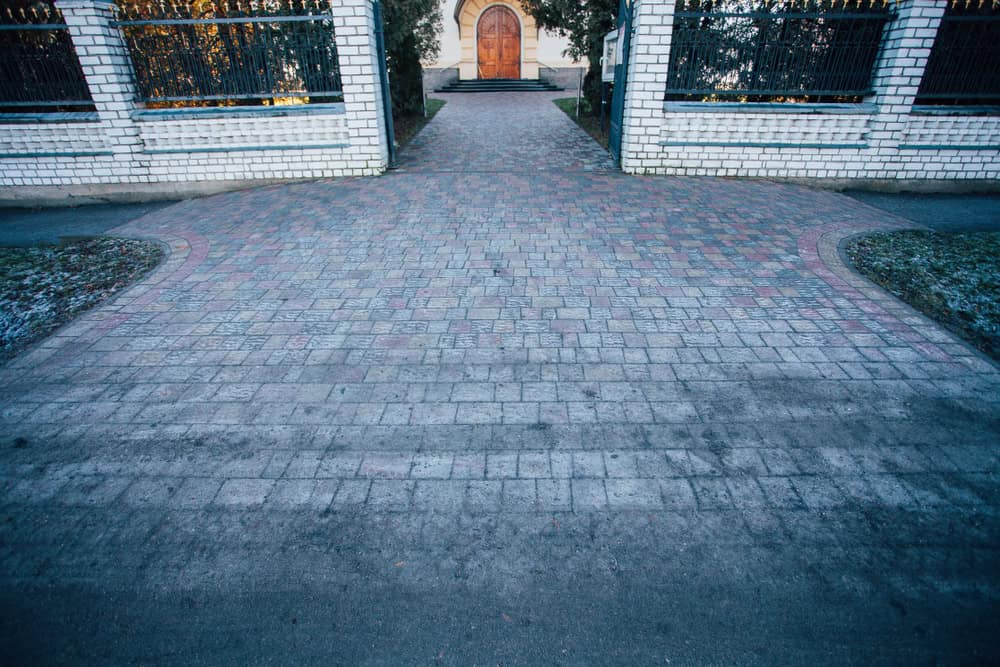
Pavers handle freeze-thaw cycles differently. Individual units flex with ground movement instead of cracking. Water drains through joints rather than pooling on the surface. When one paver does get damaged—rare, but possible—you replace that single piece, not the entire patio.
Cambridge Pavers, bluestone, and natural stone options all work well here, but they’re not interchangeable. Bluestone offers a classic Long Island look and handles salt air without deteriorating. Cambridge Pavers come with ArmorTec protection against stains and fading. Natural stone like granite provides unique character that manufactured options can’t match.
Cost matters, but so does lifespan. Professional paver installation typically runs $30 to $45 per square foot in Long Island. That’s higher than concrete’s $5 to $10 per square foot. But pavers last 25 to 30 years with basic maintenance—sometimes longer. Concrete starts showing problems within 10 to 15 years, then needs expensive repairs or full replacement.
The real question isn’t which material costs less upfront. It’s which one you’ll still be happy with in 20 years, and which one won’t need major work before then.
Water goes somewhere. If your walkway installation doesn’t account for where, you’ll deal with pooling, ice patches, and foundation problems that cost more to fix than doing it right the first time.
Long Island properties have specific drainage challenges. Clay soil in many areas holds water instead of absorbing it. Coastal locations deal with higher water tables. Properties with slopes need grading that directs runoff away from structures, not toward them.
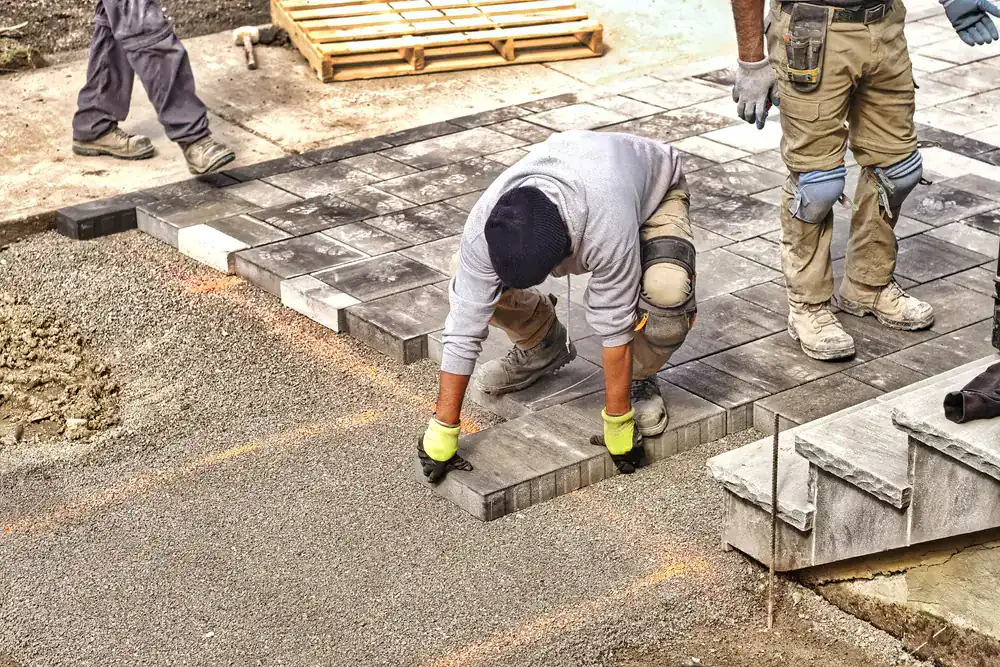
Proper walkway installation starts below the surface. Excavation typically goes 8 to 10 inches deep to accommodate base layers and account for the frost line. Contractors who skip this step or cut corners on base preparation deliver walkways that settle, shift, or develop low spots where water collects.
The base itself matters as much as the pavers you see. Compacted gravel creates stability that prevents settling. A sand leveling layer allows for precise paver placement. Edge restraints keep everything locked in position so pieces don’t shift outward over time.
Grading establishes a slight slope—usually about 1/4 inch per foot—that moves water away from your home’s foundation. This isn’t optional. Without proper slope, water pools on the walkway surface, creating slip hazards in summer and ice patches in winter.
Most residential walkway projects take 2 to 4 days depending on size and complexity. Day one handles excavation and base preparation. Day two covers sand leveling and paver installation. That timeline assumes normal conditions and a crew that knows what they’re doing. Projects with complicated drainage issues, difficult access, or extensive prep work take longer.
The installation process isn’t exciting to watch, but it determines whether your walkway still looks level and functions properly in 10 years or starts showing problems in three.
Your backyard isn’t just lawn and a few shrubs anymore. It’s potential living space that could actually get used if it worked better.
Outdoor living spaces in 2026 focus on function, not just aesthetics. Homeowners want patios that accommodate furniture without feeling cramped. Walkways that connect different areas without creating awkward paths. Zones for cooking, eating, and lounging that flow naturally instead of feeling forced.
This shift toward functional outdoor design shows up in how people plan projects. Instead of adding a patio and hoping it works, they’re thinking through how they’ll actually use the space. Where does the grill go? How many people need to fit comfortably? What happens when it rains?
The “outdoor room” concept isn’t new, but it’s being executed better. Patios extend your home’s living area outside. Proper lighting makes spaces usable after dark. Outdoor kitchens eliminate constant trips inside. Retaining walls create level areas on sloped properties while adding visual interest.

Retaining walls do more than hold back soil. They create usable flat areas on sloped Long Island properties, define spaces within your yard, and add architectural interest that makes outdoor areas feel intentional rather than accidental.
But they’re also structural elements that can fail spectacularly if built wrong. Walls over four feet typically require engineering analysis and permits. Shorter walls have more flexibility in design and materials, but they still need proper footings, drainage, and construction techniques that account for soil pressure and water movement.
The materials you choose affect both appearance and performance. Concrete block systems offer structural strength and consistent appearance. Natural stone provides character but costs more and requires skilled installation. Many Long Island homeowners choose segmental retaining wall systems that combine engineered stability with attractive finishes.
Outdoor kitchens represent another level of masonry work. You’re not just laying pavers—you’re building structures that support heavy equipment, withstand heat and moisture, and integrate utilities like gas lines, water, and electricity.
A functional outdoor kitchen includes more than a grill. You need counter space for food prep. Storage for tools and supplies. A sink for cleanup. Maybe a refrigerator, pizza oven, or bar area. All of this requires planning that accounts for how you’ll actually use the space, not just what looks good in photos.
The build process for outdoor kitchens involves multiple trades. We handle the structural masonry work and countertops. Plumbers run water lines. Electricians install outlets and lighting. Gas fitters connect appliances. Projects that don’t coordinate these elements properly end up with problems—appliances that don’t fit, utilities in wrong locations, or finishes that don’t match.
Most homeowners in Nassau and Suffolk County spend several weeks on outdoor kitchen projects from design through completion. The timeline depends on complexity, permitting requirements, and weather. But the result is cooking and entertaining space that gets used constantly during warm months and adds serious value to your property.
Let’s talk numbers. Most Long Island homeowners spend between $30 and $45 per square foot for professional paver patio installation. That price includes materials and labor for the complete job—not just slapping down pavers on dirt.
For a typical 300-square-foot patio, you’re looking at $9,000 to $13,500. A larger 500-square-foot space runs $15,000 to $22,500. These ranges account for standard paver materials and straightforward installations without major complications.
Several factors push costs up or down. Material choice makes the biggest difference. Concrete pavers at the budget end cost $2 to $5 per square foot for materials alone. Brick pavers run $4 to $8. Natural stone starts around $10 and can exceed $20 per square foot depending on the type.
Site conditions affect pricing too. Properties with poor drainage need additional work. Difficult access means more labor hours. Removing old concrete or extensive grading adds to the total. These aren’t surprise charges—they’re real work that takes time and materials.
Pattern complexity matters. Simple running bond layouts install faster than herringbone, circular, or custom designs. More cuts and precision work mean higher labor costs. If you want something custom but need to control budget, a simple layout with a contrasting border delivers visual interest without the premium price of complex patterns.
Base preparation costs $8 to $12 per square foot but determines whether your patio lasts decades or starts showing problems in a few years. This includes excavation, grading, and installing compacted gravel and sand layers. Contractors who quote unusually low prices often cut corners here. You’ll pay for it later with settling, drainage issues, or complete failure.
Add-ons like lighting, fire pits, or seat walls increase the total but also increase how much you use the space. A $3,000 fire pit might seem expensive until you realize you’re spending evenings outside instead of inside—getting actual value from your investment.
The real question isn’t whether professional installation costs more than DIY. It’s whether you want to spend weekends excavating, hauling materials, and hoping you got the base prep right, or whether you’d rather hire people who’ve done this hundreds of times and won’t have to redo it in three years.
Your backyard has potential you haven’t tapped yet. The right patio and walkway design transforms outdoor space from something you look at into something you actually use.
Materials that handle Long Island’s freeze-thaw cycles matter. Proper installation that accounts for drainage and soil conditions matters. Working with contractors who understand Suffolk and Nassau County properties matters. These aren’t details—they’re the difference between outdoor spaces that work for decades and projects that need expensive fixes in a few years.
Start by thinking through how you’ll actually use your outdoor space. Then find someone who can execute that vision with the technical knowledge and local experience to do it right the first time. When you’re ready to explore what’s possible for your property, we can guide you through a design process that delivers results worth the investment.
At DLZ Construction and Landscaping Inc., we’ve spent over two decades helping Long Island homeowners transform their outdoor spaces. We understand the specific challenges of Suffolk and Nassau County properties—the soil conditions, the climate, the drainage issues that need addressing. Our intuitive design process eliminates the uncertainty and stress that comes with major outdoor projects, ensuring you know exactly what’s happening at every step.
We use only the best materials rated for Long Island’s freeze-thaw conditions, and all our workers are background-checked and routinely drug tested. As locals, we bring unique insights into the styles and requirements that work best for properties in this area. Whether you’re planning a patio, walkway, retaining wall, or complete outdoor living space, we’ll consider your property’s specific conditions and guide you through choices that align with your vision and practical realities.
Article details:
Share:
Continue learning: