Choosing the right fence for Suffolk County means understanding permits, coastal conditions, and materials that last. Here's what you need to know before you install.
Share:
Summary:
Long Island isn’t like most places. The coastal environment here creates conditions that tear through standard fencing materials faster than you’d expect. Salt spray travels inland further than people realize, and those temperature swings between summer humidity and winter freeze-thaw cycles stress materials in ways that don’t happen twenty miles west.
That’s why Suffolk County has specific building codes for fencing installations. These aren’t arbitrary rules. They exist because contractors learned the hard way what fails when a nor’easter rolls through or when three seasons of salt exposure finally catch up with inferior materials.
Before you install anything, you need to understand what your specific town requires. Brookhaven has different height restrictions than Islip. Some areas require setbacks from property lines. Others have rules about materials for pool enclosures. Getting this wrong means either paying fines or tearing down what you just installed. A professional fence installation can help ensure your project accounts for local requirements and site conditions.

The permit process trips up more homeowners than it should. Not because it’s impossibly complicated, but because each town handles things differently and the consequences of skipping this step are expensive.
In most Suffolk County towns, you need a building permit before installing or replacing a fence. That includes Brookhaven, Islip, Smithtown, and Huntington. The application typically requires a site plan showing exactly where the fence will go, proof that you’ve marked underground utilities, and confirmation that your fence height meets local restrictions. Most residential areas cap backyard fences at six feet and front yard fences at four feet, but your specific property might have additional restrictions based on corner lots or proximity to roadways.
The permit fees run somewhere between seventy-five and a couple hundred dollars depending on your town and whether it’s residential or commercial property. That’s not the expensive part. The expensive part is building without one. If code enforcement shows up, you’re looking at stop-work orders, fines that can hit double the permit cost, and potentially having to remove or modify what you’ve already installed. Some towns require you to reapply and pay again just to make an unpermitted fence legal.
Here’s what makes it more complicated: if you’re in a homeowners association, you need their approval too. Some HOAs have stricter rules than the town. They might limit colors, require specific materials, or restrict fence styles entirely. Check both before you commit to anything.
The timeline matters too. Permit approval can take anywhere from a few days to a few weeks depending on the complexity and the town’s workload. Plan for this. Don’t schedule installation until you have the actual permit in hand, not just the application submitted. Contractors who pressure you to start without permits are telling you everything you need to know about how they operate.
One more thing that catches people: property line disputes. The town wants to see that you’re building on your property, not your neighbor’s. If there’s any question about where the line sits, you’ll need a survey. That’s another few hundred dollars and another week or two, but it beats a lawsuit later.
Wind load calculations aren’t something most homeowners think about until their fence is leaning at a fifteen-degree angle after the first big storm. Out here on Long Island, wind isn’t a sometimes thing. It’s a design requirement.
Coastal winds create lateral pressure that standard installation methods can’t always handle. A fence that would stand fine in central New York might not make it through a Long Island winter. The difference comes down to post depth, concrete footings, and panel design. Posts need to go deeper here, typically thirty inches minimum for a six-foot fence, sometimes more depending on soil conditions and exposure. The concrete footings need to be sized for the wind loads your specific location experiences.
Panel design matters too. Solid privacy panels act like sails. When wind hits a solid six-foot fence with no gaps, the pressure has nowhere to go except into those posts. That’s why some coastal installations use semi-private designs or add small gaps between boards. It’s not about cutting corners. It’s about giving wind somewhere to go instead of pushing your entire fence over.
The soil conditions in Suffolk County add another variable. Sandy soil near the coast doesn’t hold posts the way clay soil does. Rocky soil in other areas makes digging harder but provides better holding power once you’re in. We understand these differences and adjust the installation method accordingly. Someone who learned fencing in Ohio is going to have a learning curve, and your property is not the place for them to get that education.
Proper installation also means understanding how materials expand and contract. PVC and aluminum respond differently to temperature changes than wood. The spacing between panels, the way rails connect to posts, and even the type of fasteners used all matter when you’re dealing with coastal temperature swings. Get these details wrong and you’ll see gaps, warping, or structural failure within the first year.
This is why the cheapest quote isn’t always the smart choice. A contractor who’s cutting the price is cutting something else too, and it’s usually the installation details that determine whether your fence lasts five years or twenty.
Walk through any Suffolk County neighborhood and you’ll see three materials dominating: PVC, wood, and aluminum. Each has legitimate uses. Each also has limitations that matter more here than they would inland.
The material you choose determines your maintenance schedule, how long the fence lasts, and whether it still looks decent after a few Long Island winters. Price matters, but it’s not the only factor. A cheaper material that needs replacing in seven years costs more than a pricier option that lasts twenty.
Understanding how these materials respond to salt air, humidity, temperature swings, and coastal winds tells you what actually works for your specific situation.

PVC fencing has become the default choice for many Long Island homeowners, and there are good reasons for that. The material doesn’t absorb moisture, which means it won’t swell, warp, or rot no matter how much rain or humidity you get. Salt air that eats through other materials doesn’t affect PVC. The color is integrated into the material, not painted on, so you don’t get the fading and peeling that happens with coated products.
Maintenance is minimal. You’re looking at an occasional rinse with a garden hose to remove dirt and salt residue. No staining, no sealing, no repainting every few years. For people who want a fence that just works without becoming a recurring project, PVC delivers.
The coastal wind resistance is solid when properly installed. PVC has some flex to it, which actually helps in high winds rather than fighting against them. The material won’t rust or corrode, and it handles the freeze-thaw cycles that crack and split other materials. You’re looking at a lifespan of twenty-five to thirty years in coastal conditions, sometimes longer if the installation is done right.
Cost sits in the middle to upper range. You’ll pay more upfront than you would for basic wood, but less than premium cedar or high-end aluminum. When you factor in the lack of maintenance costs over the years, the total cost of ownership often ends up lower than materials that seem cheaper initially.
The downsides are worth knowing. PVC can become brittle in extreme cold, though quality products with UV inhibitors handle this better than cheaper versions. The material also has limited color options compared to painted wood or powder-coated aluminum. Most PVC comes in white, tan, or gray. If you want something outside that range, you’re probably looking at a different material.
Heat can be another consideration. Dark-colored PVC in direct summer sun gets hot to the touch. Not a problem for most applications, but worth knowing if you have young kids who might lean against it or pets that like to rest near the fence line.
For Suffolk County specifically, PVC makes sense when you want privacy, low maintenance, and materials that handle coastal conditions without constant attention. It’s particularly popular for backyard privacy fences and pool enclosures where the combination of durability and minimal upkeep matters most.
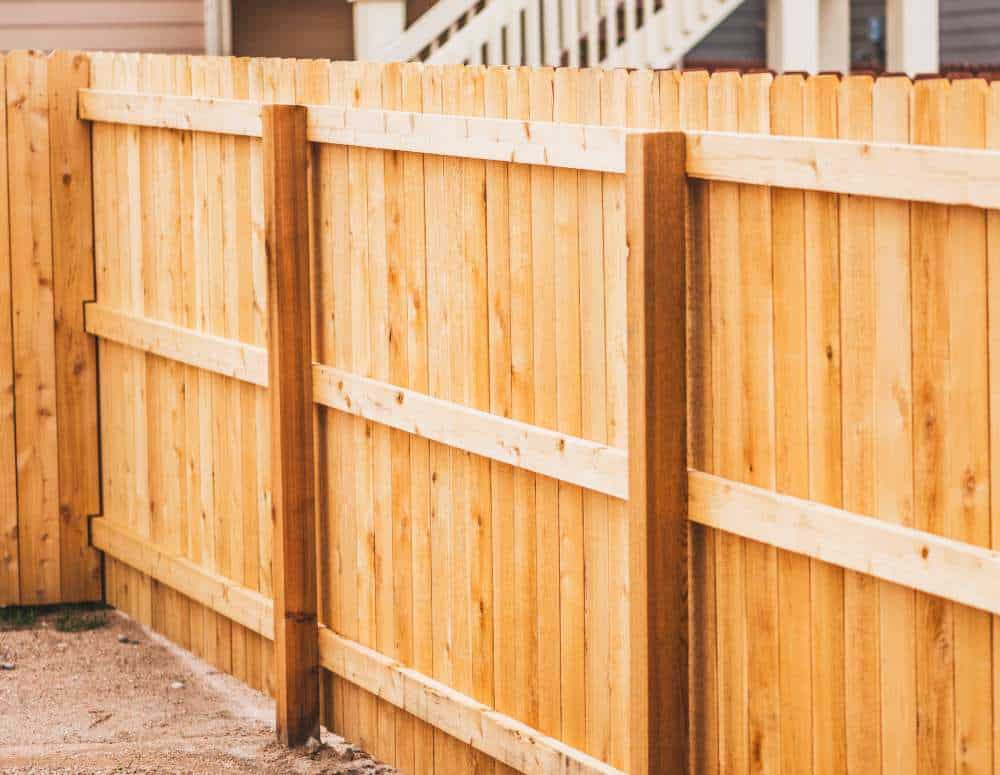
Wood fencing gives you that classic look and more design flexibility than other materials. Cedar is the go-to choice for Long Island because it has natural oils that resist rot and insects better than pine or other softwoods. You can customize heights, styles, and configurations more easily than with pre-manufactured PVC or aluminum panels. For people who want a specific aesthetic or need to match existing structures, wood offers options other materials can’t.
The tradeoff is maintenance. Wood needs to be sealed or stained every few years to protect against moisture and UV damage. Skip this and you’ll see splitting, warping, and rot, especially in the humid coastal environment. Even cedar, which naturally resists these issues better than other woods, needs regular attention to maintain its appearance and structural integrity. Budget for this ongoing maintenance when you’re calculating the real cost of a wood fence.
Lifespan for wood in Suffolk County runs fifteen to twenty years with proper maintenance. Let the maintenance slide and you’re looking at replacement much sooner. The coastal humidity and salt exposure accelerate deterioration compared to inland locations. Wood also provides less wind resistance than you might expect. Solid wood panels catch wind the same way PVC does, and if the installation isn’t done with proper depth and bracing, you’ll see leaning or failure after major storms.
Aluminum takes a different approach. The material is lightweight, rust-resistant, and requires almost no maintenance beyond occasional cleaning. It won’t rot, warp, or attract insects. The powder coating protects against salt air and UV exposure better than paint protects wood. For decorative fencing, pool enclosures, or situations where you want security without blocking sightlines, aluminum works well.
The limitation with aluminum is privacy. Most aluminum fencing uses vertical pickets with spacing between them. You can see through it. That’s fine for defining property lines or enclosing a pool, but it doesn’t give you the privacy that solid panels provide. Some manufacturers make aluminum privacy panels, but the cost jumps significantly and you lose some of the material’s natural advantages.
Strength is another consideration. Aluminum is strong for its weight, but it’s not as impact-resistant as wood or PVC. A fallen branch that would bounce off PVC might dent aluminum. For most residential applications this isn’t a deal-breaker, but it’s worth understanding.
Cost for aluminum runs similar to or slightly higher than PVC, depending on the style and height. The advantage is longevity. Properly installed aluminum fencing can last thirty to forty years in coastal conditions with minimal maintenance. When you spread that cost over the lifespan, it’s competitive with other materials.
For Suffolk County homeowners, the choice often comes down to what you need the fence to do. If privacy is the priority, wood or PVC makes more sense. If you want low maintenance with a more open design, aluminum delivers. If you’re drawn to the natural look of wood and don’t mind the upkeep, cedar gives you aesthetic options the synthetic materials can’t match. Understanding how each material performs in coastal conditions helps you choose based on what actually matters for your property rather than just picking what looks good in a showroom.
The right fence for your Suffolk County property isn’t just about picking a material or a style. It’s about understanding how coastal conditions affect longevity, knowing what your local permit process requires, and working with installation methods that account for wind loads and soil conditions specific to Long Island.
PVC gives you low maintenance and coastal durability. Wood offers aesthetic flexibility with more hands-on upkeep. Aluminum provides longevity with an open design. Each has legitimate applications depending on what you need from the fence and how much ongoing maintenance you’re willing to handle.
The permit requirements aren’t optional, and the installation details matter more here than they do inland. Work with contractors who understand Long Island’s specific conditions and have the experience to get it right the first time. We’ve been handling fencing installations in Suffolk and Nassau counties for over twenty years, with the local knowledge and proper credentials to navigate permits, materials, and installation techniques that work in coastal environments.
Article details:
Share:
Continue learning: