Your backyard has potential you haven't tapped yet. An outdoor kitchen transforms how you entertain, adding serious value to your Suffolk County home while creating the space everyone wants to gather in.
Share:

Summary:
An outdoor kitchen isn’t a luxury anymore. It’s become one of the most practical ways to expand your living space without adding square footage to your house.
Think about it. You’re essentially building a fully functional room outdoors—one that keeps you connected to your guests, keeps cooking smells outside (goodbye, lingering fish odor), and turns your patio into a space people actually want to hang out in. For Long Island homeowners, that means you’re getting use out of it from April through October, sometimes longer if you add a fire pit or patio heaters.
And here’s the part most people don’t realize until after they build one: it changes how you use your home. You’re not bouncing between the indoor kitchen and the backyard. You’re not apologizing to guests because you’ve been inside for 20 minutes. Everything you need is right there—prep space, storage, a grill that’s built in and ready to go.

Let’s get straight to the numbers because this matters if you’re ever planning to sell. Outdoor kitchens deliver an ROI between 55% and 200%, depending on the quality of materials, the layout, and how well it integrates with the rest of your property.
Homes with outdoor kitchens sell 23% faster than comparable homes without them. That’s not a small difference. And in markets like Suffolk County, NY and Nassau County, NY, where outdoor living is a major selling point, buyers are willing to pay a premium for a backyard that’s already set up for entertaining.
But here’s what really drives that value: it’s not just about having a grill. It’s about the entire setup. Built-in appliances, durable countertops, weather-resistant cabinetry, and a layout that makes sense. When buyers walk into a backyard and see a space that feels like an extension of the home—not a DIY project that’s falling apart—they notice. And they’re willing to pay for it.
The other piece that matters? Long Island’s climate. You’re not in Minnesota where an outdoor kitchen sits unused for eight months. You’ve got a solid spring, summer, and fall season where that space gets real use. That extended usability translates directly into higher perceived value.
Now, if you’re not planning to sell anytime soon, the ROI still matters—just in a different way. You’re investing in how you actually live. Fewer trips to restaurants. More gatherings at your place. A backyard that feels like a destination instead of an afterthought. That’s value you feel every weekend, not just when you list the house.
Outdoor kitchens have moved from “nice to have” to “why don’t we have this yet” over the past few years. And if you’ve noticed more of them popping up in your neighborhood, there’s a reason for that.
People are spending more time at home. They’re investing in their properties. And they’re realizing that outdoor living spaces—especially functional ones—make a massive difference in how they enjoy their homes. On Long Island, where backyards are a major part of the lifestyle, an outdoor kitchen fits right into that mindset.
But it’s not just about the trend. It’s about practicality. Long Island summers are hot. Cooking indoors heats up the house, which means your AC is working overtime. Move that cooking outside, and you’re keeping the heat where it belongs. You’re also keeping your indoor kitchen cleaner, which anyone who’s hosted a big cookout knows is a huge win.
Then there’s the social aspect. When you’re cooking inside, you’re isolated. You’re missing the conversation, the jokes, the moments that make gatherings memorable. An outdoor kitchen keeps you in the middle of it all. You’re flipping burgers, pouring drinks, and still part of the group. That’s the difference between hosting and actually enjoying what you’re hosting.
And let’s be honest—there’s a flex factor here. A well-designed outdoor kitchen makes your backyard the place people want to be. It’s the house where everyone gathers. It’s the spot that gets the “we should do this at your place” text every weekend. If you’re going to invest in your home, this is one of the upgrades that pays off in real, tangible ways.
Building an outdoor kitchen isn’t as simple as buying a grill and calling it done. There’s a process here, and understanding it upfront saves you from headaches later.
First, you’re dealing with utilities. Gas lines, water lines, electrical—all of it needs to be run from your house to wherever you’re building the kitchen. That’s not a DIY job. It requires permits, inspections, and someone who knows what they’re doing. The closer your outdoor kitchen is to your house, the easier (and cheaper) this part gets.
Then there’s the actual construction. Most outdoor kitchens on Long Island are built with masonry—stone, brick, or concrete block—because those materials hold up against the weather. You’re not dealing with wood that rots or cheap cabinetry that warps after one winter. You’re building something that’s meant to last.
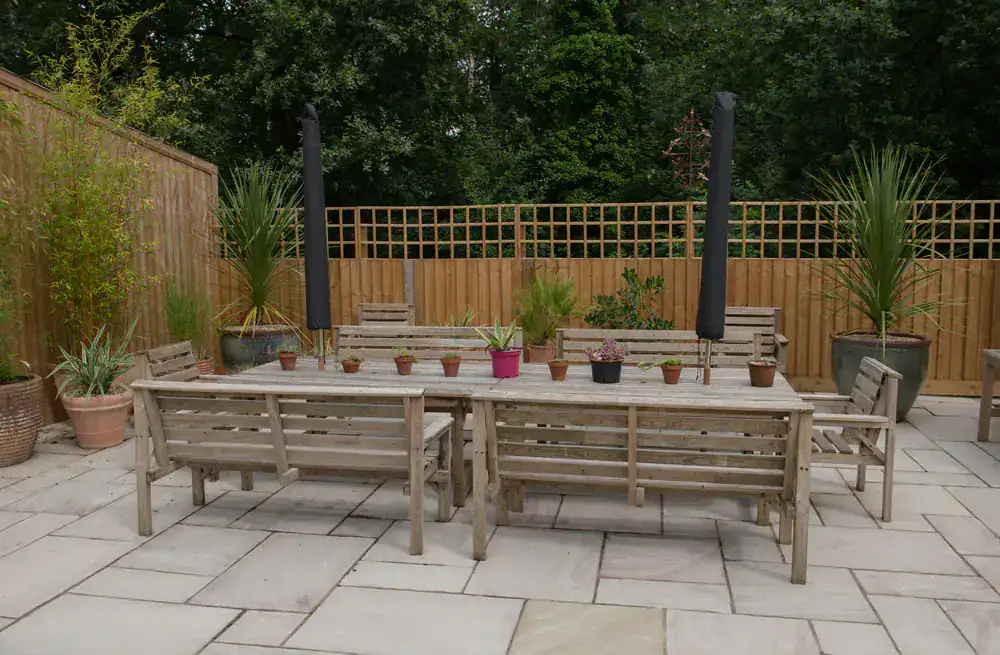
Long Island’s weather is tougher on outdoor structures than most people realize. You’ve got humidity in the summer, freezing temperatures in the winter, and if you’re anywhere near the coast, salt air that corrodes just about everything.
That’s why material choice matters more here than it does in, say, Arizona. You can’t just pick what looks good. You need materials that are rated for outdoor use and built to handle freeze-thaw cycles, moisture, and temperature swings.
For countertops, granite, bluestone, and quartz are the go-to options. They’re durable, heat-resistant, and they don’t crack under pressure (literally). Avoid anything porous that’s going to absorb water and crack when it freezes. You want a surface that you can rinse off, wipe down, and forget about.
Cabinetry is where a lot of outdoor kitchens fall apart—literally. Standard wood cabinets don’t belong outside. They warp, rot, and attract pests. If you’re adding storage, you need weather-resistant materials. Stainless steel is the gold standard, but there are also polymer-based options designed specifically for outdoor use that hold up just as well without the price tag.
For the structure itself—the base, the walls, the framework—masonry contracting is what creates a foundation that isn’t going anywhere. Stone, brick, and concrete block aren’t just about durability. Masonry gives you that high-end, custom look that screams “this was done right.” It integrates beautifully with patios, walkways, and retaining walls, so your outdoor kitchen feels like part of your backyard landscaping, not something that was plopped down as an afterthought.
And then there’s the grill. This is not the place to cheap out. You want a built-in grill that’s rated for outdoor use, with stainless steel burners and a warranty that actually means something. A quality grill is going to last 10-15 years if you take care of it. A cheap one? You’ll be replacing it in three.
Here’s something most homeowners don’t realize until it’s too late: layout matters more than any single appliance. You can have the fanciest grill on the market, but if there’s no prep space next to it, you’re going to hate using it.
The biggest mistake? Not planning for counter space. You need landing zones on both sides of the grill—places to set down plates, cutting boards, serving trays. If you’re constantly walking back and forth to a table 10 feet away, your outdoor kitchen isn’t functional. It’s just frustrating.
Storage is the other thing people skip. Where are you putting utensils? Cleaning supplies? Trash? If you don’t plan for it, you’ll end up with a cluttered mess or you’ll be running inside every five minutes. Drawers, cabinets, and even a dedicated spot for a trash bin make a huge difference in how the space actually works.
Then there’s flow. Think about how you move when you’re cooking. You’re grabbing ingredients, prepping food, grilling, plating, serving. If your layout doesn’t support that sequence, you’re going to be bumping into people or backtracking constantly. The best outdoor kitchens have a logical flow: prep zone, cooking zone, serving zone. Everything has its place, and you’re not fighting the space to use it.
And here’s one more thing: seating. If you’re building a bar area or counter seating into your outdoor kitchen, make sure there’s enough room for people to actually sit comfortably without being in your way while you’re cooking. You want guests close enough to chat, but not so close that they’re blocking your access to the grill or the sink.
The bottom line? Functionality beats aesthetics every time. A beautiful outdoor kitchen that’s a pain to use isn’t worth the investment. But a well-planned layout that makes cooking and entertaining easy? That’s the setup you’ll use every weekend.
An outdoor kitchen isn’t just about upgrading your backyard. It’s about how you use your home, how you entertain, and how much value you’re getting out of the property you’ve invested in.
If you’re in Suffolk County, NY or Nassau County, NY, you’ve got the climate, the lifestyle, and the market conditions that make this upgrade worth it. You’re not building something that sits unused for half the year. You’re creating a space that gets real use, delivers real value, and makes your home the place everyone wants to be.
The key is doing it right. That means durable materials, a functional layout, and working with someone who understands masonry contracting, backyard landscaping, and how to integrate an outdoor kitchen with the rest of your property—from patios and walkways to retaining walls and hardscaping. When it’s done well, it doesn’t feel like an addition. It feels like it was always meant to be there.
If you’re ready to stop imagining what your backyard could be and start building it, we can walk you through the process—from design to installation to the final details that make it yours.
Article details:
Share:
Continue learning: