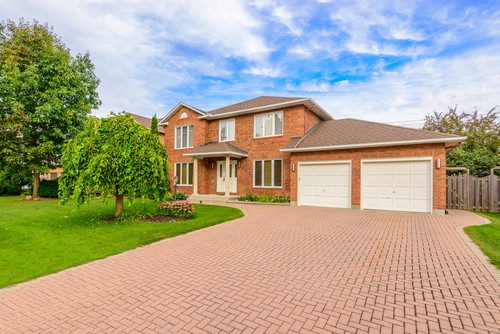
Learn what brick driveways cost in Nassau and Suffolk County, plus why they're worth the investment for Long Island homeowners.
Share:
Summary:
The straight answer? You’re looking at $18-23 per square foot for quality brick pavers in Nassau and Suffolk County. That puts a typical two-car driveway (600 square feet) between $10,800 and $13,800.
Before you close this page, here’s what most contractors won’t tell you upfront. Those numbers include proper base preparation, quality materials, and professional installation—not the bare-minimum work that falls apart in three years. The wide price range depends on brick quality, site conditions, and whether you need drainage improvements.
Compare that to asphalt at $7-15 per square foot, and yes, brick costs more initially. But stick with us—the real story is in what happens over the next 20 years.
Not all brick driveways are created equal, and Nassau County soil conditions make proper installation even more critical. Here’s what drives those cost differences you’re seeing in estimates.
Site preparation is huge. Some properties need extensive excavation, drainage improvements, or soil stabilization. Others are straightforward installs on stable ground. A contractor who skips the site evaluation is either inexperienced or planning to cut corners—both red flags.
Brick quality matters more than most homeowners realize. Standard concrete pavers run $18-20 per square foot installed, while premium fired clay brick pavers hit $22-23. The difference? Premium bricks handle freeze-thaw cycles better and resist salt damage that destroys cheaper alternatives.
Base preparation separates professional jobs from disasters waiting to happen. Proper installation requires 4-6 inches of compacted stone base, proper grading for drainage, and edge restraints that prevent shifting. Contractors who skip these steps charge less—and you’ll pay for it later with repairs.
Labor complexity varies by property. Straight driveways with good access cost less than curved designs requiring hand-setting or properties where equipment can’t reach. Most Nassau and Suffolk County properties fall somewhere in between, but steep grades or tight spaces increase labor costs significantly.
Here’s where many homeowners get surprised by their final bill. These extras aren’t necessarily anyone trying to rip you off—they’re often necessary work that becomes apparent once excavation starts.
Drainage improvements are common on Long Island. Poor drainage destroys any driveway, but it’s especially critical with pavers. Expect $400-2,400 for drainage solutions like French drains or catch basins if your property has water issues. Good contractors identify these needs during the estimate, not after they’ve started digging.
Existing driveway removal adds $1-2 per square foot to your project. If your current asphalt or concrete is in decent shape, some contractors can install over it with proper preparation. But damaged surfaces need complete removal—no shortcuts here.
Permits run $50-200 depending on your local municipality. Most residential driveways don’t require permits, but some Nassau and Suffolk County towns have specific requirements. Professional contractors handle this paperwork, but it’s still your cost.
Edging and borders can add significant value and cost. Belgian block edging, decorative borders, or matching walkways enhance the finished look but increase your investment. These aren’t necessary, but they’re popular upgrades that affect your total cost.
Soil conditions sometimes require additional base material or stabilization. Long Island’s varied soil types mean some properties need extra work to create a stable foundation. Contractors discover this during excavation, not before.
This is where the math gets interesting. Yes, brick pavers cost more initially than asphalt or basic concrete. But Long Island’s climate is brutal on driveways, and cheaper materials show it quickly.
Asphalt driveways need resealing every 3-5 years at $1-2 per square foot. They require crack filling, pothole repairs, and complete replacement every 15-20 years. Over 20 years, that “cheaper” asphalt driveway often costs more than brick pavers installed correctly the first time.
Concrete lasts longer but when it fails, you’re looking at complete removal and replacement—a messy, expensive process. Brick pavers handle freeze-thaw cycles and ground movement by flexing rather than cracking. Individual damaged pavers can be replaced without affecting the entire surface.

Nassau and Suffolk County weather creates unique challenges that most driveway materials simply can’t handle long-term. Understanding this helps explain why brick pavers are worth the investment.
Winter freeze-thaw cycles destroy solid surfaces like concrete and asphalt. Water gets into small cracks, freezes, expands, and creates bigger cracks. This cycle repeats until you’re looking at major repairs or replacement. Brick pavers solve this problem through individual movement—each paver can shift slightly without affecting its neighbors.
Salt damage is another major concern for Long Island driveways. Road salt and ice melt penetrate asphalt and concrete, causing internal damage that’s expensive to repair. With brick pavers, salt sits on the surface where it can be easily cleaned away. The fired clay construction of quality brick pavers makes them naturally resistant to chemical damage.
Summer heat affects asphalt significantly, causing it to become soft and susceptible to damage from parked cars and heavy loads. Brick pavers remain stable regardless of temperature, maintaining their structural integrity year-round.
Heavy snow loads and plowing damage both affect driveway longevity. Brick pavers handle snow removal equipment better than other materials, and individual damaged pavers can be replaced if necessary. Try that with an asphalt or concrete driveway.
Water drainage becomes critical during Long Island’s heavy rain periods and spring snowmelt. Brick pavers allow water to seep through joints instead of pooling on the surface, reducing runoff and preventing the drainage issues that plague many properties in Nassau and Suffolk County.
The Long Island market includes hundreds of contractors claiming expertise in brick driveway installation, but experience levels vary dramatically. Some specialize in quick asphalt jobs and treat brick paving as a side business. Others focus exclusively on high-end hardscaping and bring decades of specialized knowledge to every project.
Start by verifying credentials and insurance coverage. Any contractor working on your property should carry both liability insurance and workers’ compensation coverage. Ask to see current certificates and verify coverage with the insurance companies directly. This protects you from potential liability if accidents occur during construction.
Experience with local conditions matters more than you might expect. Contractors familiar with Nassau and Suffolk County soil conditions, drainage requirements, and local building codes can anticipate and prevent problems that catch inexperienced installers off guard. Ask specifically about their experience with Long Island properties and request references from recent local projects.
Quality of base preparation separates professional installations from future problems. The contractor should explain their base preparation process in detail, including excavation depth, stone base specifications, compaction methods, and drainage considerations. If they can’t explain this clearly or seem to be skipping steps, look elsewhere.
Material sourcing and warranties indicate contractor confidence in their work. Professional contractors work with established suppliers and offer meaningful warranties on both materials and installation. Be wary of contractors who can’t provide clear warranty information or seem vague about material specifications.
Project timeline and communication style tell you a lot about how the job will go. Professional contractors provide detailed timelines, communicate regularly about progress, and handle unexpected issues professionally. Poor communication during the estimate phase usually means poor communication during construction.
Brick driveways represent a significant investment, but for Long Island homeowners dealing with harsh weather and challenging soil conditions, they often prove more economical long-term than cheaper alternatives. The key is working with experienced contractors who understand local conditions and won’t cut corners on installation quality.
When you’re ready to move forward, focus on contractors with proven Nassau and Suffolk County experience, proper licensing and insurance, and detailed knowledge of proper installation techniques. The investment in quality materials and professional installation pays dividends in durability, appearance, and peace of mind.
We at DLZ Construction and Landscaping Inc. bring over 20 years of specialized experience to every brick driveway project in Nassau and Suffolk County, with the local knowledge and commitment to quality that ensures your investment delivers lasting value.
Article details:
Share:
Continue learning: