Sloped lots don't have to sit unused. Learn how terracing and masonry turn challenging terrain into functional, beautiful garden spaces across Long Island.
Share:
Summary:
Slopes look manageable until you try to do something with them. Mowing becomes dangerous. Planting anything means watching it wash away after the first heavy rain. Water pools where you don’t want it and drains too fast where you do.
Long Island’s weather doesn’t help. Heavy summer storms and spring snow melt turn minor drainage issues into foundation threats. The soil moves. Topsoil disappears. And that backyard you thought you’d use for family gatherings or a garden? It sits there, unusable, while you wonder what to do about it.
The real problem isn’t the slope itself—it’s that most yards aren’t designed to work with it. Standard landscaping approaches fail on terrain that needs structure, not just plants. Professional landscape design can help create a plan that works with the existing terrain, drainage, and usable space.
Erosion isn’t just ugly. It’s expensive. When soil washes away, it takes your investment with it. Plantings fail. Hardscaping shifts. And if water’s running toward your foundation instead of away from it, you’re looking at problems that cost far more than the yard itself.
Suffolk County, NY and Nassau County, NY properties deal with this constantly. The coastal climate means moisture. The soil composition means movement. And when slopes aren’t managed properly, gravity does what gravity does—it pulls everything downhill.
You might not see it happening day to day, but over months and years, an unmanaged slope changes shape. Bare patches appear where grass used to grow. Gullies form where water runs the same path repeatedly. And the property value you’re counting on? Buyers notice when a yard looks like a maintenance nightmare.
But here’s the thing about erosion—it’s completely preventable with proper yard design. The right structural approach stops soil movement before it starts. That means retaining walls that actually retain. Drainage systems that move water where it needs to go. And terraced levels that work with the slope instead of fighting it.
When you address these issues properly through professional garden design and landscaping, you’re not just fixing a problem. You’re creating usable space that adds value instead of subtracting it. Flat, stable terraces become garden beds, seating areas, or lawn space your family can actually use. And that’s worth something when it comes time to sell—or just when you want to enjoy your own property.
Flat yards are straightforward. You grade, you plant, you’re done. Sloped lots don’t work that way. Everything you do has to account for gravity, water flow, and soil stability. Miss any of those, and your landscaping fails—sometimes spectacularly.
The difference starts with drainage. On flat ground, water spreads out and soaks in. On a slope, it runs. And when it runs, it carries soil, mulch, and anything else that’s not anchored down. That’s why you can’t just plant ground cover and hope for the best.
You also can’t ignore the grade itself. Steep slopes need structural support—retaining walls, terracing, proper compaction. Gentle slopes might get away with strategic plantings and drainage management. But either way, you’re not working with a blank canvas. You’re working with terrain that has opinions about what will and won’t work.
Material choices matter more on slopes too. Mulch washes away. Loose stone migrates downhill. Even plant selection changes when you’re dealing with different moisture levels from top to bottom. The upper portions of a slope dry out faster. The lower sections stay wetter. You need plants that can handle those conditions in backyard garden designs, not just whatever looks good at the nursery.
Then there’s access. Maintaining a sloped yard means being able to reach everything safely. If you can’t mow it, weed it, or replant it without risking a tumble, your landscaping isn’t functional—it’s just decoration that’s going to look worse every year.
That’s why sloped lot landscaping isn’t a DIY weekend project for most homeowners. It requires understanding how water moves, how soil behaves, and how to build structures that last. Get those fundamentals right, and you can create something genuinely useful. Get them wrong, and you’re spending money to create a different set of problems.
The good news? Once you understand what makes slopes different, the solutions become clear. And those solutions—terracing, proper drainage, strategic masonry—turn difficult terrain into outdoor space that works as well as any flat yard. Sometimes better.
Terracing isn’t new. It’s been used for thousands of years to make sloped land usable. The concept is simple: instead of one long slope, you create a series of flat levels held in place by retaining walls. Each level becomes usable space. The walls provide structure and stop erosion.
For Long Island properties, this approach solves multiple problems at once. You get flat areas for planting, seating, or lawn. You control water flow between levels. And you create visual interest that makes the property look intentionally designed instead of accidentally difficult.
The masonry component is what makes it work long-term. We build retaining walls that aren’t just stacked stone—they’re engineered structures that hold back soil, manage drainage, and withstand freeze-thaw cycles. Done right, they last decades. Done wrong, they fail within years.
Retaining walls look simple from the outside, but what’s behind them determines whether they succeed or fail. The biggest enemy isn’t the soil they’re holding back—it’s water. When water builds up behind a wall, it creates pressure. Enough pressure, and even well-built walls can bow, crack, or collapse.
That’s why drainage isn’t optional. Every retaining wall needs a way for water to escape. That usually means a gravel column behind the wall, perforated pipe at the base, and landscape fabric to keep soil from clogging the system. Skip any of those components, and you’re building a dam, not a retaining wall.
Height matters too. Walls under two feet are relatively simple. Walls over four feet often require engineering, permits, and more substantial construction. That’s not arbitrary—it’s physics. The taller the wall, the more soil it’s holding back, and the more force that soil exerts. We know when a wall needs additional support, whether that’s geogrid reinforcement, a deeper foundation, or a stepped design that distributes the load.
Material selection affects both performance and appearance. Concrete block systems offer strength and consistency. Natural stone provides a more organic look but requires skilled installation. Brick creates a traditional aesthetic but needs proper mortar and drainage. Each material has advantages depending on your site conditions and design goals.
Compaction is another technical factor most homeowners don’t think about. When you create terraces, you’re often building on disturbed soil. If that soil isn’t properly compacted in layers, it settles over time. When it settles, walls shift. That’s why our installation process includes compacting fill material in lifts—usually six to eight inches at a time—to create a stable base.
The slope itself influences design decisions. Gentle slopes might need just one or two retaining walls to create usable space. Steeper terrain requires multiple terraces with careful attention to how water moves from one level to the next. Each terrace should slope slightly away from the wall to encourage drainage, not toward it where water can build up.
Local building codes in Suffolk County, NY and Nassau County, NY have specific requirements for retaining walls, especially taller ones. These aren’t bureaucratic obstacles—they’re safety standards based on soil conditions, frost depth, and structural requirements. We understand local codes, which means your walls get built right the first time, not torn out and rebuilt after an inspection failure.
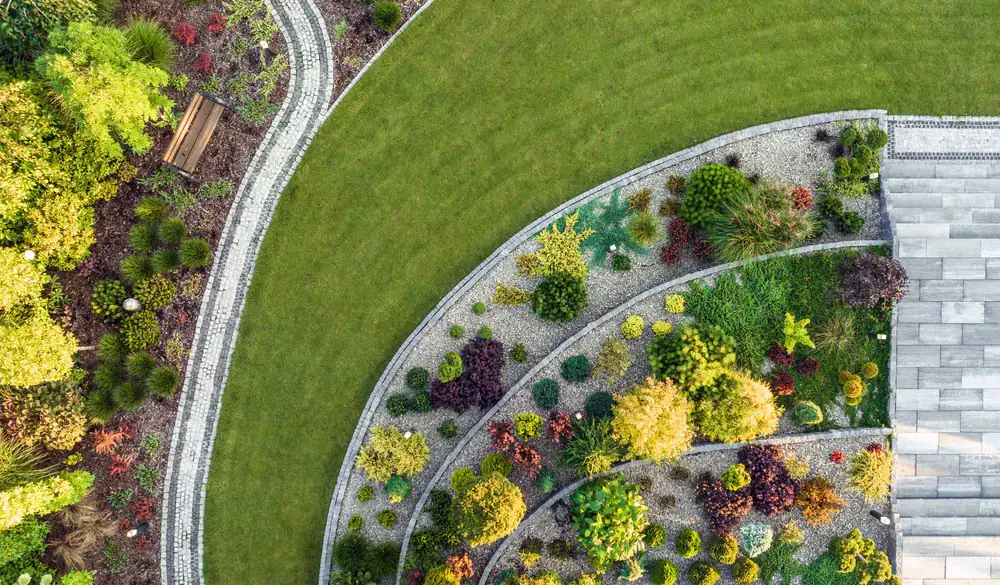
Once you’ve got flat, stable terraces, the real design work begins. Each level can serve a different purpose. The upper terrace might become a garden bed with good drainage for plants that prefer drier soil. The middle level could be a patio or seating area. The lower terrace might work as lawn space or a rain garden that handles runoff from above.
Plant selection changes by level too. Upper terraces get more sun and drain faster, making them ideal for drought-tolerant perennials, ornamental grasses, or vegetables that need good drainage. Lower levels retain more moisture, so you can use plants that prefer consistent water—ferns, hostas, or moisture-loving ground covers that help prevent erosion between walls.
Pathways between terraces matter for both function and safety. Steps need to be wide enough to use comfortably and built with materials that don’t get slippery when wet. Stone, textured concrete, or pavers with proper tread depth all work. The goal is creating access that feels natural, not like you’re climbing a ladder every time you want to move between levels.
Lighting adds usability after dark. Low-voltage LED fixtures on retaining walls, along pathways, and in planting beds extend the hours you can actually use the space. They also improve safety—nobody wants to navigate steps or slopes in the dark. Well-placed lighting turns terraced yards into spaces you can enjoy for evening gatherings, not just daytime use.
Integration with existing landscape features keeps the design cohesive. If you’ve got mature trees, we work around them rather than removing them. Their root systems actually help stabilize slopes. If there’s an existing patio or deck, we connect it to the new terraces with pathways or steps that make the transition feel intentional.
Maintenance access needs to be part of the yard design too. You should be able to reach every planting bed, every section of lawn, and every retaining wall for upkeep. That might mean building in service paths, keeping terraces at manageable widths, or choosing plants that don’t require constant attention. A beautiful design that’s impossible to maintain won’t stay beautiful for long.
The best terraced yards don’t look like they were forced onto difficult terrain—they look like the terrain was always meant to be that way. The walls feel like natural transitions. The levels create distinct outdoor rooms. And the whole space works together as a cohesive landscape that happens to solve a slope problem while looking intentional and designed.
Sloped lots don’t have to stay problems. With the right approach to garden design and landscaping—terracing, masonry, proper drainage—we can transform difficult terrain into outdoor space that works. Not someday, not eventually, but in a way that solves the issues you’re dealing with right now.
The key is understanding that slopes need structure, not just plants. Retaining walls that manage both soil and water. Terraced levels that create flat, usable space. Drainage systems that move water where it needs to go instead of letting it cause problems. When those fundamentals are handled correctly, everything else—the plantings, the pathways, the design details—falls into place.
For homeowners across Suffolk County, NY, Nassau County, NY, and Long Island dealing with sloped properties, this isn’t theoretical. It’s about taking yards that aren’t working and making them functional through professional backyard garden designs. We’ve spent over two decades doing exactly that—turning challenging lots into outdoor spaces people actually use and enjoy.
Article details:
Share:
Continue learning: