Driveway Paving in Nassau County: Materials, Costs & Installation Process

Everything Nassau County homeowners need to know about driveway paving — materials, real local costs, and what separates a job that lasts from one that doesn't.

Share:

Creating Beautiful and Functional Outdoor Living Spaces with Bricks, Stones, and Concrete Blocks

Masonry in landscaping is essential to designing and constructing an attractive and functional outdoor living space. Masonry is the art of building structures using bricks, stones, and concrete blocks. It is an ancient trade that has been used for centuries to create structures that are both functional and aesthetically pleasing.

Landscaping is the process of designing, planning, and creating attractive, functional, and sustainable outdoor living spaces. It involves the use of plants, water features, lighting, and other elements to create an outdoor environment that is both beautiful and practical.

Masonry plays a crucial role in landscaping as it helps to create a solid and durable foundation for various outdoor living features such as patios, walkways, retaining walls, fireplaces, and water features. In this blog, we will explore the various ways masonry can be used in landscaping and the benefits it provides.

Patios

Patios are outdoor living spaces typically made of concrete or stone. They are a popular feature in landscaping as they provide a comfortable area for dining, entertaining, and relaxation. Masonry is an ideal material for creating patios as it is durable, low-maintenance, and can be customized to suit any design style.

Masonry patios can be made using a variety of materials such as bricks, stones, and concrete blocks. These materials can be arranged in different patterns and designs to create an attractive and attractive outdoor living space. Masonry patios are also resistant to weathering, erosion, and pests, which makes them a practical and long-lasting option.

Walkways

Walkways are paths that lead from one area of the outdoor living space to another. They are typically made of concrete, stone, or pavers and can complement the overall landscaping design. Masonry is an ideal material for creating walkways as it provides a solid and stable surface that can withstand heavy foot traffic and the elements.

Masonry walkways can be made using a variety of materials such as bricks, stones, and concrete blocks. These materials can be arranged in different patterns and designs to create an attractive and attractive walkway that complements the overall landscaping design. Masonry walkways are also low-maintenance and can be easily cleaned and repaired if necessary.
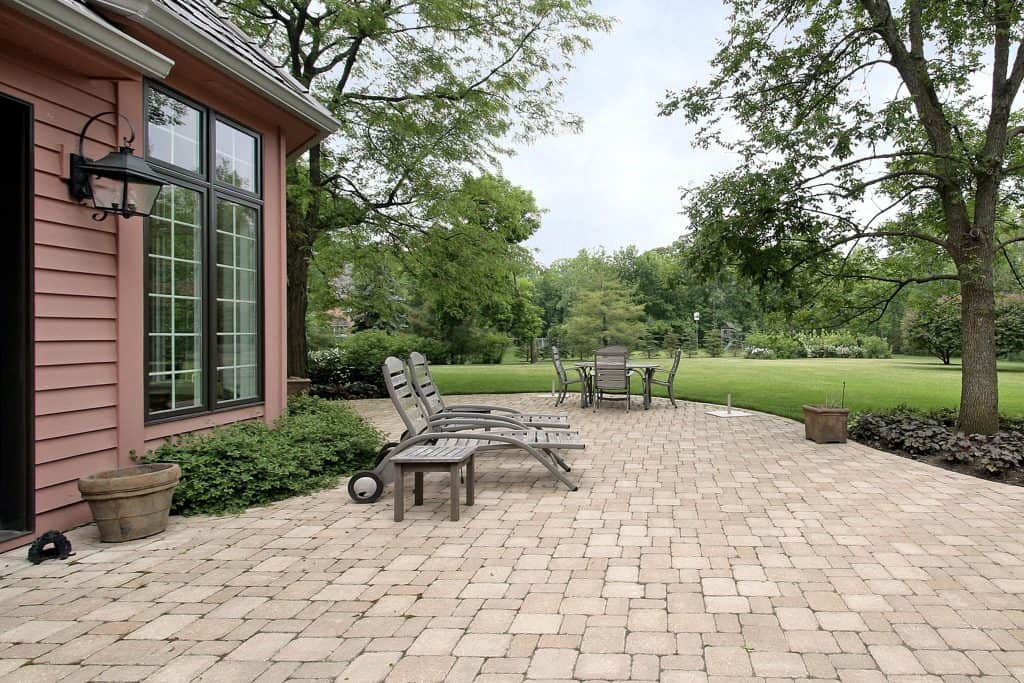
A spacious brick patio, expertly crafted by a masonry contractor Long Island, NY, features lounge chairs and a dining table set. It’s bordered by a red house and overlooks a large green lawn with trees in the background.

Retaining Walls

Retaining walls are structures designed to hold back soil and prevent erosion. They are a crucial feature in landscaping as they help maintain the integrity of the outdoor living space. Masonry is an ideal material for creating retaining walls as it is strong, durable, and can be customized to suit any design style.

Masonry retaining walls can be made using a variety of materials such as bricks, stones, and concrete blocks. These materials can be arranged in different patterns and designs to create an attractive and attractive foundation wall. This complements the overall landscaping design. Masonry retaining walls are also low-maintenance and durable, making them a practical and long-lasting option.

Fireplaces

Fireplaces are outdoor living features that provide warmth and cozy atmosphere for dining and entertaining. Masonry is an ideal material for creating fireplaces as it is heat-resistant and can be customized to suit any design style.

Masonry fireplaces can be made using a variety of materials such as bricks, stones, and concrete blocks. These materials can be arranged in different patterns and designs to create an elegant and attractive fireplace. This complements the overall landscaping design. Masonry fireplaces are also low-maintenance and durable, making them a practical and long-lasting option.
Summary:

Choosing the right driveway material is harder than it looks — especially in Nassau County, where freeze-thaw cycles, clay-heavy soil, and nor’easters put real stress on whatever you install. This guide breaks down your options honestly: asphalt, concrete, pavers, and everything in between, with local pricing, maintenance expectations, and the installation details that actually determine how long your driveway holds up. Whether you’re replacing a cracked blacktop in Massapequa or installing a paver driveway in Garden City, the decisions you make upfront — material, base prep, drainage, contractor — are what you’ll live with for the next 20 to 40 years. Read this before you get a single quote.
Table of contents

Most homeowners don’t think about their driveway until something goes wrong. A crack that keeps spreading. Water pooling after every storm. A surface that’s starting to look embarrassing next to every other house on the block. If that’s where you are right now, you’re not alone — and you’re probably wondering whether you need a patch job, a full replacement, or something in between.

This page is here to give you straight answers. We’ll walk through the main driveway materials, what they actually cost here in Nassau County, how the installation process works, and what questions to ask before you hire anyone. No fluff, no pressure — just the information you need to make a smart decision.

Asphalt Driveway Price Per Square Foot in Nassau County

Asphalt is the most common driveway material on Long Island, and for good reason. It handles freeze-thaw cycles better than concrete, costs less upfront, and when it’s installed correctly, it lasts 15 to 20 years with reasonable maintenance.

In Nassau County, asphalt driveway installation typically runs $5 to $9 per square foot — and that range includes demolition of your existing surface. If your current base is still solid and you’re looking at an overlay instead of a full replacement, you can often knock $2 to $4 off that per-square-foot cost. A standard 20×20 driveway comes out to roughly $3,000 to $4,500 depending on depth, drainage needs, and site conditions.

What moves the price around isn’t usually the asphalt itself — it’s everything underneath it. Base preparation, grading, and drainage work are where corners get cut on low-bid jobs, and where the difference between a driveway that lasts and one that fails in three years actually lives.

Asphalt Driveway Maintenance: What Nassau County's Climate Demands

Here’s something most contractors won’t bring up until after the job is done: a new asphalt driveway needs ongoing maintenance to reach its full lifespan. That’s not a flaw — it’s just the nature of the material. And in Nassau County, where winters are cold, nor’easters are a regular event, and road salt gets applied heavily from December through March, that maintenance schedule matters more than it would in a milder climate.

The first thing to know is that you shouldn’t seal a brand-new asphalt driveway right away. The material needs time to cure and release its natural oils — typically through one full season. After that first year, a slurry seal or standard seal coat is a smart move. It fills in surface aggregate, protects against UV oxidation, and keeps the driveway looking clean and tight. From there, plan on resealing every one to two years to stay ahead of the damage that salt, sun, and temperature swings cause over time.

Crack filling is the other piece. Small cracks are inevitable on any asphalt surface, especially after a hard winter. The key is catching them early. A hairline crack is a $50 problem. Left alone through another freeze-thaw cycle, it becomes a $500 problem — or a sign that the base beneath is starting to shift. In Levittown, Merrick, Wantagh, and the other flat, densely developed communities across Nassau County, poor drainage beneath the surface is often what turns small cracks into big ones. Water gets in, freezes, expands, and the damage multiplies fast.

The maintenance math is straightforward: resealing costs $0.20 to $0.70 per square foot. Ignoring it costs you a full replacement years ahead of schedule. If you’re going to invest in asphalt, build the maintenance into your plan from day one.

Cost of a Gravel Driveway: The Budget Option Worth Knowing About

Gravel doesn’t get talked about much in Nassau County because most neighborhoods have HOA expectations or municipal aesthetics that make it a non-starter. But for properties where it’s viable — larger lots in less dense areas, second driveways, or service access paths — it’s worth understanding what you’re actually getting.

A gravel driveway is the most affordable option by a significant margin. Installation typically starts around $2,500 for a small surface, and per-square-foot costs run well below asphalt or concrete. The material itself is cheap, the installation is relatively fast, and there’s no curing time to worry about.

The trade-off is ongoing effort. Gravel migrates. It gets pushed to the edges by tires, washed toward the curb in heavy rain, and scattered across the lawn after a nor’easter. In Nassau County specifically, the county’s clay-heavy soil in inland communities doesn’t drain the way sandy soil does, which means a gravel driveway without a proper geotextile fabric base and adequate grading will turn into a muddy, rutted mess after a wet spring. Weeds are also a persistent issue without a fabric barrier underneath.

If you’re comparing gravel to asphalt purely on upfront cost, gravel wins. If you’re comparing them on total effort over five years, the gap closes quickly. That said, for the right property and the right homeowner, it’s a perfectly legitimate choice — and one we’re happy to talk through honestly if you’re not sure which direction makes sense for your situation.

Concrete Driveway Costs and How They Compare to Asphalt

Concrete driveways cost more upfront — typically $6 to $12 per square foot installed — but they last significantly longer. A well-built concrete driveway in Nassau County can hold up for 30 to 40 years with minimal maintenance, compared to 15 to 20 for asphalt. No resealing required every few years. No annual crack-filling routine. Once it’s in, it largely takes care of itself.

The catch in a climate like Long Island’s is that concrete is more rigid than asphalt, which makes it more vulnerable to freeze-thaw stress. When water gets into a concrete surface and freezes, it expands with enough force to crack the slab. That’s why proper base preparation — adequate gravel depth, correct grading, and drainage — is even more critical with concrete than with asphalt. A concrete driveway installed on a compromised or poorly drained base won’t make it through many Nassau County winters before it starts showing damage.

Concrete Versus Asphalt Driveway: Which One Makes More Sense on Long Island

This is probably the most common question we get from homeowners in Nassau County, and the honest answer is that it depends on what you’re optimizing for.

Asphalt is more flexible, which means it handles freeze-thaw cycles more gracefully. When the ground shifts slightly beneath it — which happens regularly in Nassau County’s clay-heavy soil — asphalt can flex rather than crack. It’s also easier and cheaper to repair when damage does occur. And the upfront cost is lower, which matters if you’re working within a specific budget or planning to sell the home in the next several years.

Concrete gives you a longer lifespan and a different aesthetic. It’s brighter, it can be stamped or finished in different textures, and it doesn’t require the recurring maintenance that asphalt does. If you’re planning to stay in your home for decades and want a surface you can largely forget about, concrete is worth the higher initial investment.

Where people get into trouble is choosing concrete on the cheap. A concrete driveway that’s poured too thin, over an inadequate base, without proper expansion joints, is going to crack — and concrete crack repair is more involved and more expensive than asphalt repair. In communities like Rockville Centre, Manhasset, or Great Neck, where home values are high and curb appeal matters, a cracked concrete driveway is a visible problem that’s not easy to fix quietly.

The short version: if you want lower upfront cost and a material that handles Long Island winters naturally, go asphalt. If you want longevity and lower long-term maintenance and you’re willing to invest more now, concrete is a strong choice — provided the installation is done right from the base up.

Driveway Water Drainage Solutions Nassau County Homeowners Actually Need

Drainage is the part of a driveway project that most contractors gloss over in the estimate and most homeowners don’t think to ask about — until water is pooling in the garage every time it rains. In Nassau County, this isn’t a minor concern. The county’s terrain is largely flat, and significant portions of it sit on clay-heavy soil that holds water rather than absorbing it. Add in the heavy rainfall that comes with nor’easters and summer thunderstorms, and you have a recipe for drainage problems that no amount of beautiful paving will solve on its own.

The most common solution is a French drain — a perforated pipe set in a gravel-filled trench that redirects water away from the driveway and the foundation. In areas where the driveway slopes toward the house or the garage, a trench drain installed at the base of the apron can intercept runoff before it becomes a problem. Catch basins are another option for larger surfaces or properties with significant grade challenges.

What matters is that drainage gets addressed before paving begins, not after. Grading the surface correctly — so water sheds to the sides rather than pooling in the center or running toward the structure — is part of proper base preparation, not an add-on. Any contractor who doesn’t ask about your drainage situation during the estimate phase is either cutting corners or not thinking past the surface.

In coastal Nassau County communities like Long Beach, Freeport, or Oceanside, where the water table is high and storm surge is a real factor, drainage planning is especially critical. The same applies to inland neighborhoods like Hicksville, Bethpage, and Plainview, where clay soil creates runoff problems that sandy soil further east wouldn’t. Getting this right the first time is the difference between a driveway that works and one that becomes a recurring problem.

How to Choose the Right Driveway Paving Contractor in Nassau County

The material you choose matters. But the contractor you hire matters more. A great material installed on a poor base, without proper grading or permits, will fail — and Nassau County’s Home Improvement Contractor licensing requirement exists precisely because this happens often enough to be a documented problem.

Before you sign anything, verify that your contractor holds a valid license through Nassau County’s Office of Consumer Affairs, carries liability insurance and workers’ compensation, and will pull the required permits for your project. Ask who will actually be on your property during the job. Ask what the base preparation process looks like. Ask what happens if something goes wrong six months later.

We’ve been doing this work in Nassau and Suffolk counties for over 20 years. Every worker on our crew is background-checked and drug-tested. The owner is on-site during your project — not just at the start, but throughout. We handle permits, we address drainage before we pave, and we give you honest pricing upfront with no surprises on the back end. If you’re ready to talk through your driveway project, reach out to us and we’ll start with a straightforward conversation about what you actually need.

Article details:

Share: