How to Choose Driveway Installation Contractors Without Getting Burned

Not all driveway contractors are created equal. Here's what Nassau County homeowners need to know before hiring anyone.

Share:

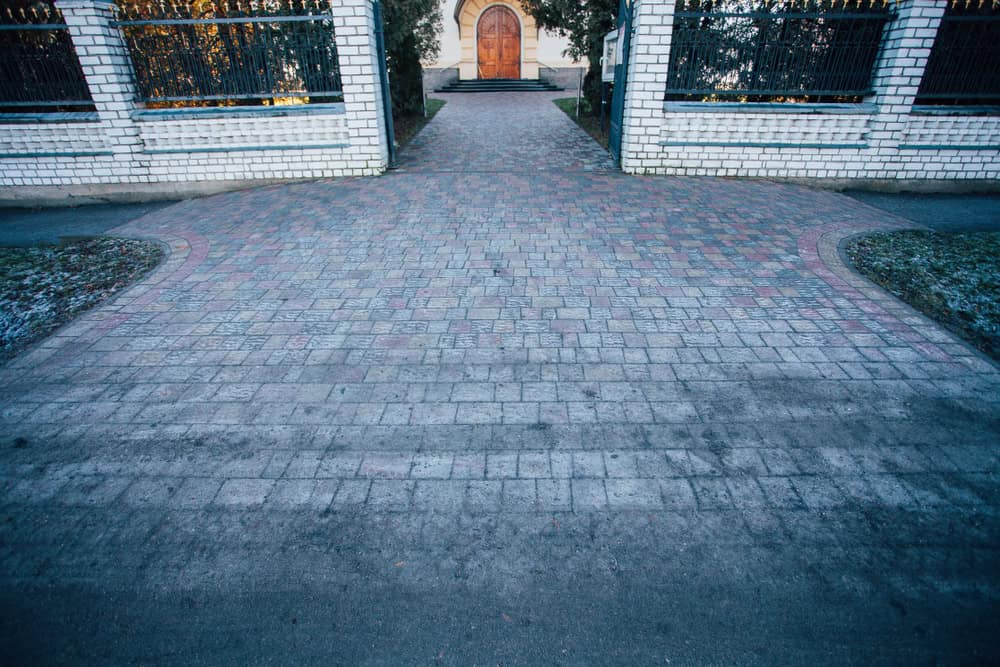
A paved walkway with a brick pattern leads to a wooden double door entrance in a white brick wall, flanked by iron fences and small patches of grass.

Creating Beautiful and Functional Outdoor Living Spaces with Bricks, Stones, and Concrete Blocks

Masonry in landscaping is essential to designing and constructing an attractive and functional outdoor living space. Masonry is the art of building structures using bricks, stones, and concrete blocks. It is an ancient trade that has been used for centuries to create structures that are both functional and aesthetically pleasing.

Landscaping is the process of designing, planning, and creating attractive, functional, and sustainable outdoor living spaces. It involves the use of plants, water features, lighting, and other elements to create an outdoor environment that is both beautiful and practical.

Masonry plays a crucial role in landscaping as it helps to create a solid and durable foundation for various outdoor living features such as patios, walkways, retaining walls, fireplaces, and water features. In this blog, we will explore the various ways masonry can be used in landscaping and the benefits it provides.

Patios

Patios are outdoor living spaces typically made of concrete or stone. They are a popular feature in landscaping as they provide a comfortable area for dining, entertaining, and relaxation. Masonry is an ideal material for creating patios as it is durable, low-maintenance, and can be customized to suit any design style.

Masonry patios can be made using a variety of materials such as bricks, stones, and concrete blocks. These materials can be arranged in different patterns and designs to create an attractive and attractive outdoor living space. Masonry patios are also resistant to weathering, erosion, and pests, which makes them a practical and long-lasting option.

Walkways

Walkways are paths that lead from one area of the outdoor living space to another. They are typically made of concrete, stone, or pavers and can complement the overall landscaping design. Masonry is an ideal material for creating walkways as it provides a solid and stable surface that can withstand heavy foot traffic and the elements.

Masonry walkways can be made using a variety of materials such as bricks, stones, and concrete blocks. These materials can be arranged in different patterns and designs to create an attractive and attractive walkway that complements the overall landscaping design. Masonry walkways are also low-maintenance and can be easily cleaned and repaired if necessary.
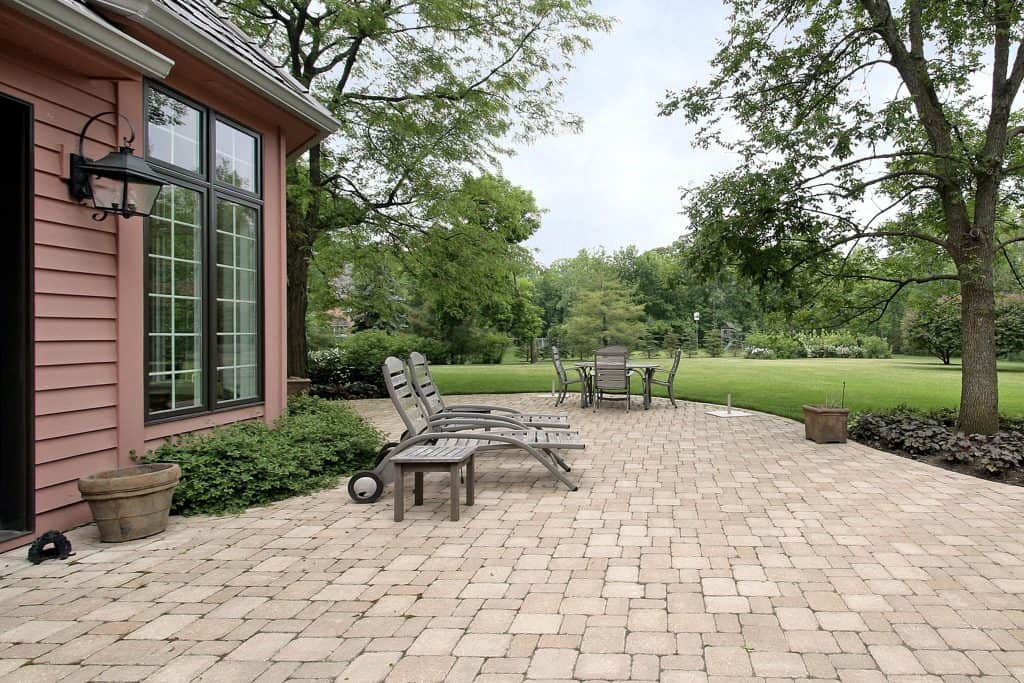
A spacious brick patio, expertly crafted by a masonry contractor Long Island, NY, features lounge chairs and a dining table set. It’s bordered by a red house and overlooks a large green lawn with trees in the background.

Retaining Walls

Retaining walls are structures designed to hold back soil and prevent erosion. They are a crucial feature in landscaping as they help maintain the integrity of the outdoor living space. Masonry is an ideal material for creating retaining walls as it is strong, durable, and can be customized to suit any design style.

Masonry retaining walls can be made using a variety of materials such as bricks, stones, and concrete blocks. These materials can be arranged in different patterns and designs to create an attractive and attractive foundation wall. This complements the overall landscaping design. Masonry retaining walls are also low-maintenance and durable, making them a practical and long-lasting option.

Fireplaces

Fireplaces are outdoor living features that provide warmth and cozy atmosphere for dining and entertaining. Masonry is an ideal material for creating fireplaces as it is heat-resistant and can be customized to suit any design style.

Masonry fireplaces can be made using a variety of materials such as bricks, stones, and concrete blocks. These materials can be arranged in different patterns and designs to create an elegant and attractive fireplace. This complements the overall landscaping design. Masonry fireplaces are also low-maintenance and durable, making them a practical and long-lasting option.
Summary:

Choosing the wrong driveway contractor in Nassau County can cost you far more than a bad-looking driveway — it can mean failed drainage, skipped permits, and a surface that cracks within two winters. This guide walks you through how to evaluate installers, what the installation process should actually look like, and why drainage and long-term maintenance matter as much as the material you choose. Read this before you get your first quote. The questions you ask upfront are the ones that protect you later.
Table of contents

If you’ve been putting off your driveway replacement for a few years, you’re not alone. Most Nassau County homeowners delay it — not because they don’t want it done, but because they don’t know who to trust. The contractor market on Long Island is full of legitimate professionals, but it also has its share of low-ball quotes, door-to-door crews with “leftover asphalt,” and operators who disappear after the deposit clears. We’ve seen it all, and this guide is built on what we’ve learned serving Nassau County since 2009. It’s for the homeowner who wants to get it done right the first time — without overpaying, without getting burned, and without ending up with a driveway that fails in three years.

How to Find and Vet Qualified Driveway Installers in Nassau County

Nassau County has one of the strictest home improvement contractor licensing requirements in New York State. That’s actually a good thing — it means there’s a clear, verifiable standard you can check before anyone sets foot on your property. A legitimate driveway installer will carry a Nassau County Home Improvement License, general liability insurance, and workers’ compensation coverage. If a contractor hesitates when you ask for any of those, that’s your answer.

Beyond the paperwork, look at how they communicate. Do they show up on time for the estimate? Do they walk the site, check the grade, and ask about drainage — or do they just eyeball the driveway and hand you a number? A contractor who skips the site assessment is already cutting corners before the job starts.

Reviews matter, but read them carefully. Specific testimonials — ones that mention the owner by name, describe the actual project, and talk about communication throughout — carry more weight than a pile of generic five-star ratings. Look for reviews from other Nassau County homeowners who’ve had similar work done, since local experience matters.

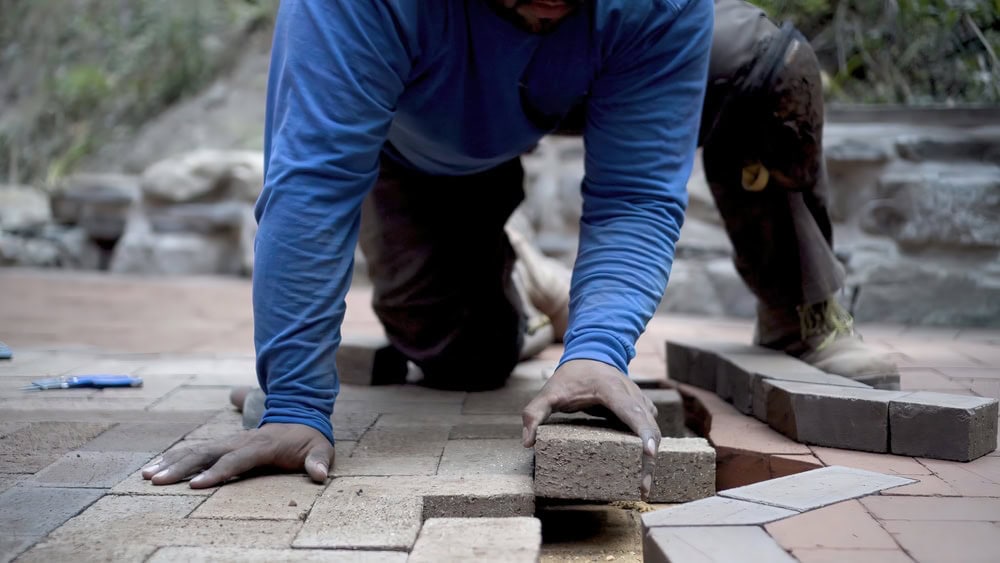
A masonry contractor in Long Island, NY, wearing a blue shirt and work pants, kneels on the ground to place rectangular bricks, filling a gap in a matching patio walkway. Tools and stacked bricks are close at hand.

Driveway French Drains: Why Nassau County Installers Need to Plan for Water First

Water is the biggest threat to any driveway on Long Island — not traffic, not age, not weather on its own, but water that has nowhere to go. Nassau County’s terrain is largely flat, and depending on where you live, you’re dealing with either the sandy, high-water-table conditions of the South Shore communities like Merrick, Wantagh, and Oceanside, or the clay-heavy soils of the North Shore around Oyster Bay, Manhasset, and Great Neck. Both create drainage challenges. They’re just different ones.

When water pools on or around your driveway, it doesn’t stay there. It works its way into the base layer, freezes during the first hard cold snap, expands, and starts cracking the surface from underneath. Nassau County averages multiple freeze-thaw cycles every winter. That’s not a minor inconvenience — it’s a mechanical force that will destroy an improperly drained driveway in a fraction of its expected lifespan.

This is why driveway french drains aren’t an upsell. They’re part of the installation. A French drain — a gravel-filled trench with a perforated pipe that redirects water away from the surface and foundation — should be assessed and installed as part of any new driveway project where drainage is a concern. Retrofitting one after the driveway is already down is significantly more expensive and disruptive. Exterior French drain installation on Long Island typically runs $30 to $90 per linear foot, and for a home that needs 100 to 150 feet of drainage, that’s a real number. Getting it right the first time is always cheaper.

When you’re interviewing contractors, ask directly: what’s the drainage plan for this project? If they can’t give you a specific answer — if they say the water will “run off” without explaining where it runs to — keep looking. A contractor who understands Nassau County’s soil conditions and water table will have a clear answer. We assess every site for drainage before we recommend a single material, because what’s underneath your driveway matters just as much as what’s on top of it.

Asphalt Driveway Maintenance in Nassau County: What Happens After Installation

One of the most overlooked parts of any driveway decision is what comes after the crew leaves. The material you choose doesn’t just affect how the driveway looks on day one — it determines how much attention it needs over the next 20 to 50 years and what it will cost you to keep it performing well.

Asphalt is the most common choice on Long Island, and for good reason. It’s cost-effective, it handles freeze-thaw cycles better than concrete because it flexes rather than cracks, and it can be driven on within 24 to 48 hours of installation. But asphalt driveway maintenance is not optional. To get the full 15 to 20 years out of an asphalt surface, you need to reseal it every three to five years. Skip that, and you’re looking at accelerated cracking, water infiltration into the base, and a driveway that needs full replacement well before its time. The sealcoating itself isn’t expensive — neglecting it is.

Concrete is the longer-term investment. A properly installed concrete driveway can last 30 to 50 years with relatively modest upkeep — resealing every one to three years and addressing any hairline cracks before they widen. It requires a seven-day curing period before it can handle vehicle weight, and it costs more upfront than asphalt. But for Nassau County homeowners in higher-value communities like Garden City, Rockville Centre, or Syosset, where median home prices regularly exceed $600,000, a concrete or paver driveway can increase property value by five to ten percent. On a $650,000 home, that’s a meaningful number.

Paver driveways — whether concrete, brick, or natural stone — offer the longest lifespan of the three, often 30-plus years with minimal maintenance, and they’re the most visually flexible option. Individual pavers can be replaced if one cracks or shifts, which is an advantage neither asphalt nor poured concrete can match. They cost more to install, but the long-term maintenance math often works in their favor.

The right material depends on your budget, your timeline, and what you’re trying to accomplish. What doesn’t change regardless of material is this: a properly prepared base, correct grading, and a drainage plan are non-negotiable. A beautiful paver driveway on a poor base will fail. A well-installed asphalt driveway on a properly graded, drained surface will outlast one that looks identical on the surface but was rushed underneath.

What a Legitimate Driveway Installation Process Actually Looks Like

The installation process itself tells you a lot about a contractor before the work is done. A legitimate driveway installation in Nassau County starts with a real site assessment — not just a measurement, but an evaluation of your existing grade, soil conditions, drainage patterns, and proximity to your foundation. From there, the contractor should handle permitting. In Nassau County, which contains 64 incorporated villages each with its own building department, the permit process varies significantly by municipality. Contractors who skip this step are leaving you legally exposed.

Proper installation then moves through demolition of the old surface if needed, subgrade preparation, base installation — a minimum four-inch compacted gravel base for concrete — drainage integration, and finally the surface material itself. Each step depends on the one before it. Rush the base, and nothing on top of it will hold.

Nassau County Permit Requirements: Why Skipping This Step Costs You Later

A worker wearing gloves and knee pads is carefully placing concrete pavers on the ground, while another stands nearby on the newly laid stones at a construction site by a trusted masonry contractor Long Island, NY.

Permits are one of the most common places contractors cut corners — and one of the most consequential for homeowners. In Nassau County, most driveway installations require a permit, particularly when the project changes drainage patterns, connects to the street, or involves significant excavation. The exact requirements vary by town and village, and with 64 incorporated villages in Nassau County, there’s no single blanket answer. What is consistent is the risk of skipping the process entirely.

If your driveway is installed without the required permits and that fact surfaces during a home sale, you can be required to remove or modify the work at your own expense before closing. If the work causes a drainage issue that affects a neighboring property, you have no permit documentation to stand behind. And if an inspector flags unpermitted work during an unrelated project, you’re looking at fines and forced remediation. None of these are hypothetical — they happen regularly in suburban Long Island markets where contractor oversight is common and neighbors are close.

A contractor who tells you permits aren’t necessary for your project without actually verifying that with the local building department is either uninformed or hoping you won’t ask follow-up questions. The right answer is: “Let me check with your municipality and confirm what’s required.” That’s what we do. Permitting is part of our process, not an afterthought — because it protects you, not just us.

Red Flags to Watch for When Hiring a Driveway Contractor on Long Island

The Better Business Bureau’s Scam Tracker has documented driveway fraud losses of over $8,000 per victim, and that number is almost certainly understated because many homeowners don’t report it. The scam usually follows a recognizable pattern: a crew shows up at your door claiming they have leftover asphalt from a job down the street, offers a price that sounds too good to pass up, takes a deposit, does rushed or incomplete work — or disappears entirely.

That version is obvious in hindsight. The harder cases are the contractors who look legitimate on the surface but cut the corners you can’t see. A thin base that won’t show up as a problem for two winters. Drainage that was never assessed. A contract that’s vague enough to give them an out if something goes wrong. These situations are harder to spot upfront, which is why the questions you ask before signing anything matter as much as the reviews you read.

Here’s what to look for before you commit to anyone. Ask for their Nassau County Home Improvement License number and verify it. Ask whether they carry workers’ compensation — not just liability — because if a worker is injured on your property without it, you can be held responsible. Ask who will actually be on-site during the project. A contractor who wins the job and then sends a crew you’ve never met, with no owner present, is a different situation than one where the owner is there every day. Ask about the warranty on workmanship, and get it in writing.

Price is a factor, but a quote that’s dramatically lower than the others isn’t a deal — it’s a signal. Lower price almost always means a thinner base, skipped drainage work, or labor that won’t hold up. The driveway that costs $1,500 less to install and fails in four years is the more expensive driveway. In our 15-plus years serving Nassau and Suffolk counties, the jobs we get called in to fix are almost always the ones where someone chose the cheapest option available.

Ready to Replace Your Driveway in Nassau County? Here's Where to Start.

The short version: hire someone who knows the local soil, handles the permits, plans for drainage before laying a single inch of material, and will be on-site when the work happens. Those four things alone will separate a driveway that lasts 20 years from one that needs attention in three.

We’ve built our reputation over 15-plus years serving communities across Nassau and Suffolk counties by doing exactly that. We’re masonry and paving specialists — not generalists who occasionally do driveways — with verifiable local reviews, a background-checked crew, and an owner who shows up.

If you’re ready to talk through your project, DLZ Construction and Landscaping Inc. offers free on-site consultations. No pressure, no drive-by estimates — just a real look at your property and an honest conversation about what it needs.

Article details:

Share: