Discover how brick driveway paving transforms Suffolk County properties with lasting beauty, superior durability, and enhanced curb appeal.
Share:
Summary:
Long Island’s climate presents unique challenges that traditional driveway materials simply weren’t designed to handle. Between freeze-thaw cycles that crack concrete and summer heat that softens asphalt, homeowners need something more resilient.
Brick pavers deliver that resilience through engineering that makes sense. Each individual paver can move independently, flexing with ground movement instead of cracking under pressure. When Suffolk County winters cause soil to freeze and expand, your brick driveway adjusts naturally.
The strength difference is remarkable too. While concrete typically handles around 3,000-4,000 pounds per square inch, quality brick pavers are tested to withstand over 12,000 pounds per square inch. That means your driveway won’t just survive daily use—it’ll thrive under it.
Suffolk County homeowners know the drill: winter arrives with freezing temperatures, spring brings heavy rains, summer delivers scorching heat, and fall adds leaf debris to the mix. Your driveway needs to handle all of it without falling apart.
Here’s where brick pavers show their superiority. The interlocking joint system allows individual pavers to shift slightly with ground movement, preventing the catastrophic cracking that plagues solid concrete surfaces. When water freezes in the soil beneath your driveway, causing it to heave upward, brick pavers move with it and settle back into place when temperatures warm.
Salt and de-icing chemicals pose another challenge. While these substances can deteriorate concrete and asphalt over time, properly sealed brick pavers resist chemical damage. The natural clay composition of quality brick pavers actually becomes more durable when exposed to freeze-thaw cycles, unlike manufactured alternatives that can break down.
Summer heat creates different problems. Asphalt becomes soft and can develop ruts from vehicle traffic, while concrete expands and can crack at joints. Brick pavers maintain their structural integrity regardless of temperature, and their natural color won’t fade like painted or dyed surfaces might.
The drainage advantage can’t be overlooked either. Properly installed brick paver driveways allow water to flow between joints, reducing pudding and ice formation. This natural drainage helps prevent the water infiltration that causes so many problems with solid surface driveways.
Suffolk County homeowners know the drill: winter arrives with freezing temperatures, spring brings heavy rains, summer delivers scorching heat, and fall adds leaf debris to the mix. Your driveway needs to handle all of it without falling apart.
Here’s where brick pavers show their superiority. The interlocking joint system allows individual pavers to shift slightly with ground movement, preventing the catastrophic cracking that plagues solid concrete surfaces. When water freezes in the soil beneath your driveway, causing it to heave upward, brick pavers move with it and settle back into place when temperatures warm.
Salt and de-icing chemicals pose another challenge. While these substances can deteriorate concrete and asphalt over time, properly sealed brick pavers resist chemical damage. The natural clay composition of quality brick pavers actually becomes more durable when exposed to freeze-thaw cycles, unlike manufactured alternatives that can break down.
Summer heat creates different problems. Asphalt becomes soft and can develop ruts from vehicle traffic, while concrete expands and can crack at joints. Brick pavers maintain their structural integrity regardless of temperature, and their natural color won’t fade like painted or dyed surfaces might.
The drainage advantage can’t be overlooked either. Properly installed brick paver driveways allow water to flow between joints, reducing pudding and ice formation. This natural drainage helps prevent the water infiltration that causes so many problems with solid surface driveways.
Professional brick driveway installation involves much more than simply laying pavers on the ground. The process begins with proper excavation and base preparation—the foundation that determines your driveway’s long-term performance.
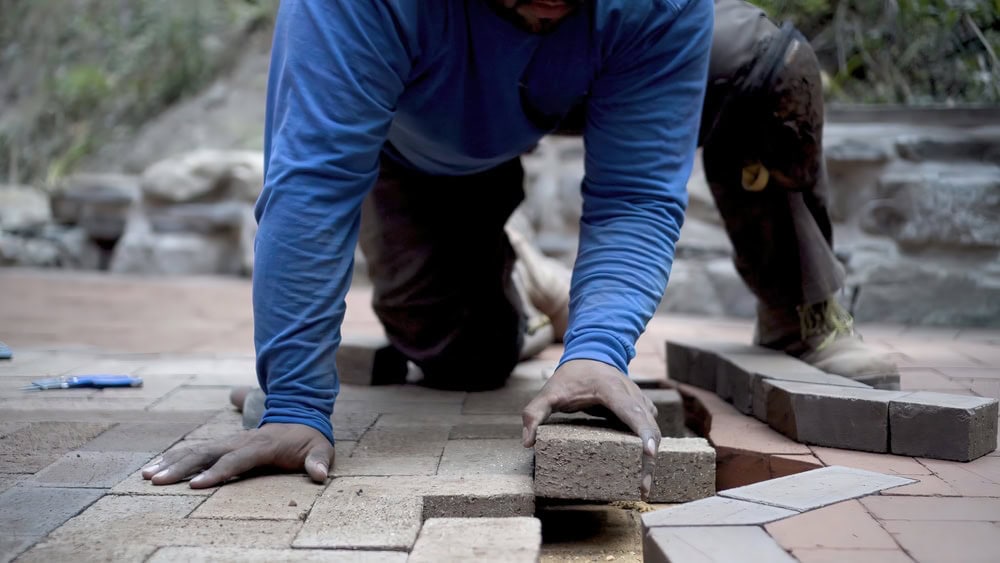
We understand that Suffolk County’s soil conditions require specific base depths and materials to prevent settling and ensure proper drainage. Our typical installation includes excavating to the proper depth, installing a compacted gravel base, adding a sand leveling layer, and then carefully placing each paver according to the chosen pattern.
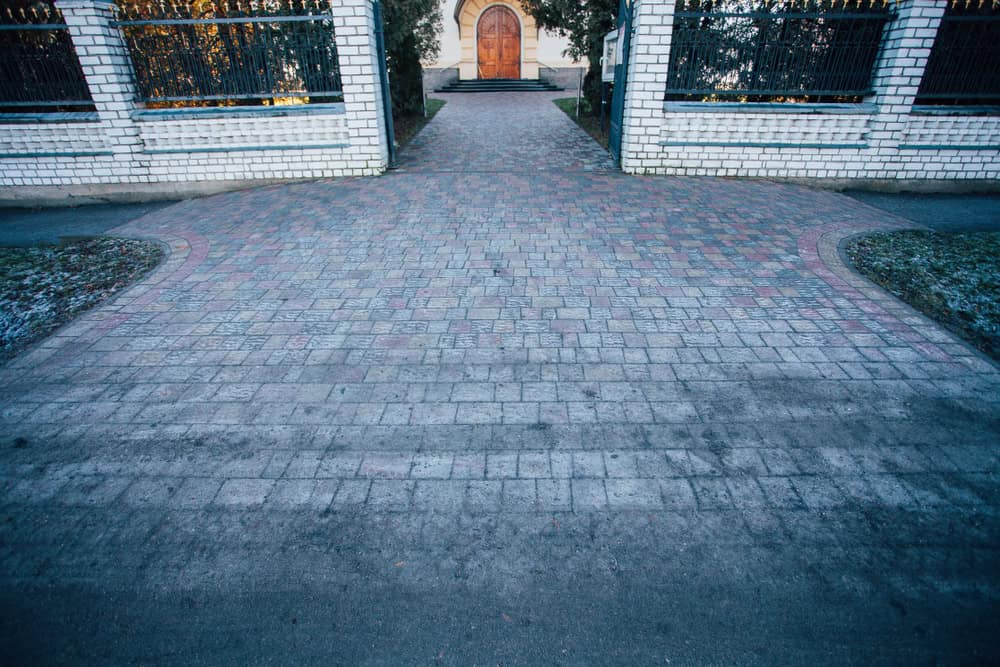
Design flexibility sets brick pavers apart from other materials. You can choose from classic running bond patterns, elegant herringbone designs, or custom layouts that complement your home’s architecture. Color options range from traditional red clay to contemporary grays and earth tones.
The appeal of DIY projects is understandable, especially when facing the investment required for professional brick driveway installation. However, the complexity of proper paver installation makes this one project where professional expertise pays dividends.
Proper excavation requires understanding soil conditions, drainage requirements, and local building codes. Suffolk County’s varied soil composition—from sandy areas near the shore to clay-heavy inland regions—demands different approaches to base preparation. We know how to adjust our methods based on specific site conditions.
Base preparation represents the most critical phase of installation. The compacted gravel base must be precisely graded for drainage while maintaining the structural integrity to support vehicle loads. Improper compaction leads to settling, which causes pavers to become uneven and creates trip hazards.
Edge restraints present another technical challenge. These systems prevent pavers from spreading under load, maintaining the tight joints essential for long-term performance. Our professional installation includes proper edge restraint selection and installation based on your driveway’s specific requirements and expected traffic patterns.
The leveling sand layer requires precision that comes with experience. Too much sand creates instability; too little prevents proper paver seating. We understand the nuances of achieving the perfect sand bed for each specific paver type and installation pattern.
Pattern layout affects both aesthetics and structural performance. Certain patterns provide better load distribution for driveways, while others excel in decorative applications. We can recommend the optimal pattern for your specific needs and execute complex layouts with precision.
One of brick driveway paving’s greatest advantages lies in its minimal maintenance requirements compared to traditional alternatives. However, understanding proper care ensures your investment delivers maximum value over its extended lifespan.
Regular maintenance starts with simple cleaning. A stiff-bristled broom and occasional rinse with your garden hose removes most debris and prevents organic matter from staining paver surfaces. Spring cleaning should include removing any weeds that may have sprouted between joints and checking for any settling that might require attention.
Joint sand maintenance represents the most important ongoing care task. The sand between pavers prevents them from shifting and helps distribute loads across the surface. Weather and use gradually remove this sand, so periodic replenishment keeps your driveway performing optimally. Modern polymeric sands offer enhanced durability and weed prevention compared to traditional sand.
Sealing provides additional protection against stains and enhances color, though it’s not always necessary for structural integrity. Suffolk County homeowners should consider sealing if their driveway sees heavy use or if stain prevention is a priority. Quality sealers typically last three to five years before requiring reapplication.
Snow removal requires different techniques than concrete or asphalt driveways. Avoid metal shovels that might chip paver edges, opting instead for plastic shovels or snow blowers. The textured surface of brick pavers actually provides better traction than smooth alternatives, often requiring less salt or chemical de-icers.
Individual paver replacement offers a unique advantage when damage occurs. Unlike concrete slabs that require extensive repairs for localized damage, individual brick pavers can be lifted and replaced without affecting surrounding areas. This modular approach keeps repair costs minimal and maintains your driveway’s appearance.
Your driveway represents more than just a functional necessity—it’s an investment in your property’s value, safety, and aesthetic appeal. Brick driveway paving offers Suffolk County homeowners a solution that addresses the shortcomings of traditional materials while delivering benefits that compound over time.
The combination of superior durability, weather resistance, and design flexibility makes brick pavers the smart choice for homeowners who want to solve their driveway problems once and for all. When properly installed by experienced professionals, your brick driveway will enhance your property’s curb appeal while requiring minimal maintenance for decades to come.
Ready to transform your property with a driveway that combines beauty, durability, and value? At DLZ Construction and Landscaping Inc., we bring over two decades of experience to every project, ensuring your investment delivers the results you expect. Contact us today to discuss how professional brick driveway paving can enhance your Suffolk County home.
Article details:
Share:
Continue learning: