Best Pavers for Pool Deck: Travertine vs Porcelain Compared

Choosing the right inground pool pavers in Nassau County comes down to more than looks — freeze-thaw cycles, slip resistance, and maintenance all factor in.

Share:

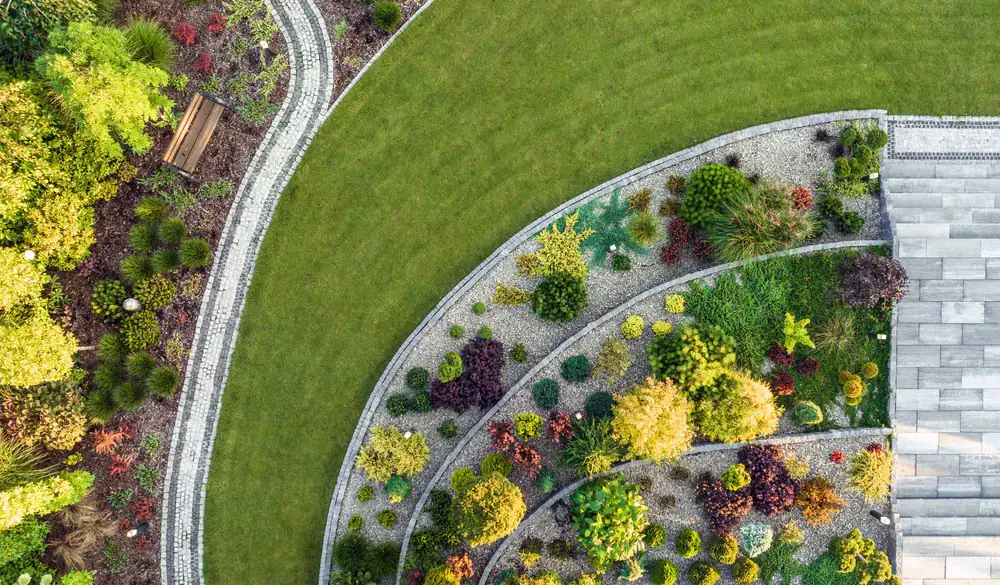
Aerial view of a landscaped garden with curved paths, green lawn, and tiered flower beds filled with various colorful plants, shrubs, and trees next to stone steps and a paved area.

Creating Beautiful and Functional Outdoor Living Spaces with Bricks, Stones, and Concrete Blocks

Masonry in landscaping is essential to designing and constructing an attractive and functional outdoor living space. Masonry is the art of building structures using bricks, stones, and concrete blocks. It is an ancient trade that has been used for centuries to create structures that are both functional and aesthetically pleasing.

Landscaping is the process of designing, planning, and creating attractive, functional, and sustainable outdoor living spaces. It involves the use of plants, water features, lighting, and other elements to create an outdoor environment that is both beautiful and practical.

Masonry plays a crucial role in landscaping as it helps to create a solid and durable foundation for various outdoor living features such as patios, walkways, retaining walls, fireplaces, and water features. In this blog, we will explore the various ways masonry can be used in landscaping and the benefits it provides.

Patios

Patios are outdoor living spaces typically made of concrete or stone. They are a popular feature in landscaping as they provide a comfortable area for dining, entertaining, and relaxation. Masonry is an ideal material for creating patios as it is durable, low-maintenance, and can be customized to suit any design style.

Masonry patios can be made using a variety of materials such as bricks, stones, and concrete blocks. These materials can be arranged in different patterns and designs to create an attractive and attractive outdoor living space. Masonry patios are also resistant to weathering, erosion, and pests, which makes them a practical and long-lasting option.

Walkways

Walkways are paths that lead from one area of the outdoor living space to another. They are typically made of concrete, stone, or pavers and can complement the overall landscaping design. Masonry is an ideal material for creating walkways as it provides a solid and stable surface that can withstand heavy foot traffic and the elements.

Masonry walkways can be made using a variety of materials such as bricks, stones, and concrete blocks. These materials can be arranged in different patterns and designs to create an attractive and attractive walkway that complements the overall landscaping design. Masonry walkways are also low-maintenance and can be easily cleaned and repaired if necessary.
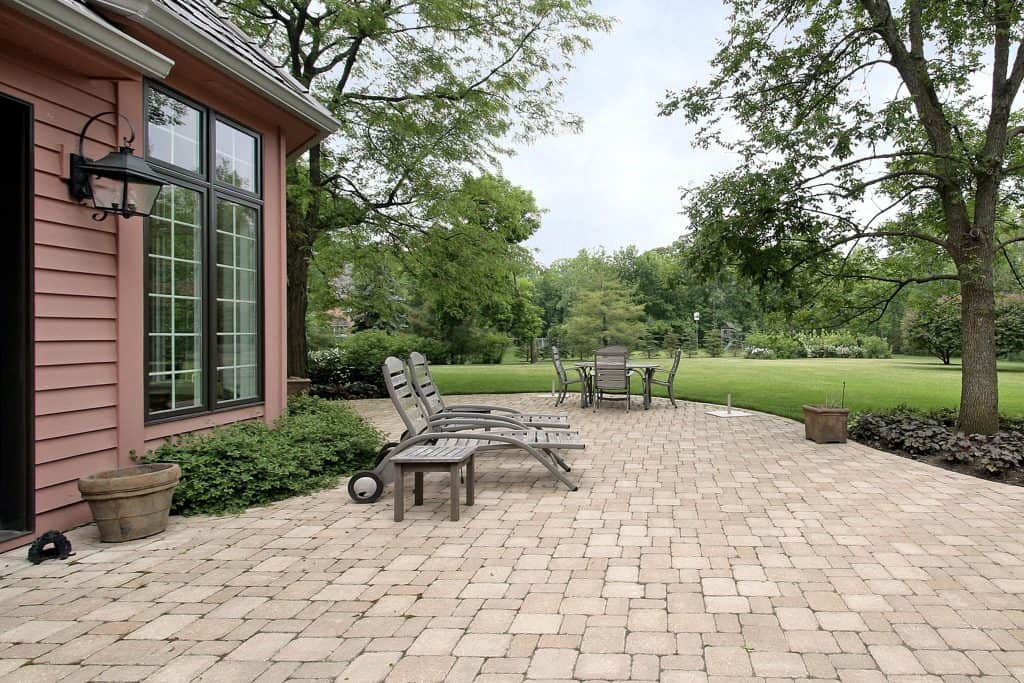
A spacious brick patio, expertly crafted by a masonry contractor Long Island, NY, features lounge chairs and a dining table set. It’s bordered by a red house and overlooks a large green lawn with trees in the background.

Retaining Walls

Retaining walls are structures designed to hold back soil and prevent erosion. They are a crucial feature in landscaping as they help maintain the integrity of the outdoor living space. Masonry is an ideal material for creating retaining walls as it is strong, durable, and can be customized to suit any design style.

Masonry retaining walls can be made using a variety of materials such as bricks, stones, and concrete blocks. These materials can be arranged in different patterns and designs to create an attractive and attractive foundation wall. This complements the overall landscaping design. Masonry retaining walls are also low-maintenance and durable, making them a practical and long-lasting option.

Fireplaces

Fireplaces are outdoor living features that provide warmth and cozy atmosphere for dining and entertaining. Masonry is an ideal material for creating fireplaces as it is heat-resistant and can be customized to suit any design style.

Masonry fireplaces can be made using a variety of materials such as bricks, stones, and concrete blocks. These materials can be arranged in different patterns and designs to create an elegant and attractive fireplace. This complements the overall landscaping design. Masonry fireplaces are also low-maintenance and durable, making them a practical and long-lasting option.

Summary:

Not all pool deck pavers hold up the same way on Long Island. Between freeze-thaw winters, clay-heavy soil, and summer heat, Nassau County homeowners face conditions that make material selection genuinely consequential — not just aesthetic. This guide breaks down the real differences between travertine, porcelain, and concrete pavers for pool decks: what each handles well, where each falls short, and what the installation process actually involves. Read it before you commit to anything.
Table of contents

If you’ve been staring at a cracked, stained concrete pool deck and wondering what to replace it with, you’re not alone. Most Nassau County homeowners with pools built in the ’60s through the ’80s are dealing with the same thing — original concrete that’s done its job and then some, but has nothing left to give. The question isn’t whether to upgrade. It’s which material is actually going to hold up through Long Island winters, stay cool enough to walk on barefoot in July, and not turn into a maintenance project of its own. Here’s what you need to know before making that call.

Best Pavers for Pool Deck: What Actually Matters in Nassau County

Nassau County sits in a climate zone that most online paver guides completely ignore. You’re dealing with 20 to 40 freeze-thaw cycles every winter, clay-heavy soil that drains poorly, coastal humidity on both the South Shore and North Shore, and summer days that push into the 90s. A material that performs beautifully in Scottsdale can fail spectacularly in Massapequa or Garden City.

The criteria that matter here are slip resistance in wet conditions, heat retention on a July afternoon, freeze-thaw durability, chemical resistance to pool chlorine or saltwater, and how much ongoing maintenance you’re willing to take on. Every material handles those differently, and the trade-offs are real.

A landscaped garden with curved stone retaining walls, green grass, various plants, small trees, and shrubs, bordered by a black metal fence and surrounded by lush greenery.

Travertine Pavers Around a Pool: The Honest Pros and Cons

Travertine has been used around pools for decades, and there are good reasons for that. It’s a natural stone with a porous composition that actually works in your favor in one important way: it absorbs surface water rather than letting it sit on top. That gives tumbled travertine genuinely good slip resistance when wet — not because of a coating, but because of how the material is structured. It also stays noticeably cooler underfoot than concrete. On a Nassau County afternoon in August, that’s the difference between a deck you use and one you avoid.

The concerns with travertine are real too, and worth being honest about. Lower-grade travertine has unfilled voids and pits that can trap algae, pool chemicals, and debris over time. The fix is specifying filled-and-honed travertine rather than the cheapest option available — but that requires knowing what to ask for, and not every contractor does. Travertine also needs to be sealed every one to two years around a pool, and pool chemicals, particularly acidic ones, can etch the surface if it’s not properly protected. It’s a material that rewards good installation and routine upkeep. If you want something you can ignore entirely, travertine isn’t it.

One thing travertine handles exceptionally well that often goes unmentioned: repairability. If a paver cracks or shifts after a particularly brutal Nassau County winter, you can replace individual pieces without disturbing the rest of the deck. That’s a meaningful advantage over poured concrete, where a crack in one section means patching the whole area and hoping the color matches.

Thin Pavers Over an Existing Concrete Pool Deck: Is It Actually an Option?

This is the question we get most often from Nassau County homeowners who have an aging concrete pool deck and don’t want to spend the money on full demolition. The short answer is: sometimes, yes — and when it works, it saves a significant amount of money and disruption.

Thin pavers, sometimes called remodeling or overlay pavers, run between 20 and 30 millimeters thick, compared to the standard 60 millimeters for a full installation. Porcelain overlay pavers can be as thin as 20 millimeters. When installed over a structurally sound existing concrete slab, they can transform the look and feel of a pool deck in under 48 hours, without jackhammers, hauling, or the cost of full base reconstruction. For a homeowner in Merrick or Wantagh with a 1970s concrete deck that’s cosmetically rough but structurally intact, this is often the most practical path.

The critical word there is structurally sound. If the existing slab has significant cracks from root intrusion or severe settling, or if it’s heaving from freeze-thaw damage, overlaying it doesn’t fix the underlying problem — it just covers it temporarily. Any cracks in the base will eventually telegraph through to the overlay. Before recommending an overlay, we assess the existing slab carefully: its grade, its drainage, its structural condition, and whether the added height from the overlay will create any issues at doorways, steps, or pool coping transitions. Skipping that assessment is how overlay projects fail, and it’s one of the more common shortcuts taken by contractors who are more interested in closing a sale than doing the job correctly.

If the slab qualifies, an overlay using thin porcelain or travertine pavers is a genuinely smart renovation approach. It’s not a compromise — it’s a different method with a different cost profile and a different timeline, and for the right situation, it delivers the same end result.

Pool Paver Installation: What the Process Looks Like and Where It Goes Wrong

The material you choose matters. How it’s installed matters more. The most common reason pool deck pavers fail in Nassau County isn’t the material — it’s the base. Clay-heavy soil doesn’t drain the way sandy soil does, and when water sits under a paver installation through a freeze-thaw cycle, it heaves. Pavers shift, joints open up, and what looked great in June looks like a problem by March.

Proper installation for a pool deck in Nassau County starts with a thorough site assessment: soil type, existing drainage patterns, slope, and proximity to the pool structure. The compacted gravel base for a pool deck application should run six to eight inches deep — more than a standard patio, because of the constant water exposure. The deck needs to slope a minimum of one-eighth inch per foot away from the pool and any structures. Edge restraints go around the entire perimeter. None of this is optional, and none of it is visible once the job is done — which is exactly why some contractors skip it.

Porcelain Pavers for Pool Decks: Where They Excel and What to Watch For

A landscaped garden in NY with stone paving by a top masonry contractor Long Island, featuring a curved stone wall, trimmed bushes, colorful plants, and a small pond—all bordered by a wooden fence and lush greenery.

Porcelain has become one of the most requested materials for pool decks over the last several years, and the reasons make sense. It’s non-porous, which means pool chemicals — chlorine, saltwater, algaecides — don’t penetrate the surface. It doesn’t need to be sealed. It won’t pit, stain, or absorb algae. You clean it with a garden hose. For a busy Nassau County family that wants to spend time in the pool rather than maintaining the deck around it, porcelain is a genuinely low-friction choice.

The durability numbers are serious. Porcelain pavers, properly installed, can last upward of 100 years. They’re UV-stable, so the color doesn’t fade. They’re dimensionally consistent in a way natural stone isn’t, which makes installation cleaner and more predictable. For homeowners who want a contemporary, clean-lined aesthetic — the kind of outdoor space that photographs well and holds its look for decades — porcelain delivers.

Here’s what you need to watch for: not all porcelain is appropriate for pool decks. Smooth or polished porcelain becomes dangerously slippery when wet. Around a pool, that’s not an aesthetic concern — it’s a safety hazard. The correct specification for a pool deck is a textured porcelain with an R11 or higher slip rating. That’s the industry threshold for wet pedestrian surfaces, and it’s the difference between a safe deck and a liability. We specify the right finish for every project, not just the one that looks best in a showroom sample.

Heat retention is the other variable worth understanding. Light-colored porcelain stays relatively cool underfoot, comparable to travertine. Dark charcoal or black porcelain can get significantly hotter — in some cases hotter than bare concrete. If you’re drawn to a darker palette, that’s worth factoring into your decision, especially for a South Shore property where summer sun exposure is direct and intense.

Nassau County Permits for Pool Deck Work: What Homeowners Don't Know Can Cost Them

This is the part of the conversation most contractors skip entirely, and it’s one of the more important things to get right in Nassau County.

The county is divided among three towns — Hempstead, North Hempstead, and Oyster Bay — each with its own building department and its own permit requirements. Whether your pool deck project requires a permit depends on the scope of work, whether it affects drainage patterns, and how it interfaces with the existing pool structure. In many cases, the answer is yes, a permit is required. In some municipalities, impervious surface coverage limits also come into play — meaning the total percentage of your lot covered by hard surfaces is regulated, and permeable paver systems may be required or strongly incentivized to stay in compliance.

Why does this matter beyond the obvious? Because unpermitted work in Nassau County can result in fines, stop-work orders, and forced removal. More practically, it creates complications when you sell. Buyers’ attorneys and home inspectors look for this, and unpermitted improvements — even ones that look great — can kill a deal or require expensive remediation before closing. On an $800,000 Nassau County home, that’s not a risk worth taking over a permit fee.

We handle permitting correctly on every project. That means we know which municipalities require what, we pull the appropriate permits before work starts, and we make sure the finished installation passes inspection. It’s not the most exciting part of a pool deck project, but it’s one of the things that separates a job done right from one that creates problems down the road.

Choosing the Right Pool Deck Pavers in Nassau County, NY

Travertine and porcelain are both excellent choices for inground pool pavers — they just serve different priorities. Travertine gives you natural beauty, cooler surfaces, and repairability. Porcelain gives you minimal maintenance, chemical resistance, and long-term durability. The right answer depends on your pool, your yard, your soil conditions, and how you actually use the space.

What both materials have in common is that they perform well when installed correctly and fail when they aren’t. Base preparation, drainage, proper slope, the right slip rating, permits pulled before work starts — these aren’t details. They’re the job.

We’ve been doing this work in Nassau and Suffolk County for over 20 years. Our owners are on-site for every project, every worker is background-checked and drug-tested, and we don’t cut corners on the parts of the job you can’t see once it’s finished. If you’re ready to stop looking at a deck that’s past its prime, reach out to us for a free estimate and a straight conversation about what your project actually involves.

Article details:

Share: