Pool Deck Paver Installation: The Settling Period Most Ignore

Your pool deck pavers shouldn't be sinking after two summers. Here's what most contractors skip — and what proper installation actually looks like in Nassau County.

Share:

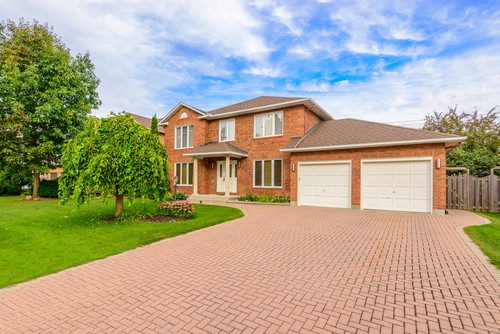
A two-story brick house with white trim, built by a skilled masonry contractor in Long Island, NY, features double front doors and a three-car garage behind a spacious paved driveway and green lawn with trees under a blue sky.

Creating Beautiful and Functional Outdoor Living Spaces with Bricks, Stones, and Concrete Blocks

Masonry in landscaping is essential to designing and constructing an attractive and functional outdoor living space. Masonry is the art of building structures using bricks, stones, and concrete blocks. It is an ancient trade that has been used for centuries to create structures that are both functional and aesthetically pleasing.

Landscaping is the process of designing, planning, and creating attractive, functional, and sustainable outdoor living spaces. It involves the use of plants, water features, lighting, and other elements to create an outdoor environment that is both beautiful and practical.

Masonry plays a crucial role in landscaping as it helps to create a solid and durable foundation for various outdoor living features such as patios, walkways, retaining walls, fireplaces, and water features. In this blog, we will explore the various ways masonry can be used in landscaping and the benefits it provides.

Patios

Patios are outdoor living spaces typically made of concrete or stone. They are a popular feature in landscaping as they provide a comfortable area for dining, entertaining, and relaxation. Masonry is an ideal material for creating patios as it is durable, low-maintenance, and can be customized to suit any design style.

Masonry patios can be made using a variety of materials such as bricks, stones, and concrete blocks. These materials can be arranged in different patterns and designs to create an attractive and attractive outdoor living space. Masonry patios are also resistant to weathering, erosion, and pests, which makes them a practical and long-lasting option.

Walkways

Walkways are paths that lead from one area of the outdoor living space to another. They are typically made of concrete, stone, or pavers and can complement the overall landscaping design. Masonry is an ideal material for creating walkways as it provides a solid and stable surface that can withstand heavy foot traffic and the elements.

Masonry walkways can be made using a variety of materials such as bricks, stones, and concrete blocks. These materials can be arranged in different patterns and designs to create an attractive and attractive walkway that complements the overall landscaping design. Masonry walkways are also low-maintenance and can be easily cleaned and repaired if necessary.
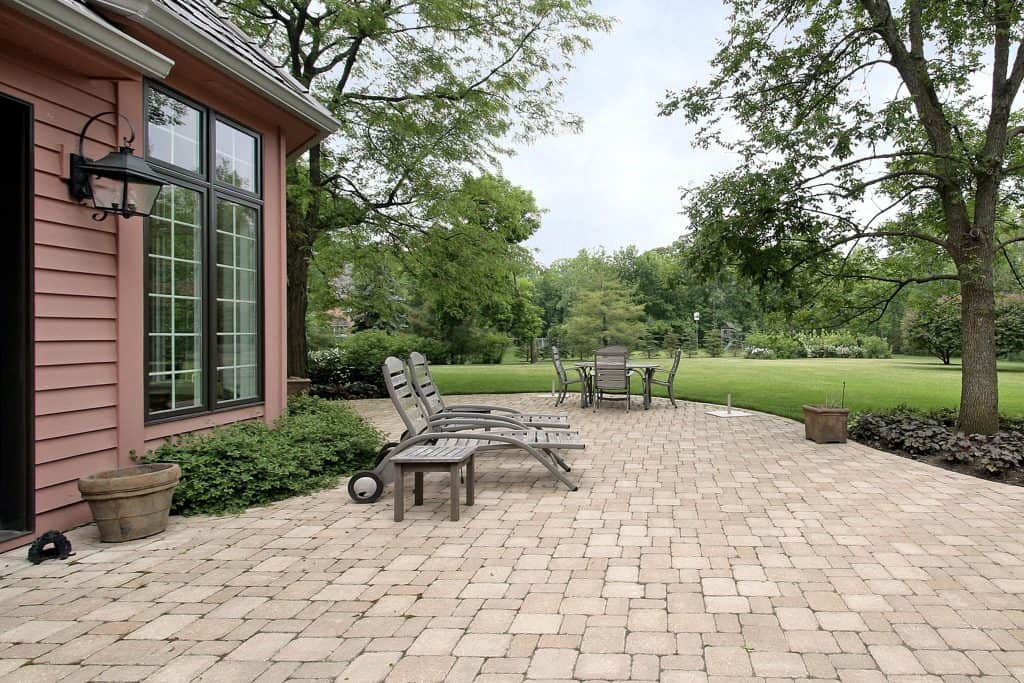
A spacious brick patio, expertly crafted by a masonry contractor Long Island, NY, features lounge chairs and a dining table set. It’s bordered by a red house and overlooks a large green lawn with trees in the background.

Retaining Walls

Retaining walls are structures designed to hold back soil and prevent erosion. They are a crucial feature in landscaping as they help maintain the integrity of the outdoor living space. Masonry is an ideal material for creating retaining walls as it is strong, durable, and can be customized to suit any design style.

Masonry retaining walls can be made using a variety of materials such as bricks, stones, and concrete blocks. These materials can be arranged in different patterns and designs to create an attractive and attractive foundation wall. This complements the overall landscaping design. Masonry retaining walls are also low-maintenance and durable, making them a practical and long-lasting option.

Fireplaces

Fireplaces are outdoor living features that provide warmth and cozy atmosphere for dining and entertaining. Masonry is an ideal material for creating fireplaces as it is heat-resistant and can be customized to suit any design style.

Masonry fireplaces can be made using a variety of materials such as bricks, stones, and concrete blocks. These materials can be arranged in different patterns and designs to create an elegant and attractive fireplace. This complements the overall landscaping design. Masonry fireplaces are also low-maintenance and durable, making them a practical and long-lasting option.
Summary:

A beautiful pool deck can turn into an expensive headache fast if the base isn’t built correctly. The settling period — the time after pool excavation when surrounding soil is still compressing — is the most commonly skipped step in pool deck paver installation, and it’s the reason so many Nassau County homeowners end up with sunken, separating pavers within a few years. This page breaks down what the settling period actually is, which materials hold up best in Long Island’s climate, and what a proper installation process looks like from the ground up. If you’re planning a pool deck project, this is the information you need before you sign anything.
Table of contents

You paid good money for a pool deck. Maybe it looked great the first summer. Then the second summer, a paver dips. By the third, you’ve got a section that’s visibly uneven and a contractor who’s stopped returning your calls. This is not an unusual story in Nassau County — and it almost always traces back to one thing that happened before a single paver was ever set. This page is about that thing: what the settling period is, why it matters, which materials actually perform in Long Island’s climate, and what the installation process should look like when it’s done correctly.

Pool Deck Paver Installation: Complete Material Comparison

Not all pavers are equal, and not all pavers are equal in Nassau County specifically. The combination of hot, humid summers, pool chemical exposure, and four months of freeze-thaw cycling from December through March creates a performance environment that eliminates certain materials quickly. Choosing the right paver isn’t just about aesthetics — it’s about what’s still looking good and sitting level five years from now.

The three materials that come up most often for pool deck work on Long Island are concrete pavers, natural stone like travertine or bluestone, and porcelain pavers. Each has a real case to be made for it, and each has real limitations worth understanding before you commit. Professional patio installation can help ensure your chosen material is properly planned and installed for the conditions.

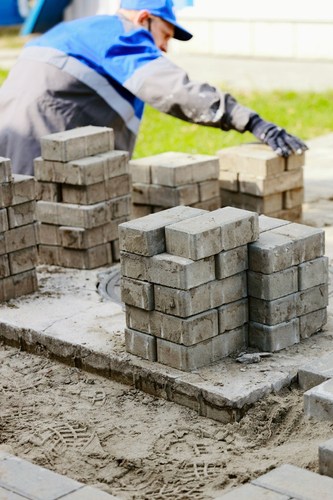
A worker in a blue cap and gray uniform arranges stacked concrete bricks outdoors, preparing for construction on a sandy, unfinished surface for a NY masonry contractor Long Island project.

Concrete Pavers Around Pool: What They Do Well and Where They Fall Short

Concrete pavers are the most common choice for pool decks in Nassau County, and for good reason. They’re durable, widely available, cost-effective compared to natural stone or porcelain, and they come in enough shapes, sizes, and colors to work with almost any design direction. For a homeowner who wants a clean, finished look without spending at the top of the market, concrete pavers are a legitimate option.

The fully installed cost for concrete pavers typically runs $12 to $20 per square foot, which puts a 600-square-foot pool deck in the $7,200 to $12,000 range before factoring in site conditions, access, or slope. That’s a meaningful investment — and it’s one that holds up well when the base is built correctly.

Where concrete pavers require attention is maintenance. They’re porous, which means they absorb water. In Nassau County’s climate, that porosity becomes a liability during the freeze-thaw months. Water gets into the surface, freezes, expands, and over time causes surface cracking and spalling. Sealing every two to five years is not optional — it’s what keeps the surface protected and the color from fading. Homeowners who skip sealing often find themselves dealing with deterioration well before the pavers themselves should need replacing.

The other advantage concrete pavers have over poured concrete slabs — which often get confused with pavers — is repairability. If one section settles or a paver cracks, you can pull it out, address the base underneath, and reset it without tearing out the entire deck. That flexibility has real long-term value in Nassau County, where freeze-thaw cycles mean even well-installed surfaces occasionally need spot attention over the years.

Natural Stone Pool Decks: Travertine, Bluestone, and the Nassau County Case for Each

Natural stone is the premium end of the pool deck market, and in communities like Garden City, Manhasset, Old Westbury, and Great Neck, it’s a common choice. Travertine and bluestone are the two materials that come up most often on Long Island, and they perform differently enough that the choice between them matters.

Travertine stays noticeably cooler underfoot in direct summer sun compared to concrete or darker stone — a real quality-of-life factor for a Nassau County pool deck that’s going to see heavy barefoot traffic from June through September. It’s also naturally slip-resistant in its tumbled or brushed finish, which addresses one of the primary safety concerns around any pool surface. The aesthetic is warm and timeless, which is why it tends to show up on higher-end properties where the pool area is designed to feel like a destination, not just a functional surface.

Bluestone is a different look — cooler in tone, more formal, and very much at home in Nassau County’s older, established neighborhoods. It’s dense and durable, handles freeze-thaw well when properly sealed, and has the kind of natural variation that gives a pool deck character without feeling overdone. The tradeoff is cost: natural stone runs $15 to $30 per square foot for material alone, and installation adds to that significantly.

Both materials require proper sealing and periodic maintenance, and both demand the same rigorous base preparation as any other paver type — more on that shortly. The point is that material selection matters, but it’s secondary to what’s happening underneath. A beautifully selected travertine paver sitting on a compromised base will fail just as predictably as concrete over poorly compacted fill.

Porcelain Pavers for Pool Deck: Why They're Gaining Ground on Long Island

Porcelain pavers have become the fastest-growing segment of the pool deck market, and the reasons are practical, not just aesthetic. They’re manufactured under high heat and pressure, which produces a surface that absorbs almost no water — less than 0.5% — and resists pool chemicals, UV fading, and Nassau County’s freeze-thaw cycles better than most alternatives. They don’t require sealing. They don’t stain easily. And they hold their color and surface texture for years with minimal upkeep.

For homeowners along Nassau County’s south shore — Rockville Centre, Hewlett, Oceanside, Long Beach — the non-porous surface also holds up well against the salt air exposure that accelerates deterioration in more porous materials.

Are Porcelain Pavers Slippery Around Pools? What Nassau County Homeowners Need to Know

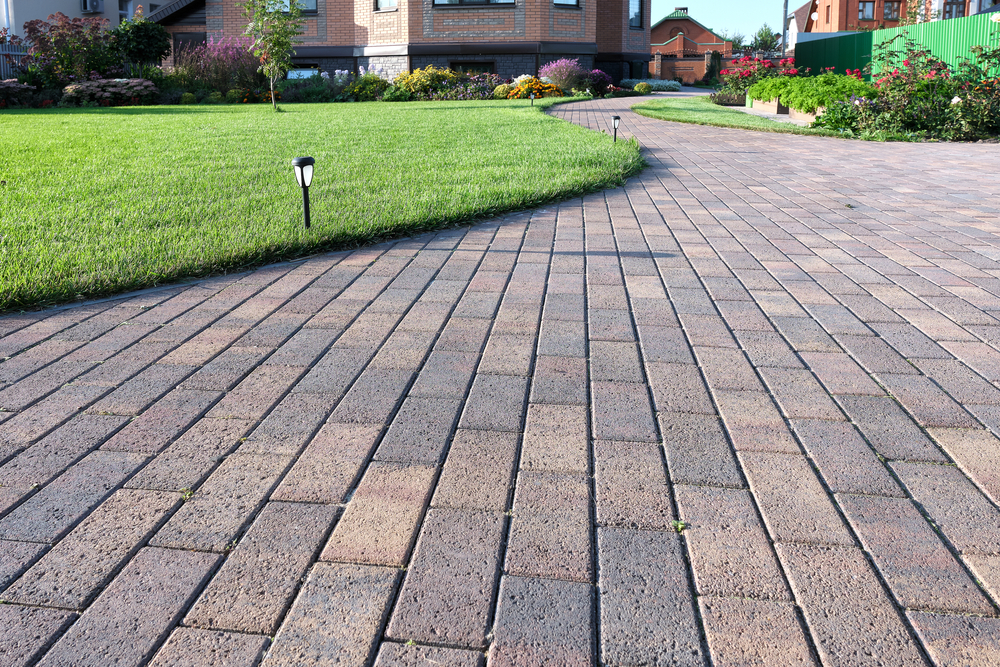
A curved, paved walkway made of rectangular bricks runs through a well-maintained garden with green grass, flowers, and solar path lights near a modern house—expertly crafted by a top masonry contractor in Long Island, NY.

This is the question that comes up almost every time porcelain pavers enter the conversation, and it deserves a straight answer: it depends entirely on the finish. Polished or smooth porcelain is genuinely dangerous when wet, and it has no business being installed around a pool. But that’s not the product being specified for outdoor pool deck applications. Textured porcelain pavers designed for exterior use carry slip resistance ratings that meet or exceed the standards for pool deck surfaces, and they perform well underfoot even when the surface is wet.

The confusion comes from conflating interior porcelain tile — the kind used on bathroom floors or kitchen counters — with exterior-grade porcelain pavers engineered specifically for outdoor conditions. They’re categorically different products. When a contractor tells you porcelain is too slippery for a pool deck without specifying which finish or rating, that’s either a knowledge gap or a sales pitch for a different material.

The other thing worth knowing about porcelain is that it requires more precise base preparation and more skilled cutting than concrete pavers. It’s a harder, more brittle material, and the installation process has less margin for error. That’s a reason to make sure the contractor you hire has actually installed it before. The end result, when done correctly, is a pool deck surface that looks sharp, stays cool in summer, handles Long Island winters without issue, and requires almost nothing from you in terms of ongoing maintenance.

Cost-wise, porcelain pavers run $10 to $22 per square foot for material, with installed costs reaching $20 to $40 per square foot at the premium end. For homeowners in Garden City, Jericho, Woodbury, or Syosset who are investing in a high-end outdoor space, that cost is often justified by the combination of durability and low long-term maintenance expense.

The Settling Period: The Step That Determines Whether Your Pool Deck Lasts

Here’s what most contractors won’t tell you, and what explains the majority of pool deck failures in Nassau County: when a pool is installed, the excavation process disturbs a significant volume of soil around the pool shell. That soil gets backfilled — mixed with gravel, compacted as well as conditions allow — but it is not at its final density. It’s still moving. Still compressing. And depending on soil type, rainfall, and temperature, that process can continue for weeks to months.

A contractor who installs your pool deck pavers the week after the pool goes in the ground — even with a technically correct crushed stone base — is building on an unstable foundation. The base compacts correctly. The soil underneath it does not. What you get is a deck that looks perfect in year one and starts showing problems in year two or three, when the backfill finally reaches its settled state and takes the base with it.

The right approach is to assess the backfill zone specifically, determine whether the soil has stabilized enough to support installation, and in some cases, wait. That conversation might delay a project by several weeks. It will save a homeowner thousands in repairs over the next decade. Most contractors don’t have it because most contractors don’t want to push a job back — especially during Nassau County’s spring rush, when every homeowner wants the deck done before Memorial Day.

Beyond timing, the base itself has to be built correctly regardless of when installation happens. That means excavating to eight to ten inches, adding crushed stone in three to four inch lifts and compacting each one before adding the next, engineering a one to two percent drainage slope away from the pool, and finishing with a thin bedding layer of sand before the pavers go down. Polymeric sand fills the joints. Edge restraints prevent lateral movement. Every step matters, and every step that gets skipped shows up eventually.

Nassau County’s freeze-thaw cycle makes proper drainage non-negotiable. Water that pools on or under a deck surface in December is going to freeze, expand, and shift whatever is above it. South shore communities with higher water tables — parts of Hempstead, Valley Stream, Lynbrook — need drainage designed into the project from the start, not addressed as an afterthought. This is where 20-plus years of working specifically in Nassau and Suffolk County makes a real difference. We learn what fails here. We build accordingly.

Hiring a Pool Deck Paver Contractor in Nassau County, NY: What to Ask Before You Sign

The contractor conversation itself tells you most of what you need to know. Ask them how they handle the pool backfill zone. Ask how deep the base will be and how they compact it. Ask whether they’ll pull permits if the scope requires them. A contractor who can answer those questions directly — without deflecting or pivoting to price — understands what they’re doing. One who can’t is worth walking away from, no matter how competitive the quote looks.

Nassau County requires all home improvement contractors to be registered with the Department of Consumer Affairs in Mineola. That registration is verifiable, and verifying it before signing anything is a reasonable step that protects you legally and financially.

If you’re planning a pool deck project in Nassau County and want to talk through the process before committing to anything, we offer free consultations. Every worker on our jobs is background-checked and drug-tested, our owners are on-site during projects, and we’ve been doing this work on Long Island for over 20 years. The conversation costs you nothing. What you learn from it might save you quite a bit.

Article details:

Share: