Driveway Paving Estimate: 2026 Nassau County Cost Breakdown

Wondering what a driveway paving estimate should actually include in Nassau County? Here's what you need to know before getting a single quote.

Share:

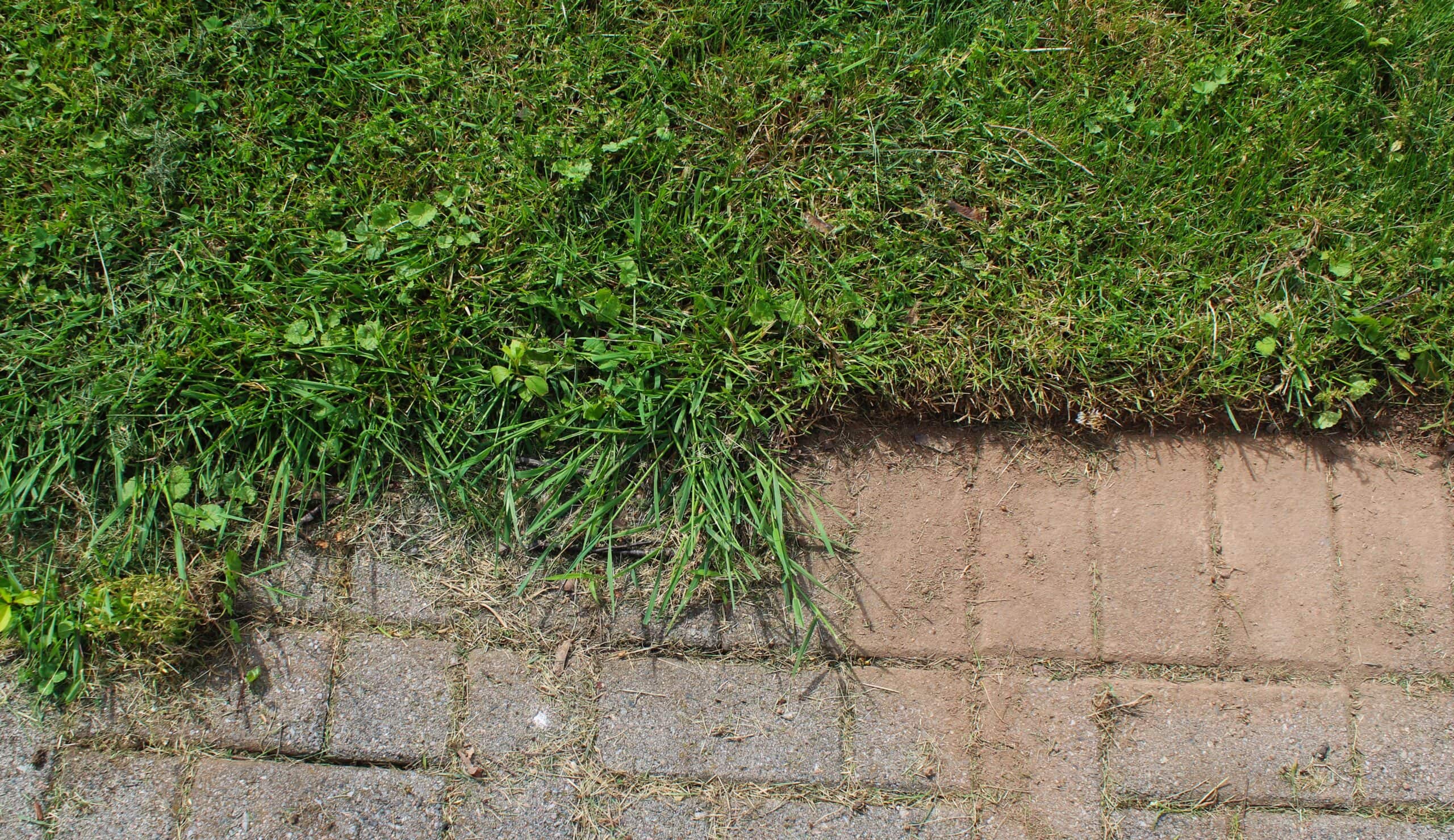
Grass growing over the edge of a stone or brick path, with some grass encroaching onto the walkway and patches of bare soil visible along the boundary—perfect for a NY home maintained by a skilled masonry contractor Long Island residents trust.

Creating Beautiful and Functional Outdoor Living Spaces with Bricks, Stones, and Concrete Blocks

Masonry in landscaping is essential to designing and constructing an attractive and functional outdoor living space. Masonry is the art of building structures using bricks, stones, and concrete blocks. It is an ancient trade that has been used for centuries to create structures that are both functional and aesthetically pleasing.

Landscaping is the process of designing, planning, and creating attractive, functional, and sustainable outdoor living spaces. It involves the use of plants, water features, lighting, and other elements to create an outdoor environment that is both beautiful and practical.

Masonry plays a crucial role in landscaping as it helps to create a solid and durable foundation for various outdoor living features such as patios, walkways, retaining walls, fireplaces, and water features. In this blog, we will explore the various ways masonry can be used in landscaping and the benefits it provides.

Patios

Patios are outdoor living spaces typically made of concrete or stone. They are a popular feature in landscaping as they provide a comfortable area for dining, entertaining, and relaxation. Masonry is an ideal material for creating patios as it is durable, low-maintenance, and can be customized to suit any design style.

Masonry patios can be made using a variety of materials such as bricks, stones, and concrete blocks. These materials can be arranged in different patterns and designs to create an attractive and attractive outdoor living space. Masonry patios are also resistant to weathering, erosion, and pests, which makes them a practical and long-lasting option.

Walkways

Walkways are paths that lead from one area of the outdoor living space to another. They are typically made of concrete, stone, or pavers and can complement the overall landscaping design. Masonry is an ideal material for creating walkways as it provides a solid and stable surface that can withstand heavy foot traffic and the elements.

Masonry walkways can be made using a variety of materials such as bricks, stones, and concrete blocks. These materials can be arranged in different patterns and designs to create an attractive and attractive walkway that complements the overall landscaping design. Masonry walkways are also low-maintenance and can be easily cleaned and repaired if necessary.
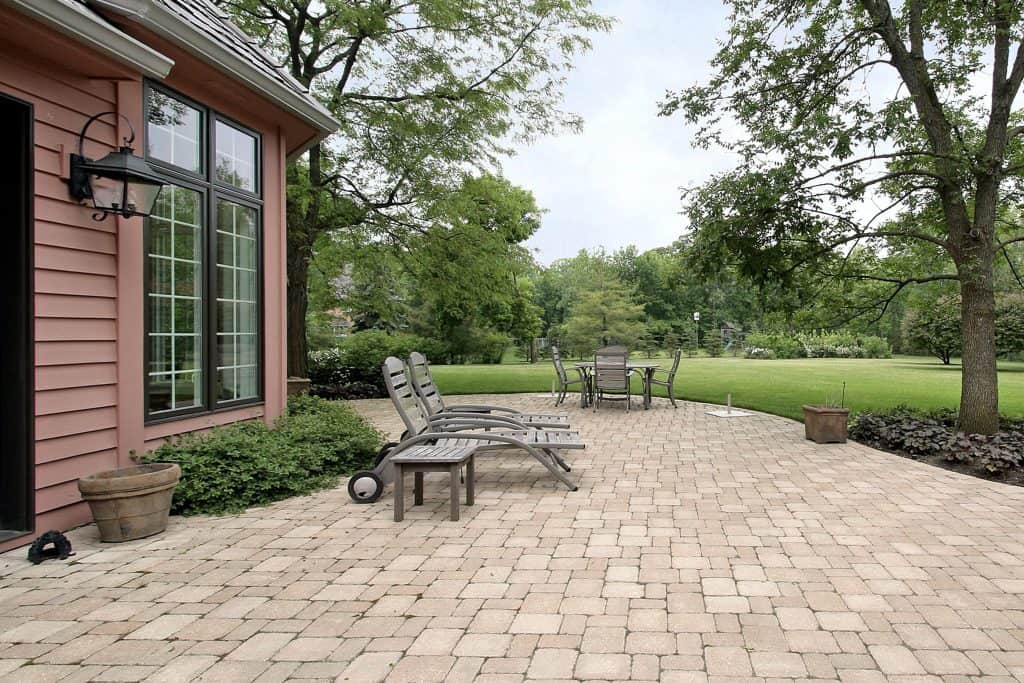
A spacious brick patio, expertly crafted by a masonry contractor Long Island, NY, features lounge chairs and a dining table set. It’s bordered by a red house and overlooks a large green lawn with trees in the background.

Retaining Walls

Retaining walls are structures designed to hold back soil and prevent erosion. They are a crucial feature in landscaping as they help maintain the integrity of the outdoor living space. Masonry is an ideal material for creating retaining walls as it is strong, durable, and can be customized to suit any design style.

Masonry retaining walls can be made using a variety of materials such as bricks, stones, and concrete blocks. These materials can be arranged in different patterns and designs to create an attractive and attractive foundation wall. This complements the overall landscaping design. Masonry retaining walls are also low-maintenance and durable, making them a practical and long-lasting option.

Fireplaces

Fireplaces are outdoor living features that provide warmth and cozy atmosphere for dining and entertaining. Masonry is an ideal material for creating fireplaces as it is heat-resistant and can be customized to suit any design style.

Masonry fireplaces can be made using a variety of materials such as bricks, stones, and concrete blocks. These materials can be arranged in different patterns and designs to create an elegant and attractive fireplace. This complements the overall landscaping design. Masonry fireplaces are also low-maintenance and durable, making them a practical and long-lasting option.
Summary:

Getting a driveway paving estimate in Nassau County means navigating a wide range of quotes — some fair, some not. This guide breaks down what you should actually pay in 2026 for asphalt, concrete, and paver driveways, and what separates a legitimate estimate from one that’s hiding something. Understanding the real cost of driveway replacement or repair isn’t just about the number on the page. It’s about knowing what’s included, what’s being skipped, and how Nassau County’s climate and permitting requirements affect the final price.
Table of contents

If you’ve already started getting quotes, you’ve probably noticed something frustrating — the numbers are all over the place. One contractor says $4,000. Another says $9,500. And neither one has explained why. That gap isn’t random. It usually comes down to what’s actually included in the estimate, and more often than not, the cheaper number is missing something important. This page breaks down what a legitimate driveway paving estimate looks like in Nassau County in 2026 — real local pricing by material, what affects the final cost, and how to tell whether a quote is honest before you commit to anything.

What Does a Driveway Paving Estimate Actually Include in Nassau County?

A real estimate isn’t just a total dollar amount. It should spell out the square footage being paved, the depth and type of base material, the thickness of the asphalt or concrete layer, how demolition and haul-away are handled, and whether permits are included. If a contractor hands you a number without explaining any of that, you don’t have an estimate — you have a guess with room to charge you more later.

In Nassau County, driveway installation is classified as home improvement work under county law, which means the contractor must hold a valid home improvement contractor license issued by the Nassau County Department of Consumer Affairs. That’s not optional. Any legitimate estimate should reflect a contractor who’s operating legally — and that includes pulling the right permits when the job requires them.

Pricing in Nassau County runs higher than national averages, and for good reason. Local labor costs, material delivery, and the specific demands of Long Island’s climate all factor in. For 2026, we see asphalt driveway estimates in the range of $5 to $9 per square foot, concrete from $7 to $14 per square foot, and paver driveways starting around $17 to $21 per square foot for sand-based concrete pavers.

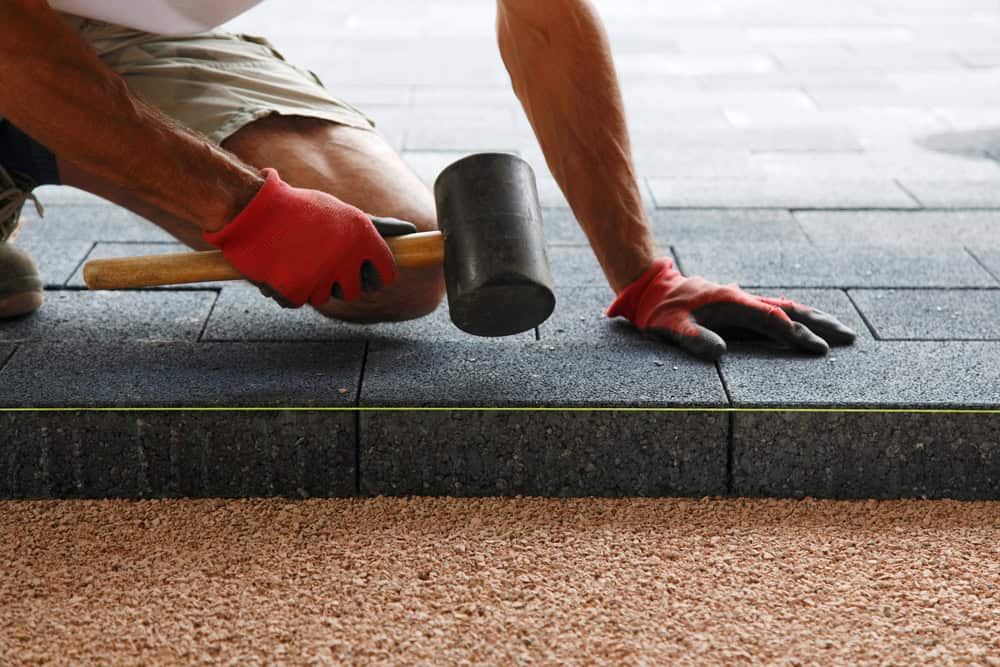
A person wearing red gloves and shorts uses a rubber mallet to align and secure gray paving stones over a bed of sand or gravel during outdoor construction.

Concrete Versus Asphalt Driveway: Which One Actually Makes Sense for Nassau County?

This is one of the most common questions homeowners ask when they’re getting estimates, and the honest answer is that it depends on your priorities — but Nassau County’s climate tips the scale in a specific direction.

Asphalt costs less upfront. In Nassau County, you’re looking at $5 to $9 per square foot installed, compared to $7 to $14 per square foot for concrete. For a standard two-car driveway, that difference can be $3,000 or more. But the cost gap is only part of the story. Asphalt is flexible. It moves slightly with temperature changes, which matters a lot on Long Island where freeze-thaw cycles are a real, recurring force. Concrete is rigid, and that rigidity makes it more prone to cracking when the ground shifts in winter. Proper joint placement and base preparation can reduce that risk, but it doesn’t eliminate it.

Concrete has the longer lifespan — 30 to 50 years versus 15 to 20 for asphalt — and lower ongoing maintenance costs. You won’t need to sealcoat it every few years the way you do with asphalt. But when you run the numbers over 20 years, the total cost of ownership for both materials tends to land surprisingly close to each other. Asphalt typically runs around $7,000 over that period when you factor in maintenance; concrete comes in around $7,500.

What that means practically is that neither material is a clear winner on cost alone. The better question is what works for your property. If your driveway has drainage challenges or sees heavy vehicle traffic, asphalt’s flexibility and easier repairability are real advantages. If you want something that holds up for decades with minimal attention and you’re willing to invest more upfront, concrete is worth considering. Either way, the base preparation underneath matters more than the surface material — and that’s where a lot of contractors cut corners.

Road salt is another Nassau County-specific factor worth mentioning. County roads get heavily salted in winter, and that salt splashes onto driveways near the street. It accelerates surface deterioration for both asphalt and concrete, which is one reason regular sealcoating on asphalt driveways matters more here than in warmer markets. Skipping that maintenance doesn’t just affect appearance — it shortens the life of the surface.

Why Nassau County's Freeze-Thaw Cycles Change What You Should Expect From a Paving Estimate

A driveway estimate that doesn’t account for base preparation isn’t worth the paper it’s written on — at least not in Nassau County. This is the part of the job that’s invisible once it’s done, which is exactly why some contractors skip it or minimize it to keep their number low.

The base is what protects your driveway from the ground up. Nassau County’s freeze-thaw cycles — where temperatures repeatedly cross the freezing point throughout winter — cause the ground to expand and contract. Water gets into surface cracks, freezes, and pushes them wider. Without a properly compacted aggregate base of at least four to six inches beneath the surface material, that movement will crack and shift your driveway within a few winters. It’s not a matter of if. It’s when.

Clay-heavy soil, which is common in many Nassau County neighborhoods, compounds the problem. Clay holds water longer than sandy soil, which means more freeze-thaw pressure on the base. A contractor who’s worked on Long Island for years knows this. One who’s applying a generic approach from elsewhere may not factor it in — or may not care to, if it means keeping their bid competitive.

This is also why paver driveways have become popular in communities like Garden City, Manhasset, and Great Neck. Brands like Cambridge, Nicolock, and Techo-Bloc engineer their products specifically for Northeast freeze-thaw conditions. Individual pavers can shift slightly and be reset without replacing the entire surface — a practical advantage when you’re dealing with Long Island’s winters year after year. The upfront cost is higher, but the long-term durability and repairability are genuine benefits.

When you’re reviewing estimates, ask every contractor the same question: how deep is your base, and how are you compacting it? If they can’t answer that clearly, or if the answer doesn’t include a vibratory roller and at least four inches of compacted stone, that’s a meaningful red flag.

Driveway Repair Cost Estimates: Resurfacing, Mudjacking, or Full Replacement?

Not every driveway needs to be torn out and rebuilt. Sometimes repair is the smarter call — and sometimes it’s just delaying the inevitable. The difference matters because the cost gap between repair and replacement is significant, and the wrong choice in either direction costs you money.

Resurfacing an asphalt driveway — applying a new layer over an existing surface — runs about $2 to $3 per square foot in Nassau County. Sealcoating, which is a maintenance treatment rather than a structural repair, typically costs $200 to $500 for a standard residential driveway. Full replacement, depending on material and size, starts around $5 per square foot for asphalt and goes up from there. Knowing which option actually applies to your situation is worth getting right before you agree to anything.

When Resurfacing Makes Sense — and When It Doesn't

A worker wearing gloves and protective boots is installing rectangular paving stones in a herringbone pattern on a gravel base for a pathway or patio.

Resurfacing works when the base beneath your driveway is still structurally sound. If the cracks you’re seeing are surface-level — hairline fractures from UV exposure or minor wear — and the driveway isn’t heaving, sinking, or draining poorly, resurfacing can extend its life by eight to fifteen years at a fraction of the replacement cost.

What it can’t do is fix a failing base. If your driveway is sinking in sections, cracking in large irregular patterns, or holding water after rain, those are signs of base failure — not surface wear. Resurfacing over a compromised base is a temporary fix at best. It might look fine for a season, but the underlying problem will push through the new surface. You’ll be back to the same conversation in a year or two, except now you’ve also spent money on the overlay.

The honest assessment here is that resurfacing is a legitimate option for driveways that are aging but structurally intact. It’s not a workaround for deferred maintenance or base problems. If a contractor is recommending resurfacing on a driveway with visible heaving or drainage issues, ask them specifically what they’re doing about the base. If the answer is nothing, that’s a problem.

For Nassau County homeowners in towns like Levittown, Massapequa, or Valley Stream — where many homes were built in the post-war era and driveways haven’t been touched in decades — full replacement is often the more cost-effective long-term decision. Repeated repairs on a driveway with an aging or inadequate base add up fast. A properly installed replacement with a compacted stone base and the right material for your site conditions will outlast a patched-up surface by years.

What Is Mudjacking and Is It Worth It for Nassau County Driveways?

Mudjacking is a repair technique used specifically for concrete slabs that have sunk due to soil erosion or settling beneath them. The process involves drilling small holes into the slab and pumping a slurry mixture underneath to lift it back to its original position. It’s less invasive than full replacement and typically costs between $3 and $6 per square foot, making it significantly cheaper than tearing out and repaving.

The important thing to understand is that mudjacking is a targeted fix for a specific problem. It works when a concrete slab has sunk because the soil beneath it eroded or compressed — not because the slab itself is structurally compromised. If the concrete is cracked in multiple places, has shifted unevenly, or is showing signs of widespread deterioration, mudjacking won’t solve the underlying issue. You’d be lifting a slab that still needs to be replaced.

It also doesn’t apply to asphalt driveways at all. Asphalt doesn’t come in discrete slabs the way concrete does, so the technique isn’t relevant for that material.

For Nassau County homeowners considering mudjacking, the key question is whether the slab has sunk due to soil movement or whether the concrete itself has failed. A contractor who does an honest on-site assessment can tell the difference. One who recommends mudjacking without looking at the full picture — or recommends full replacement when mudjacking would genuinely suffice — isn’t serving your interests.

What this all comes back to is the estimate itself. A trustworthy driveway paving estimate in Nassau County isn’t just a number. It’s a recommendation that reflects an honest look at your specific property — the condition of your current surface, the state of the base, your drainage situation, and your long-term goals. That’s the kind of estimate worth getting, and it’s the kind we give.

How to Get a Driveway Paving Estimate in Nassau County You Can Actually Trust

The biggest mistake homeowners make is treating the lowest estimate as the best deal. In Nassau County’s paving market, a low number almost always reflects something missing — thinner base material, skipped permits, unvetted labor, or a contractor who won’t be easy to reach if something goes wrong six months later.

What you’re really paying for with any reputable contractor is the work you can’t see: the depth of the base, the quality of the compaction, the permits pulled correctly, the crew that shows up knowing what they’re doing. Those things don’t show up in a photo of the finished driveway, but they’re exactly what determines whether it lasts five years or twenty-five.

If you’re ready to get a straight answer on what your driveway project actually costs, we offer free on-site estimates with no obligation. We’ve been working in Nassau and Suffolk Counties for over 20 years, and every estimate we give is itemized, permit-aware, and based on what your property actually needs — not a flat rate that leaves room for surprises later.

Article details:

Share: