Plan Your Fall Hardscape Design Now for Spring

As summer winds down, fall is the smartest time to plan your hardscape project — here's why Nassau County homeowners who start now come out ahead.

Share:

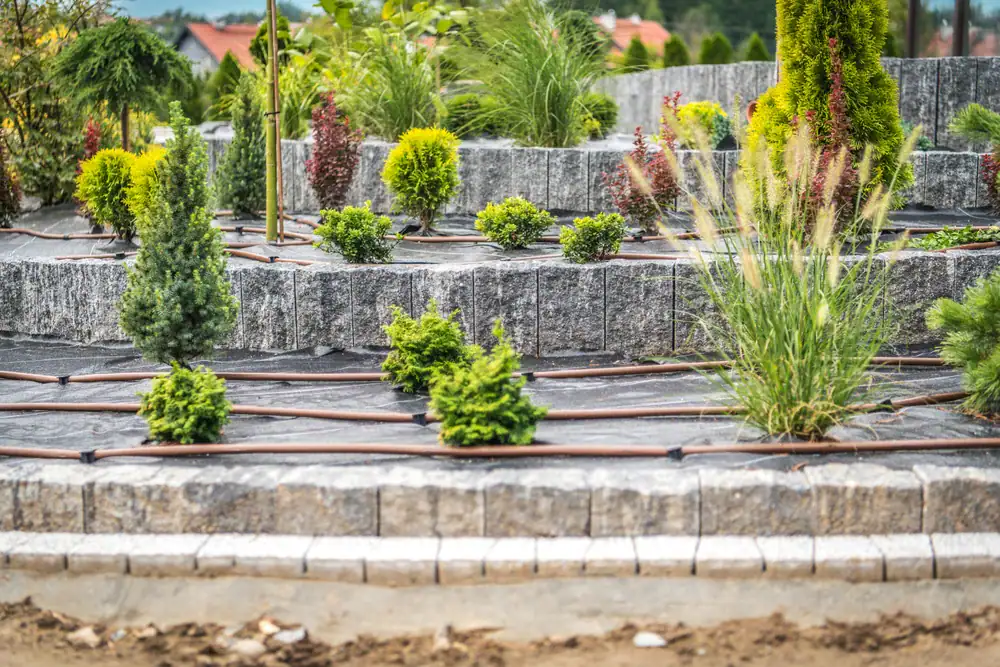
A terraced garden with stone retaining walls, black landscaping fabric, drip irrigation tubing, and a variety of small shrubs, grasses, and evergreen plants.

Creating Beautiful and Functional Outdoor Living Spaces with Bricks, Stones, and Concrete Blocks

Masonry in landscaping is essential to designing and constructing an attractive and functional outdoor living space. Masonry is the art of building structures using bricks, stones, and concrete blocks. It is an ancient trade that has been used for centuries to create structures that are both functional and aesthetically pleasing.

Landscaping is the process of designing, planning, and creating attractive, functional, and sustainable outdoor living spaces. It involves the use of plants, water features, lighting, and other elements to create an outdoor environment that is both beautiful and practical.

Masonry plays a crucial role in landscaping as it helps to create a solid and durable foundation for various outdoor living features such as patios, walkways, retaining walls, fireplaces, and water features. In this blog, we will explore the various ways masonry can be used in landscaping and the benefits it provides.

Patios

Patios are outdoor living spaces typically made of concrete or stone. They are a popular feature in landscaping as they provide a comfortable area for dining, entertaining, and relaxation. Masonry is an ideal material for creating patios as it is durable, low-maintenance, and can be customized to suit any design style.

Masonry patios can be made using a variety of materials such as bricks, stones, and concrete blocks. These materials can be arranged in different patterns and designs to create an attractive and attractive outdoor living space. Masonry patios are also resistant to weathering, erosion, and pests, which makes them a practical and long-lasting option.

Walkways

Walkways are paths that lead from one area of the outdoor living space to another. They are typically made of concrete, stone, or pavers and can complement the overall landscaping design. Masonry is an ideal material for creating walkways as it provides a solid and stable surface that can withstand heavy foot traffic and the elements.

Masonry walkways can be made using a variety of materials such as bricks, stones, and concrete blocks. These materials can be arranged in different patterns and designs to create an attractive and attractive walkway that complements the overall landscaping design. Masonry walkways are also low-maintenance and can be easily cleaned and repaired if necessary.
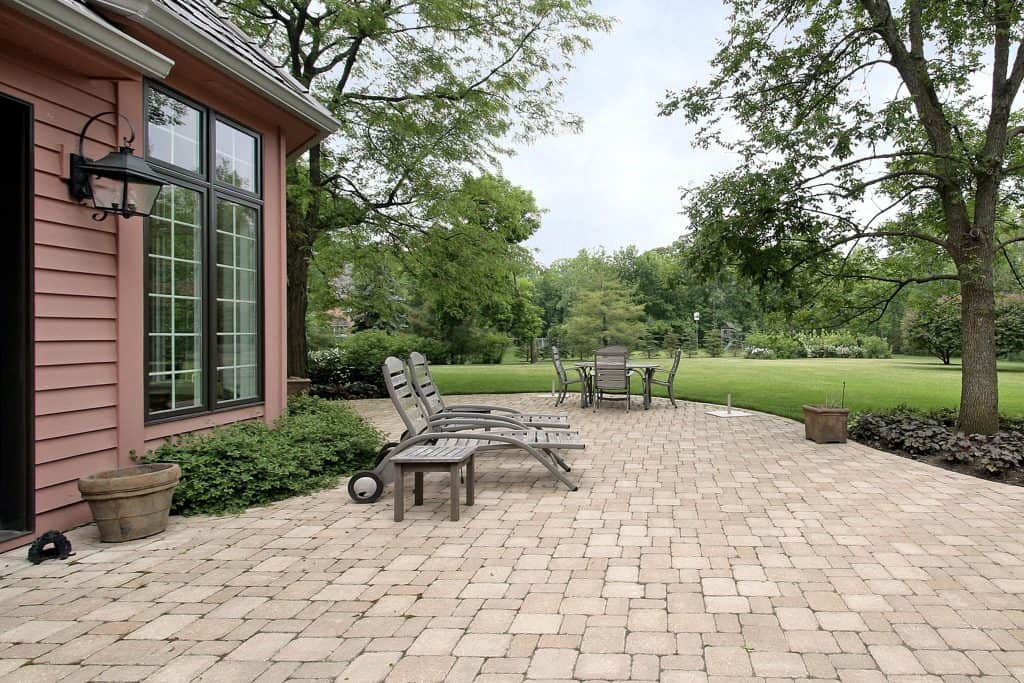
A spacious brick patio, expertly crafted by a masonry contractor Long Island, NY, features lounge chairs and a dining table set. It’s bordered by a red house and overlooks a large green lawn with trees in the background.

Retaining Walls

Retaining walls are structures designed to hold back soil and prevent erosion. They are a crucial feature in landscaping as they help maintain the integrity of the outdoor living space. Masonry is an ideal material for creating retaining walls as it is strong, durable, and can be customized to suit any design style.

Masonry retaining walls can be made using a variety of materials such as bricks, stones, and concrete blocks. These materials can be arranged in different patterns and designs to create an attractive and attractive foundation wall. This complements the overall landscaping design. Masonry retaining walls are also low-maintenance and durable, making them a practical and long-lasting option.

Fireplaces

Fireplaces are outdoor living features that provide warmth and cozy atmosphere for dining and entertaining. Masonry is an ideal material for creating fireplaces as it is heat-resistant and can be customized to suit any design style.

Masonry fireplaces can be made using a variety of materials such as bricks, stones, and concrete blocks. These materials can be arranged in different patterns and designs to create an elegant and attractive fireplace. This complements the overall landscaping design. Masonry fireplaces are also low-maintenance and durable, making them a practical and long-lasting option.

Summary:

With summer coming to a close, most Nassau County homeowners are about to make the same mistake: waiting until spring to think about their patio or driveway, then spending the season watching everyone else enjoy theirs while they sit on a contractor’s backlog. Starting your hardscape design now, as fall begins, changes that entirely. This post breaks down why the coming off-season is actually the best time to plan, what the process looks like from design through permits, and how to make sure your outdoor space is ready the moment next spring’s weather turns.
Table of contents

Summer is winding down, and if you’ve been putting off that patio, driveway replacement, or backyard overhaul, fall is the window most Nassau County homeowners miss entirely. By the time April rolls around, the best contractors are already committed through July. Permits are backed up. Materials are on back order. And the project you wanted done by Memorial Day is suddenly a late-summer maybe. Starting your hardscape design now, right as the season turns, puts you ahead of all of that. Here’s what the process actually looks like, and why the timing matters more than most people realize.

Hardscape Planning in Nassau County: Why Fall Is the Right Time to Start

Nassau County’s spring season is brutal for contractor availability. The moment the weather breaks, every homeowner who waited suddenly wants their project done at once. Schedules fill up fast, and the contractors worth hiring — the ones with the experience, the proper licensing, and the track record — don’t have gaps to fill by March.

Fall is different. It’s when the real planning work can happen without the pressure. You have time to develop a design you actually feel good about, sort through material options, get permits in motion, and lock in a spring start date before the rush hits. That’s not a small advantage — it’s the difference between a project that happens on your terms and one that happens whenever someone has an opening.

A lush, well-maintained garden with a variety of green shrubs, tall grasses, flowering plants, and neatly trimmed lawn in the foreground, surrounded by dense trees and foliage.

What Does Fall Hardscape Preparation Actually Involve?

A lot of homeowners assume planning a hardscape project means picking out pavers and calling it a day. In reality, there’s a lot that happens before anyone touches a shovel — and most of it takes time.

First, there’s the design phase. A good hardscape design isn’t just about what looks nice. It accounts for how your yard drains, where the sun hits, how the space connects to your home, and what you actually want to do out there. A patio for a family with young kids looks different from one built around weekend entertaining. Getting that right takes a few conversations and usually some back-and-forth on materials, layout, and scope. That process is a lot smoother in October than it is in April when everyone’s in a hurry.

Then there’s material selection. Natural stone, concrete pavers, brick — they’re not all sitting in a warehouse waiting for you. Premium materials, especially custom or specialty options, often have lead times of six weeks or more. If you’re starting that process in fall, your materials are ready when your installation date arrives. If you’re starting in March, you’re adding months to a timeline that’s already tight.

There’s also the soil factor, which most people don’t think about. As summer gives way to fall, Nassau County’s ground begins to settle and dry out after a season of heat and rain. That stability actually matters for base preparation — the compacted gravel and sand layers that go down before any paver or stone gets placed. A well-compacted base on stable fall soil holds better than one laid on ground that’s still thawing and saturated from snowmelt. It’s a technical detail, but it’s the kind of thing that determines whether your patio still looks good in ten years or starts heaving and cracking after the third winter.

Nassau County Permits Take Time — Here's What to Expect

This is the part that catches a lot of homeowners off guard. Nassau County has one of the more layered permitting environments in New York. Depending on your project and where you live, you may be dealing with county-level requirements, town-level permits through the Town of Hempstead, North Hempstead, or Oyster Bay, and in some cases village-level approvals on top of that. For certain features — retaining walls above a specific height, outdoor kitchens with gas lines, pergolas attached to the house, or driveway curb cuts onto county roads — a permit isn’t optional.

Review timelines across Nassau County municipalities typically run four to twelve weeks, depending on the scope of the project and which office is handling it. A homeowner who submits a permit application in October or November is in a very different position than one who submits in March. The first one has approvals in hand before spring installation begins. The second one is watching the calendar slip.

Working with a contractor who’s licensed by the Nassau County Department of Consumer Affairs — and who actually knows which permits apply to your specific project — removes a lot of this uncertainty. The DCA licensing requirement exists for a reason, and it’s worth understanding that unlicensed contractors in Nassau County can’t legally pull permits. That means any work they do without one becomes your problem at resale, potentially triggering fines or mandatory removal orders. It’s not a small risk on a $600,000-plus home.

We handle permitting as part of the process. We know what’s required in the towns and villages we work in across Nassau County, and we don’t leave that piece to chance.

Spring Hardscape Installation: How to Secure Your Timeline Before Everyone Else Does

The goal of fall planning is simple: make sure your spring installation actually happens in spring, not sometime after. That means having your design finalized, your permits approved, your materials ordered, and your contractor scheduled before the season opens up.

When all of those pieces are in place, a project that might have dragged into August can realistically start in April or May. For Nassau County homeowners who want to actually use their outdoor space during the warm months — not watch it get built — that timing matters.

Here’s the honest reality of how spring booking works. By January, contractors with strong reputations and full crews are already fielding calls for spring. By February, the good slots are filling up. By March, you’re looking at late spring at the earliest — and that’s if you’re lucky. The homeowners who get their preferred contractor and their preferred start date are almost always the ones who had that conversation in the fall.

Booking early also gives you more flexibility. When you’re not rushing to find anyone available, you can take the time to compare options, ask the right questions, and make a decision you feel confident about rather than one you made under pressure. That’s a meaningful difference when you’re investing anywhere from $10,000 to $50,000 or more in a project that’s going to be part of your home for decades.

There’s also the budget piece. An extended planning window gives you time to think through financing, explore home equity options, or simply plan around your cash flow without the pressure of an imminent construction start. Projects that get rushed tend to get over-scoped or under-planned — neither of which ends well. Starting in fall means you can work through the budget conversation at a pace that actually makes sense.

For what it’s worth, a well-executed hardscape in Nassau County isn’t just a lifestyle upgrade. According to the National Association of Realtors and National Association of Landscape Professionals’ joint 2023 Remodeling Impact Report, a new patio recovers about 95 percent of its cost at resale, and an overall landscape upgrade can recover the full cost or more. In a market where median home values sit in the $600,000 to $700,000 range — and homes in communities like Garden City, Merrick, and Rockville Centre often sell well above that — that’s a real number. A new patio or driveway is something you enjoy now, and something that shows up on the appraisal when you sell.

What to Look for When Choosing a Nassau County Hardscape Contractor

A landscaper wearing gloves and kneepads works on a modern garden with concrete stepping stones, decorative gravel, and blooming flowers in a neatly arranged outdoor area.

Not every contractor operating in Nassau County is the same, and the differences aren’t always obvious until something goes wrong. A few things are worth checking before you commit to anyone.

Start with licensing. Nassau County requires home improvement contractors to be licensed by the Department of Consumer Affairs. Nassau County backs that licensing requirement with fingerprinting and ongoing compliance obligations, not a rubber stamp. A contractor who can’t show you their DCA license is one who also can’t legally pull permits for your project.

Ask whether the owners are involved in day-to-day work. In a lot of companies, you meet the salesperson and then a crew shows up that you’ve never seen before. That creates real accountability gaps. We have owners on-site during every project. That’s simply how we’ve always worked, not something written into a policy manual. When the people running the job are the same people who built the business, the standard of work tends to reflect that.

Background-checked and drug-tested workers matter more than most homeowners realize until they think about it. You’re letting people work on your property, often while you’re home. Knowing that every person on our crew has been vetted matters, and it’s something most contractors don’t address at all.

Finally, look at the reviews — not just the star rating, but what people actually say. A review that mentions a specific project, a specific result, or a long-term relationship tells you more than a generic five-star rating. We’ve had clients trust us with their homes and rental properties for over a decade. That kind of relationship doesn’t happen by accident.

We’ve been working in Nassau and Suffolk counties for over twenty years. We know Long Island’s soil conditions, its frost depths, its drainage challenges, and its permitting landscape. That experience shows up in every project we build.

Summer is on its way out, and fall is short — the spring calendar fills up faster than most people expect. If you’ve been thinking about a new patio, a driveway replacement, a retaining wall, or a full backyard transformation, now is genuinely the right time to start — not because it makes for a good marketing message, but because the planning, permitting, and scheduling process takes real time, and starting it now is what makes a spring installation actually possible.

The homeowners who enjoy their outdoor spaces from the first warm day of the year are almost always the ones who started this conversation while the weather was still good, not the ones who waited until April.

If you’re ready to talk through what your project might look like, we offer free consultations and have been helping Nassau County homeowners plan and build outdoor spaces that hold up for decades. Reach out and let’s figure out what makes sense for your property.

Article details:

Share: